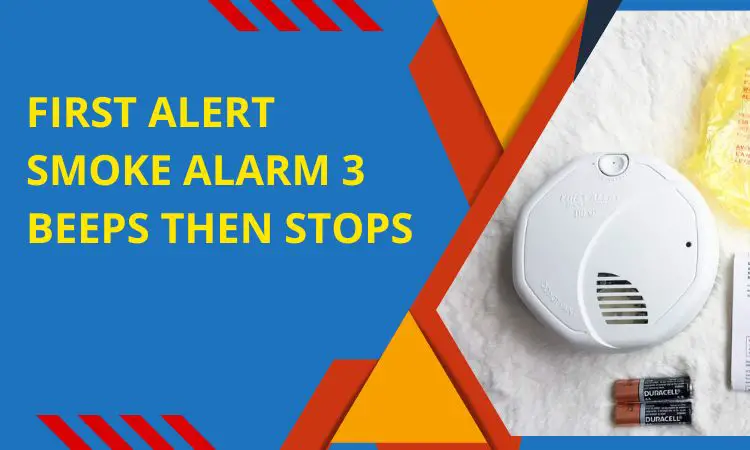
Three Beeps On Fire Alarm

Ever been in a building, heard a beep, and wondered, "Is this a drill, or should I be running?" It’s a common moment of confusion, isn't it? But what if I told you there’s a distinct, internationally recognized signal that cuts through the noise and tells you exactly what’s happening? We’re talking about the three beeps on a fire alarm – a sound that’s not just noise, but a crucial message designed to keep us safe. Understanding this simple pattern isn't just for firefighters; it’s a fascinating bit of knowledge that empowers all of us to respond correctly when it matters most.
So, what exactly are these three beeps, and why are they so important? This distinct sound pattern, officially known as the "temporal-3" signal, serves one primary purpose: to unequivocally indicate the presence of a fire emergency. It’s a rhythmic "beep-beep-beep... pause... beep-beep-beep... pause" that repeats. The immense benefit of this universal standard is its clarity. In a world full of beeps, chirps, and buzzes from everything from microwaves to smartphones, the temporal-3 pattern acts as a dedicated siren for fire. It helps prevent false alarms (like mistaking a low battery chirp for a fire) and ensures that when you hear it, you know it's time to act swiftly and calmly. This uniformity across different brands and buildings means that no matter where you are – your home, office, or a shopping mall – the message is always the same: fire detected, evacuate now. It saves precious seconds and, ultimately, lives, by eliminating ambiguity in a high-stress situation.
You might be surprised how often this signal is embedded in our daily lives and educational practices. Think about school fire drills: students are specifically taught to recognize the temporal-3 pattern and respond by evacuating. This isn't just about practicing an exit route; it’s about conditioning a response to a specific, life-saving auditory cue. In workplace safety training, employees learn to differentiate between various alarm sounds, with the three-beep signal always emphasized as the call to action for fire. Even at home, newer smoke alarms are often designed to emit this exact pattern for a fire, while using different chirps for low battery or other issues like carbon monoxide. It’s a testament to its effectiveness that this pattern has become a cornerstone of public safety education, integrated into everything from elementary school lessons to professional emergency preparedness programs, ensuring that from a young age, we learn to trust and react to its urgent, yet clear, message.
Must Read
Curious to explore this life-saving language further? It’s simpler than you might think. Next time you're in a public building during a scheduled fire drill, really listen to the alarm. Pay attention to the cadence – the distinct three-beep pattern followed by a brief silence. At home, familiarize yourself with your own smoke and carbon monoxide detectors. Most modern devices have a test button that will simulate a fire alarm (often the temporal-3 pattern) or a CO alarm (typically four beeps). Understanding these differences can be incredibly empowering. You could even discuss it with your family or housemates, creating a shared understanding of what each sound means. The more we consciously recognize and differentiate these signals, the better prepared we are to ensure our safety and the safety of those around us. It’s a small piece of knowledge with a huge potential impact, waiting for you to tune in and understand.