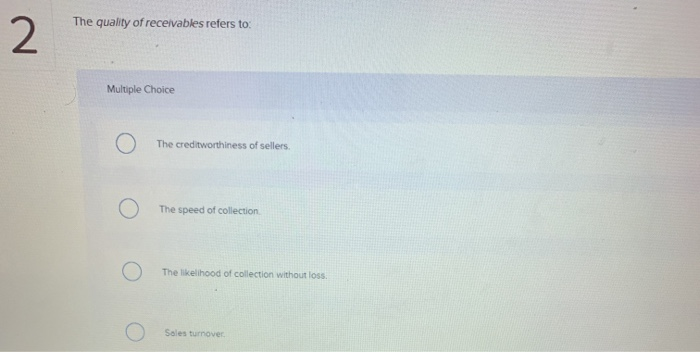
The Quality Of Receivables Refers To
Ever wondered why some businesses seem to thrive while others struggle, even when they're selling the same amazing products? Or perhaps you've thought about how your local coffee shop manages to keep brewing even when you pay with a credit card and they don't get the cash immediately? The secret often lies in something called the quality of receivables. It might sound like dry accounting jargon, but understanding it is like unlocking a secret power – a power that helps you understand the financial health of businesses (and even your own finances!).
So, what exactly is the quality of receivables? Simply put, it refers to the likelihood that a company will actually collect the money it's owed. Think of it this way: a bakery sells 100 cupcakes on credit, promising payment in 30 days. Those promised payments are their receivables. But what if 20 customers forget, delay, or simply can't pay? The "quality" of those receivables just went down! High-quality receivables mean a company is likely to get paid, while low-quality receivables suggest trouble is brewing. A company with excellent receivables is efficient in collecting payment for goods or services sold to clients on credit. This is usually from clients with high credit scores and a past history of paying debts in a timely manner.
The purpose and benefits of understanding receivables quality are significant. For businesses, it's all about cash flow. Predictable and reliable cash flow allows companies to invest in growth, pay employees, and generally keep the lights on. Monitoring receivables quality helps them identify potential problems early and take corrective action, like tightening credit policies or offering early payment discounts. For investors, understanding receivables quality is crucial for assessing the financial stability of a company. A company drowning in bad debt might look profitable on paper, but if it can't collect the money, it's heading for trouble. A company that is unable to collect on receivables may indicate a business is not using correct lending procedures, or have a large number of unreliable customers. It can also indicate poor cash flow within the business, as it is not consistently receiving funds.
Must Read
But receivables quality isn't just for business gurus! Think about lending money to a friend. You're essentially creating a receivable. Assessing the quality of that receivable involves considering your friend's history of repaying loans (their "credit score," if you will!) and their current financial situation. In education, business students learn about analyzing a company's accounts receivable to determine whether it is a worthwhile company to invest in. For example, if a company has an excessively high amount of uncollected receivables, the student would learn that the company is at a high risk for bankruptcy or debt.
So, how can you explore this topic further? Start by looking at the financial reports of publicly traded companies. Pay attention to their "allowance for doubtful accounts" – this is an estimate of the receivables they don't expect to collect. Compare that figure to their total receivables. A high allowance suggests lower quality receivables. You can also practice by observing real-world scenarios. Notice how different businesses handle credit. Does a small business allow anyone to buy on credit, or are they selective? These observations can help you develop a practical understanding of the impact of receivables quality on business success. By understanding the importance of receiving debts, this can lead to more responsible and efficient spending and lending.