
The Primary Function Of An Axon Is

Alright, gather 'round, gather 'round! You wanna know about axons, huh? Specifically, what these little guys are really all about? Think of me as your friendly neighborhood brain explainer, minus the lab coat and questionable social skills (mostly!).
Now, imagine your brain is like a super-complicated, intergalactic telephone exchange. Seriously, way more complex than whatever AT&T is currently doing. You’ve got billions of tiny operators in there, all chatting away, gossiping about everything from your favorite flavor of ice cream (mine’s pistachio, fight me!) to the urgent need to pull your hand away from a hot stove.
Those operators? Those are your neurons, or brain cells. And axons? Well, they’re basically the phone lines connecting all these chatty neurons together. But really fancy phone lines. Like, fiber-optic cable that runs on pure thought and a dash of electricity. Try getting that from Verizon!
Must Read
The One Job Axons Were Born To Do: Passing the Message
So, what's the primary function? What’s their raison d'être, their reason for existing? Drumroll please… (imagine me actually drumming on the table here)… It’s to transmit information! Shocking, I know. You were expecting them to knit sweaters? Maybe perform interpretive dance?
Think of it this way: your brain gets an idea. “Ooh, that pizza looks tasty!” This idea, or signal, starts as a tiny electrical blip in one neuron. Now, that neuron needs to tell all the other neurons involved in eating the pizza – the ones controlling your arm, your mouth, your stomach's eagerness. That’s where the axon comes in. It’s like the Pony Express rider, only instead of carrying mail on horseback, it’s ferrying an electrical signal along its length.
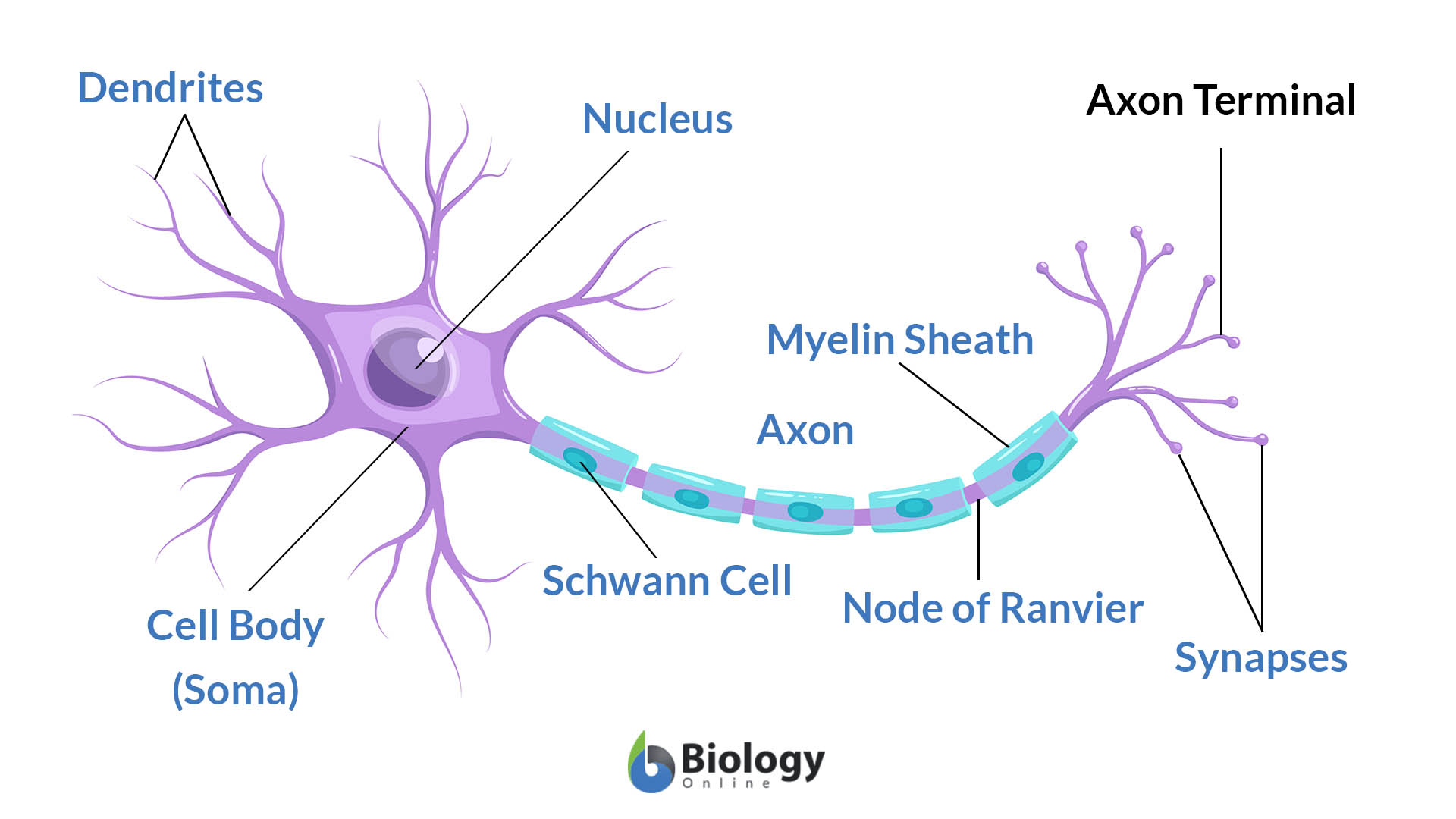
This electrical signal, by the way, is called an action potential. Sounds kinda like a superhero power, doesn't it? "Action Potential Man! He can transmit signals across vast distances in milliseconds!" (Hollywood, call me!).
Here's the mind-blowing part: these signals can travel at speeds up to 268 miles per hour! That's faster than a Formula One race car! So next time you stub your toe and scream, remember that pain signal is blazing its way to your brain faster than you can say "ouch!".

Axons can vary wildly in length. Some are tiny, connecting neurons that are right next door to each other. Others, like the ones that run from your spinal cord to your toes, are massive. I'm talking several feet long. Imagine the tiny electrical signal making that journey! It’s like sending a text message across the country and hoping it arrives with all the emojis intact.
Myelin: The Axon's Awesome Insulation
Now, you might be thinking, "Wait, wouldn't that signal just... fade out over such a long distance? Like when your Wi-Fi gets weak when you're too far from the router?" Great question! And the answer involves something called myelin.
Myelin is a fatty substance that wraps around the axon like insulation around an electrical wire. Think of it as a super-efficient, biological version of bubble wrap. It prevents the electrical signal from leaking out and allows it to travel much faster. And faster is always better, especially when it comes to reacting to danger (like, say, a rogue squirrel trying to steal your picnic lunch).
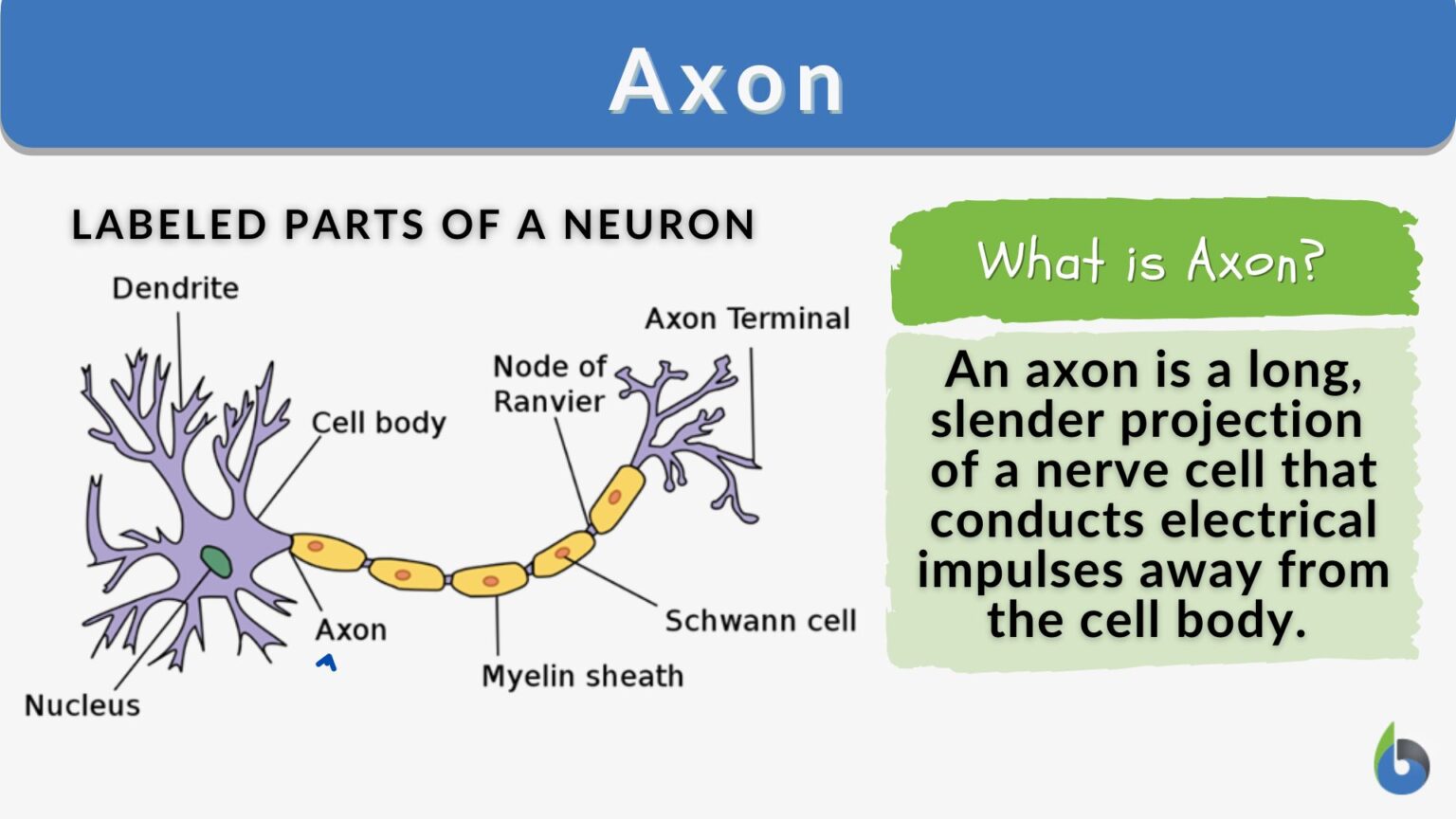
Interestingly, certain diseases, like multiple sclerosis (MS), damage the myelin sheath. This can slow down or even block the transmission of signals along the axons, leading to a variety of neurological problems. It’s like trying to make a phone call with a frayed and damaged phone line. You might get through, but it’s going to be a scratchy, unreliable mess.
Synapses: The Axon's Grand Finale
Okay, so the electrical signal has zipped along the axon, protected by its myelin sheath. Now what? It's showtime! The axon ends at a special junction called a synapse. This is where the axon meets another neuron (or a muscle cell, or a gland cell). But they don't actually touch!
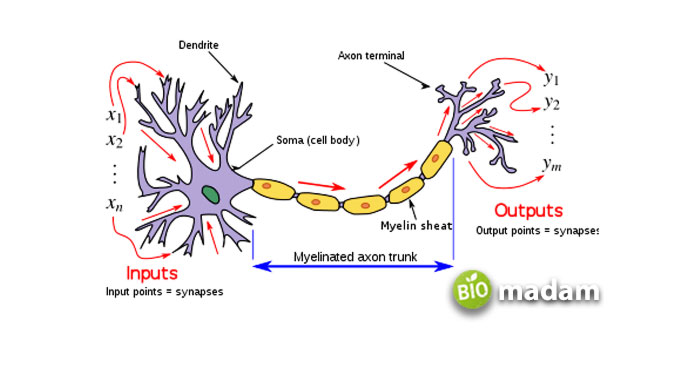
Instead, the electrical signal triggers the release of chemical messengers called neurotransmitters. These neurotransmitters diffuse across the tiny gap between the cells and bind to receptors on the receiving cell, essentially passing the message along. It’s like handing off a baton in a relay race, except the baton is a tiny vial of brain chemicals and the runners are neurons.
So, to recap: Axons are the brain's communication highways. Their primary function is to transmit electrical signals (action potentials) from one neuron to another. Myelin helps them do it faster and more efficiently. And synapses are the final destination, where the message is passed on to the next recipient.
And there you have it! The thrilling, edge-of-your-seat tale of the axon! I hope you found that entertaining and informative. Now, if you'll excuse me, I hear a pizza calling my name... and my axons are already firing away, sending signals to my mouth!