
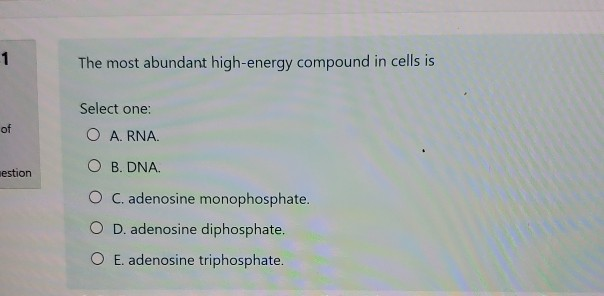
The Most Abundant High Energy Compound In Cells Is
So, picture this: I'm at this café, right? Buzzing with people, the smell of coffee is assaulting my senses in the best way possible, and I'm eavesdropping on a conversation at the next table. Okay, maybe not eavesdropping, more like… acoustically enhanced listening. Anyway, these two are going on about… cellular energy. Riveting stuff, I know.
But it got me thinking. What is the rockstar of cellular energy? The VIP pass holder to the cellular rave? It's not what you think. It’s not coffee (sadly). It's not even pizza (even sadder).
Prepare yourselves, because the answer is… (drumroll please)… ATP!
Must Read
Yes, Adenosine Triphosphate. Sounds like a villain in a sci-fi movie, I know. But trust me, ATP is the ultimate good guy. Or rather, the ultimate good compound. It’s the most abundant high-energy compound in cells. It's like the cell's personal battery pack, constantly being charged and discharged.
ATP: The Cell's Currency
Think of ATP as the cell's currency. You can't buy cellular processes with "good vibes" or "positive thinking" (although those help!). You need ATP. To move muscles? ATP. To transport molecules across membranes? ATP. To synthesize proteins? You guessed it – more ATP! It’s basically the tiny, molecular equivalent of a universal credit card.
Now, you might be asking, “Okay, so it’s important. But what is it, exactly?” Well, ATP is a molecule made up of adenosine (a combination of adenine and ribose) and three phosphate groups. These phosphate groups are like tightly coiled springs, just bursting with potential energy. Seriously, if you could somehow harness the energy from all the ATP in your body at once... well, you'd probably explode. Please don't try it. I am not responsible for any explosions.
How ATP Works: The Energy Release
The magic happens when one of those phosphate groups is broken off. This process, called hydrolysis, releases a whole lotta energy. It’s like snapping a rubber band that’s been stretched to its absolute limit. POW! Energy everywhere!
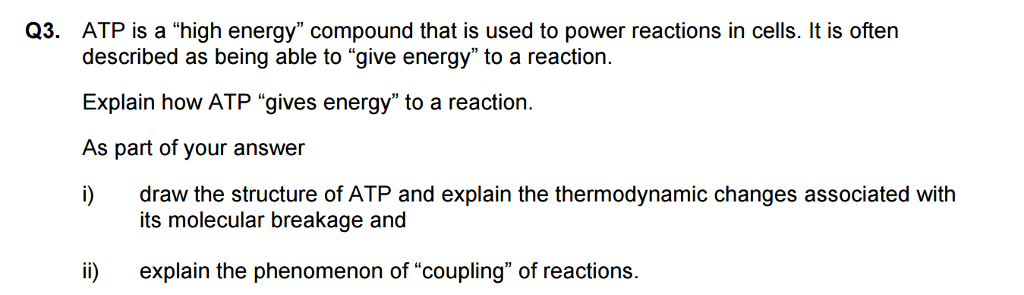
This energy is then used to power all sorts of cellular activities. The remaining molecule, now with only two phosphate groups, becomes ADP (Adenosine Diphosphate). ADP is basically ATP after it's spent some money. It needs to be recharged, which is where the mitochondria (the powerhouse of the cell!) come in. They're like the cell's personal charging stations.
The Amazing Cycle of ATP
And here’s the truly mind-blowing part: this whole process is a cycle! ATP gets broken down into ADP, releasing energy. ADP then gets recharged back into ATP, ready to do it all again. It’s like a tiny, tireless energy machine, constantly working to keep your cells humming. In fact, a single ATP molecule goes through this cycle thousands of times a day! Think about that next time you’re feeling tired. Your ATP is working overtime!
Fun fact: Your body recycles its own weight in ATP every day! Yeah, read that again. Your body recycles the equivalent of you in ATP daily! That's some serious energy efficiency right there. Imagine trying to recycle yourself every day. You'd be exhausted.
![[ANSWERED] A high energy compound that takes part in most energy - Kunduz](https://media.kunduz.com/media/sug-question-candidate/20230217054546898285-4988684.jpg?h=512)
Think of it this way: you wouldn't drive a car without gasoline, right? Well, your cells can't function without ATP. And just like you need to fill up your gas tank regularly, your cells need to constantly replenish their ATP supply. That’s why you need to eat! Food provides the raw materials your cells need to create more ATP. It’s all connected!
Why You Should Care About ATP
So, why should you care about this tiny, molecular energy currency? Because without it, you wouldn't be able to do anything. You wouldn't be able to breathe, think, move, or even read this article! ATP is the fuel that powers your entire existence.
The next time you're feeling energetic, thank ATP. And maybe treat yourself to a little something special. After all, you're basically a walking, talking, ATP-powered machine. You deserve it!
Now, if you'll excuse me, all this talk about cellular energy has made me hungry. I'm off to find some ATP-replenishing pizza. Because even scientists need a little cellular fuel now and then.
Disclaimer: Eating pizza will not directly increase your ATP levels, but it will provide your body with the nutrients it needs to create more ATP. Also, I am not a doctor. Don't take medical advice from a guy at a café. Unless he's a doctor at a café. Then maybe.