The Identity Of An Atom Is Determined By

Have you ever looked at a periodic table and wondered what makes gold, well, gold? Or why carbon is so different from oxygen? It all boils down to something incredibly fundamental: the identity of an atom. Understanding this isn't just for scientists in lab coats; it's actually pretty cool and surprisingly useful in everyday life. From understanding nutrition labels to knowing why your phone works, the atom's identity plays a role!
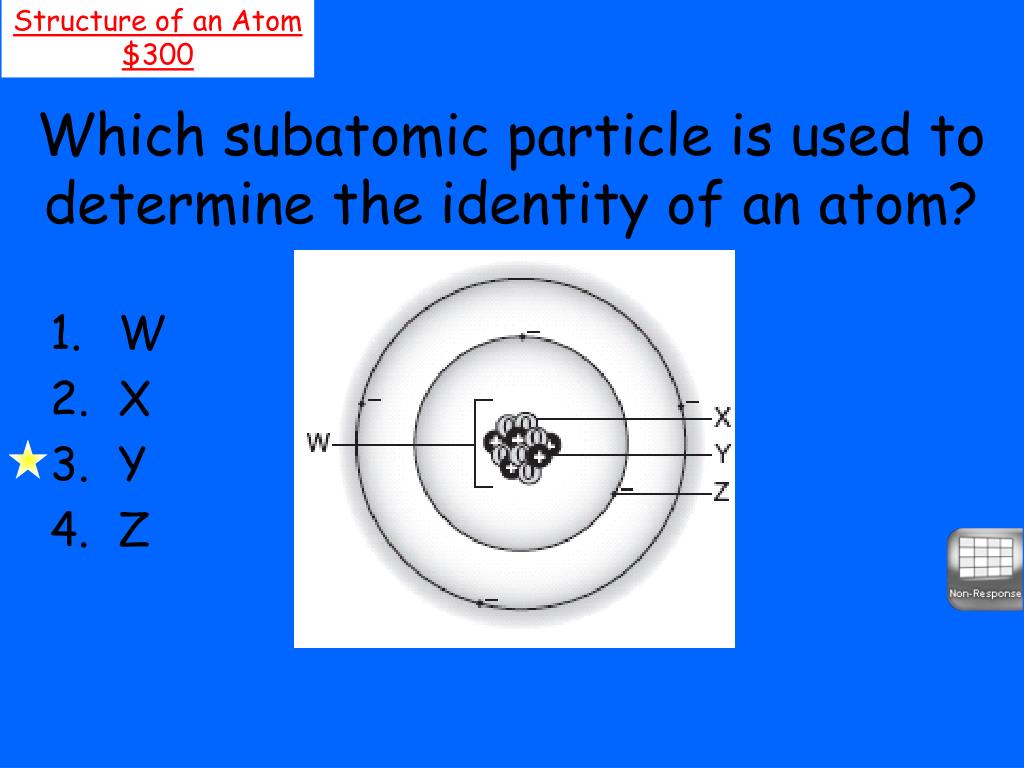
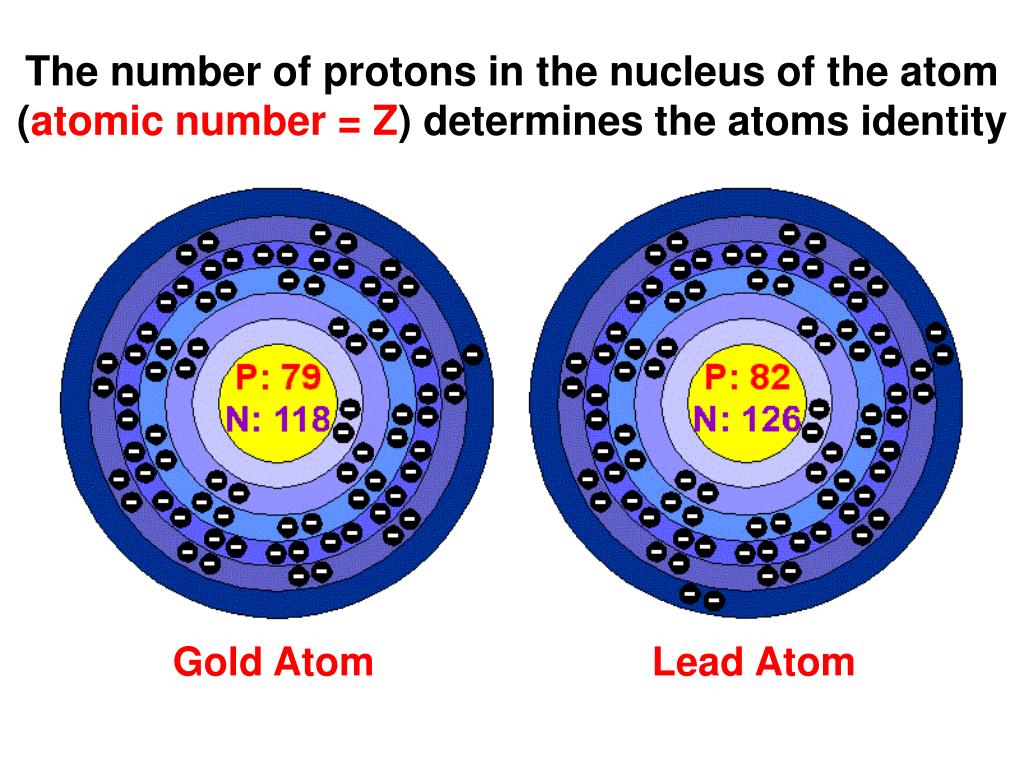
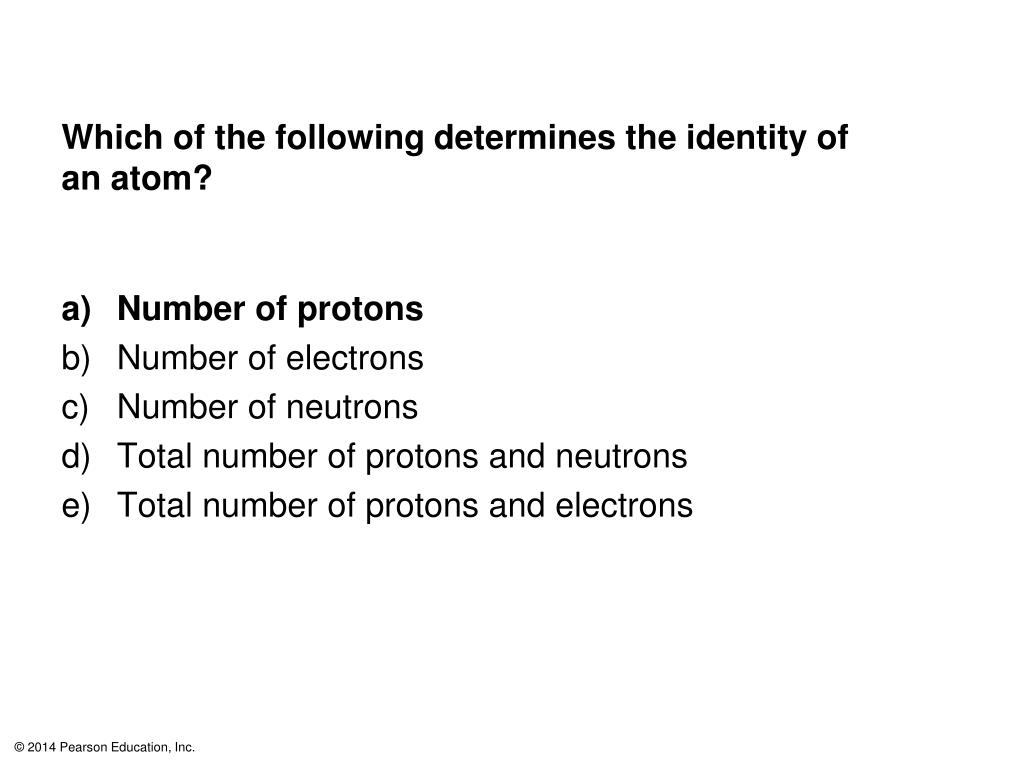
So, what exactly determines what an atom is? The answer is its number of protons. That's it! This number is so important, it's called the atomic number. Every atom of a particular element has the same number of protons. For example, every single hydrogen atom in the universe has one proton. Every single carbon atom has six protons. Change that number, and you change the element!
Why is this useful? Let's break it down for different audiences:
Must Read
- Beginners: Thinking about elements like LEGO bricks, each with a specific number of studs (protons). Knowing this basic building block helps you understand how things are put together. It's the ABCs of chemistry!
- Families: Want to explain why diamonds (pure carbon) are so different from the graphite in your pencil (also pure carbon, but arranged differently)? Knowing they both have six protons, but the arrangement matters, opens up a world of fascinating conversations about molecular structure!
- Hobbyists (gardeners, cooks, etc.): Understanding that plants need nitrogen (7 protons) and phosphorus (15 protons) to thrive, allows you to make informed decisions about fertilizers and soil composition. In the kitchen, understanding that salt is sodium chloride (sodium has 11 protons, chlorine has 17 protons) can help you appreciate the chemical reactions that happen while cooking!
Let's look at some examples. Helium, the stuff that makes balloons float, has two protons. Iron, which makes up the Eiffel Tower and is vital for your blood, has 26 protons. Uranium, used in nuclear power (and unfortunately, weapons), has a whopping 92 protons. The bigger the number of protons, generally, the heavier and more complex the atom.
Variations exist in the number of neutrons an atom has. These are called isotopes. Isotopes of the same element have the same number of protons (same identity!), but different numbers of neutrons. Carbon-12 (6 protons, 6 neutrons) and Carbon-14 (6 protons, 8 neutrons) are both carbon, but Carbon-14 is radioactive and used for dating ancient artifacts.
.jpg)
Want to dive deeper? Here are a few practical tips to get started:
- Explore the Periodic Table: Spend some time looking at a periodic table online or in a textbook. Notice how the elements are arranged by atomic number.
- Watch Science Videos: There are tons of excellent videos on YouTube and other platforms that explain atomic structure in a simple and engaging way.
- Read Science Articles: Look for articles on popular science websites that discuss elements and their properties.
- Build an Atom Model: Use candies or building blocks to create a model of an atom. It's a fun way to visualize the structure!
Understanding that the identity of an atom is determined by its number of protons opens a door to a deeper appreciation of the world around us. It's not just abstract science; it's a fundamental principle that governs everything from the air we breathe to the stars in the sky. So, embrace the curiosity, explore the elements, and enjoy the fascinating journey into the world of atoms!