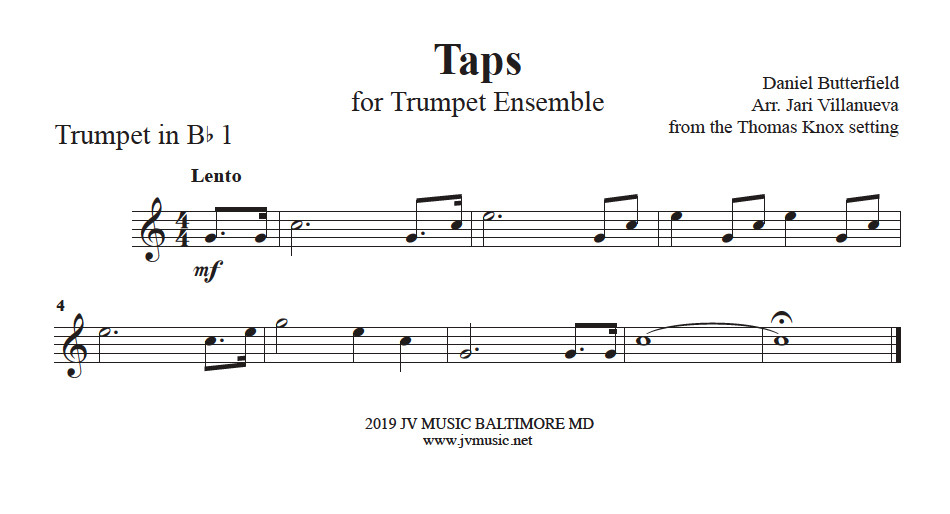
Taps Sheet Music For Trumpet

So, you're looking to learn "Taps" on the trumpet? Awesome choice! This isn't just another tune; it's a piece of American history, a poignant melody woven into the fabric of remembrance. Whether you're a seasoned pro or just picking up the horn, learning "Taps" is a rewarding experience. And guess what? We're here to make it as smooth as a perfectly polished trumpet valve.
Why "Taps" Matters
Let's dive a little deeper. "Taps" isn't just notes on a page; it's a symbol. It's played at military funerals, memorial services, and even at the end of the day at many military bases. Think of it as a sonic salute, a powerful, wordless expression of respect and gratitude.
Believe it or not, the tune we know as "Taps" evolved from a bugle call used during the Civil War. Union General Daniel Butterfield adapted an earlier call to create a more melodic and dignified farewell. Talk about an improvisation that stood the test of time!
Must Read
Finding the Right Sheet Music
Okay, let's get practical. Where do you find "Taps" sheet music for the trumpet? The good news is, it's readily available! Here's a breakdown:
- Online Resources: Websites like Musicnotes.com, IMSLP (the Petrucci Music Library), and 8notes.com offer free and paid versions. Look for editions specifically arranged for the trumpet in B♭.
- Sheet Music Retailers: Your local music store is a goldmine! You can browse physical copies and even get advice from experienced musicians.
- Apps: Several music learning apps include "Taps" in their repertoire. These often come with features like adjustable tempos and backing tracks, great for practice.
Pro Tip: When downloading online sheet music, make sure it's legible! A blurry or poorly formatted copy will only lead to frustration. Look for PDFs with clear notation.

Tips for Mastering "Taps"
Now for the fun part: playing! Here are a few tips to help you nail it:
- Start Slow: Don't rush! "Taps" is about feeling, not speed. Practice slowly and deliberately, focusing on accuracy and tone.
- Breathing is Key: Smooth, controlled breathing is essential. "Taps" requires long, sustained notes, so practice your breath control exercises.
- Listen and Learn: Listen to recordings of "Taps" played by skilled trumpeters. Pay attention to their phrasing, dynamics, and overall interpretation.
- Record Yourself: Hearing yourself play can be eye-opening (or ear-opening, rather). It helps you identify areas for improvement.
- Consider a Teacher: If you're struggling, don't be afraid to seek guidance from a trumpet teacher. Even a few lessons can make a big difference.
Think of Miles Davis's minimalist approach. It’s not about flashy solos, but about conveying emotion with simplicity and clarity. That's the spirit of "Taps."
Beyond the Notes: The Emotional Connection
More than just hitting the right notes, "Taps" is about conveying emotion. It's about connecting with the history, the sacrifice, and the sense of loss that the music represents. Before you play, take a moment to reflect on the meaning of the piece. Close your eyes, breathe deeply, and let the emotion flow through you.

Imagine you're playing for a veteran, a family member of the fallen, or even just for yourself in quiet contemplation. Let that purpose guide your performance.
Remember that iconic scene from the movie "From Here to Eternity," where Montgomery Clift's character, Robert E. Lee Prewitt, a bugler, refuses to play? It highlights the weight and responsibility associated with this piece.

Fun Fact: "Taps" is intentionally written in a way that it can be played even if the bugler isn't perfectly skilled. The simplicity is part of its power!
Bringing it Home
Learning "Taps" is a journey, not a race. It's about more than just technical proficiency; it's about connecting with a tradition, honoring a legacy, and expressing a deep sense of respect. As you practice, remember the power of music to transcend words and to touch the hearts of those who listen.
Even beyond the context of military service, "Taps" can remind us to pause and appreciate the simple things, to remember those who came before us, and to be grateful for the peace we enjoy. It's a lesson in humility, remembrance, and the enduring power of a single, heartfelt melody. So, keep practicing, keep feeling, and keep sharing the beauty of "Taps" with the world.