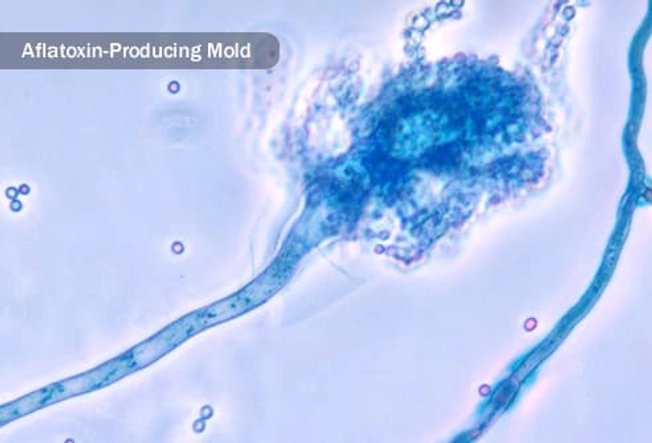
Substance Created By Mold That Damages The Liver

Have you ever noticed that deep, earthy aroma coming from a well-aged cheese or a perfectly brewed sake? That unique flavor profile, that complex character – sometimes, the most interesting things in life come from unexpected sources. And sometimes, those sources can be a little... risky. Let's talk about something that's been gaining popularity in a niche creative circle, despite its potentially harmful nature: aflatoxins, produced by certain molds that, unfortunately, can damage your liver. Yes, you read that right.
Now, before you run screaming for the nearest sanitizing wipe, hear me out. While ingesting aflatoxins is never recommended and can be incredibly dangerous, the conceptual application of understanding how they are formed, and how other fungal growths influence their environment, can be a fascinating (and purely theoretical) exercise for artists and hobbyists. Think of it as a really, really, REALLY abstract art class in microbiology.
For artists, the appeal lies in exploring the themes of decay, transformation, and the beauty of the unseen. Imagine creating visual art inspired by the intricate patterns of mold growth, the vibrant (but dangerous) colors that certain fungi exhibit, or the ephemerality of organic materials. You might explore styles reminiscent of abstract expressionism, mimicking the chaotic yet strangely organized growth patterns of mold. Or, you could delve into hyperrealism, meticulously rendering the minute details of fungal structures. Subjects could range from decaying fruit still lifes to imagined landscapes colonized by fantastical molds.
Must Read
Hobbyists, particularly those interested in mycology or fermentation (in a completely safe and controlled context, of course!), can use this theoretical knowledge to better understand the environments they're working with. They can learn about the conditions that promote fungal growth, the interactions between different types of fungi, and the ways in which these organisms transform organic matter. This can be incredibly useful for optimizing fermentation processes (think kombucha, sourdough bread – processes where safe molds/yeasts are encouraged) and preventing unwanted contamination.
Important Disclaimer: We are absolutely NOT advocating for growing mold to create art. This is purely a thought experiment. Do not attempt to cultivate aflatoxin-producing molds at home. Instead, focus on drawing inspiration from their aesthetic and the scientific understanding of their formation. Consider studying images of mold under a microscope, experimenting with textures and colors that evoke the idea of decay, or creating abstract paintings that represent the invisible world of microorganisms.
Why is this enjoyable? Because it's about pushing boundaries, exploring the uncomfortable, and finding beauty in the unexpected. It's about taking something that is generally considered repulsive and finding a way to appreciate its complexity and its role in the natural world. It's a reminder that even in the darkest corners, there can be something fascinating to discover – as long as you keep a safe and respectful distance.