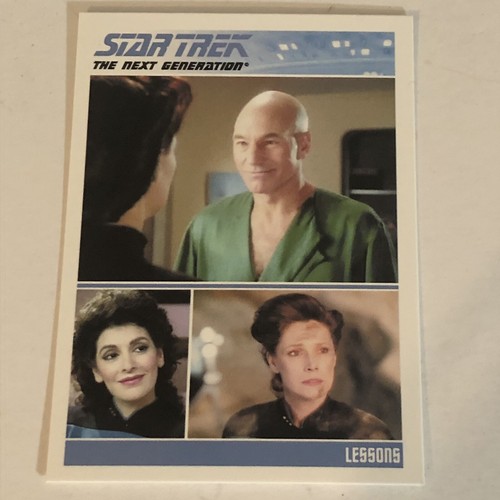
Star Trek The Next Generation Trading Cards Value

Alright, gather 'round, Trekkies and casual observers alike! Let's talk about something near and dear to my heart (and possibly gathering dust in your attic): Star Trek: The Next Generation trading cards. Remember those? Little cardboard rectangles promising untold riches and the thrill of owning a piece of Picard's forehead? Yeah, those.
The burning question, the one that keeps you up at night tossing and turning in your Starfleet-themed pajamas: are they worth anything? Well, buckle up, because the answer is… it's complicated. Like a Romulan cloaking device hiding a Ferengi love affair.
Let's start with the harsh reality. Most of your run-of-the-mill, common-as-replicator-rations TNG cards are probably worth about as much as a used PADD. That's right. Pennies. You could probably wallpaper your bathroom with them and still have enough left over to insulate your cat's spaceship-shaped bed. Don't quit your day job just yet, Wesley.
Must Read
Now, before you fling your collection into the nearest black hole (or donation bin), there's still a glimmer of hope. A faint, shimmering, warp-drive-fueled glimmer. Certain cards, my friends, can actually fetch a decent price. But finding them is like finding a tribble who doesn't reproduce: rare.
So, What Makes a TNG Card Valuable?
Glad you asked! It’s not as simple as "shiny = $$$," although shininess certainly helps. Here are a few factors that influence the price of those little cardboard squares of nostalgia:

- Rarity: This is the big one. Limited edition cards, chase cards, and cards that were difficult to pull from packs are generally worth more. Think autograph cards, sketch cards, and certain foil variants. The rarer, the better, like a Ferengi Rule of Acquisition that actually makes sense.
- Condition: Just like your grandma's antique tea set, condition is key. A card that's been lovingly preserved in a binder, away from sunlight and the grubby hands of sticky-fingered children, is going to be worth more than one that's been chewed on by a pet targ (or, you know, just carelessly stored). Look for sharp corners, a clean surface, and no major creases. Mint condition is the holy grail.
- The Character: Picard is always going to be a big draw. Data, too. Riker’s beard? Maybe not so much. Unless it's a holographic beard. Then we're talking.
- Autographs: An autograph from Patrick Stewart? Cha-ching! Marina Sirtis? Definitely valuable. An autograph from that random background character who sneezed during a crucial scene? Eh… maybe if you find the right collector who has a very specific sneezing fetish. (Hey, no judgement.)
- The "Ooh, Shiny!" Factor: Foil cards, holofoils, prism cards… anything that sparkles and catches the light tends to be more desirable. Humans, we're easily amused by shiny things. Just ask a magpie. Or a Ferengi.
Important Note: Getting your cards graded by a professional grading service (like PSA or Beckett) can significantly increase their value. They'll assess the card's condition and give it a numerical grade, which provides buyers with confidence in the card's authenticity and quality. It's like getting your dilithium crystals certified by a reputable space mechanic.
Okay, Give Me Some Examples!
Alright, alright, you want specifics! I get it. You want to know if you can finally afford that self-sealing stem bolt you've been eyeing. While I can't guarantee your early retirement, here are a few examples of TNG cards that have sold for decent money:

- Autograph Cards: High-grade autograph cards from principal cast members, especially Patrick Stewart, can sell for hundreds, even thousands, of dollars. Imagine the possibilities! You could buy, like, ten stem bolts!
- Certain "Chase" Cards: Some insert sets, like the "Q Continuum" cards from the SkyBox series, are highly sought after. They featured those pesky Q.
- Error Cards: Occasionally, printing errors can make a card more valuable. It's like finding a glitch in the Matrix… but instead of dodging bullets, you're potentially making bank.
Pro Tip: Use online resources like eBay, COMC (Check Out My Cards), and PSA's price guide to research the value of your specific cards. See what similar cards have sold for recently. Knowledge is power, my friend. And power is… well, you know.
The Bottom Line
So, are your TNG trading cards a potential goldmine or a nostalgic trip to the recycling bin? The answer, as always, is “it depends.” Do your research, assess the condition of your cards, and manage your expectations. You might not be able to buy your own starship with the proceeds, but you might be able to treat yourself to a fancy synthehol cocktail. And that, my friends, is a victory worth celebrating.
Now, if you'll excuse me, I have a sudden urge to dig through my old collection. Wish me luck! And may the Force… I mean, live long and prosper!