South Africa Size Compared To Us
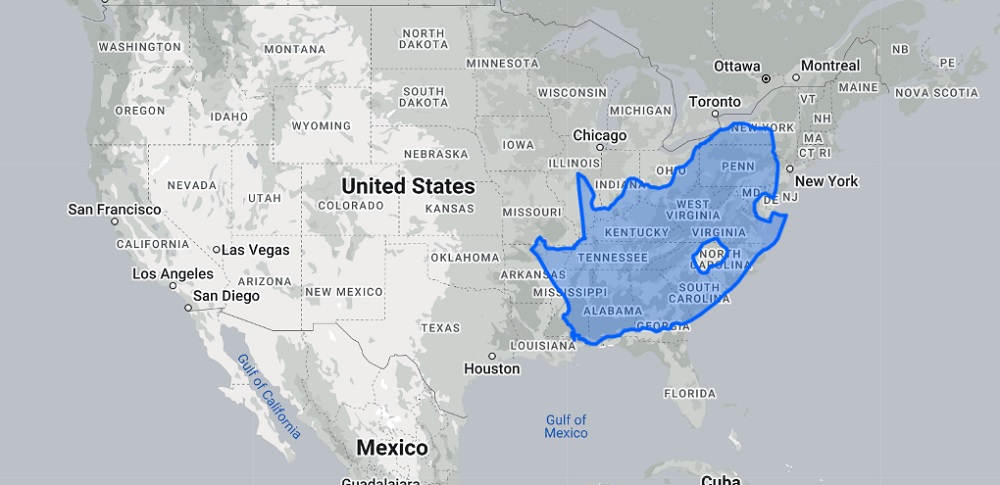
Ever wondered how different countries stack up against each other in size? It's more than just a fun fact; understanding relative sizes helps us grasp global scales, appreciate geographical diversity, and even make sense of world events. Let's take a closer look at South Africa and the United States – a comparison that reveals some fascinating insights!
Why bother comparing countries by size? Well, for starters, it gives us perspective. We often hear about economic powerhouses, population densities, or natural resources, but without understanding the physical space they occupy, it's hard to truly appreciate their significance. Think about it: if a country has vast natural resources spread across a huge area, that presents very different logistical challenges than if those same resources were concentrated in a small space. Size really matters!
So, how do South Africa and the United States compare? The United States is significantly larger. To be precise, the U.S. covers approximately 9.8 million square kilometers, while South Africa comes in at around 1.2 million square kilometers. This means the U.S. is roughly eight times the size of South Africa! Imagine fitting eight South Africas into the borders of the United States. That's a pretty significant difference.
Must Read
This difference in size has all sorts of implications. For example, the U.S. boasts a wider range of climate zones, from arctic tundra in Alaska to tropical rainforests in Hawaii. South Africa, while incredibly diverse, has a more limited range of climates, primarily characterized by semi-arid and subtropical conditions. This climatic variation in the U.S. supports a broader spectrum of agricultural production and ecosystems.
Understanding these size differences is useful in many areas. In education, it can help students visualize geography and develop a better sense of global proportions. Imagine teaching about the Great Depression and the Dust Bowl in the U.S. Knowing the sheer scale of the affected area makes the human tragedy feel even more profound. Similarly, understanding the size of South Africa helps students appreciate the challenges and opportunities associated with managing its diverse landscapes and natural resources.
In daily life, understanding these relative sizes can improve your understanding of the news. When you hear about a natural disaster affecting a certain area, knowing its size in relation to a familiar place (like your home state or country) can help you grasp the magnitude of the event. It adds context and depth to your understanding.

So, how can you explore this further? It's easier than you think! Online tools like Google Maps allow you to overlay countries and compare their sizes visually. You can also use websites that provide side-by-side comparisons of various statistics, including area. Another fun activity is to look at maps of the U.S. and see if you can mentally "fit" South Africa into different regions. Could you fit it entirely within Texas? How about California and Oregon combined?
Ultimately, comparing the sizes of countries is a simple yet powerful way to broaden your understanding of the world. It’s a journey of discovery that can enhance your appreciation for global diversity and make you a more informed global citizen. So, take a moment to explore the relative sizes of different countries. You might be surprised at what you discover! Start with South Africa and the U.S., and then see where your curiosity takes you.