
Smoke Detector Going Off For No Reason

Ah, the sweet symphony of silence... shattered by the piercing, ear-splitting shriek of your smoke detector. You jump, heart pounding, scanning the room frantically for any sign of a fire. But there's nothing. No smoke, no smell, no flames. Just that relentless, high-pitched scream. "What in the world?" you wonder, staring at the little white disk on the ceiling as if it's personally insulted you.
Sound familiar? We've all been there. That moment when your trusty guardian suddenly turns into a drama queen, going off "for no reason." It’s annoying, sure, but have you ever stopped to think about why this happens? And isn't it actually a little bit fascinating?
The Case of the Invisible Intruder: Dust!
Let's start with a common culprit: dust. Yep, those tiny specks of forgotten fluff floating around your home. Your smoke detector, especially an ionization-type, is basically a miniature, ultra-sensitive particle detector. It has two electrically charged plates and a small amount of radioactive material that ionizes the air between them, creating a tiny, steady electric current.
Must Read
When smoke particles enter this chamber, they disrupt that current, triggering the alarm. But guess what else disrupts that current? You guessed it – dust! Imagine a tiny snowstorm happening inside your detector. A big enough clump of dust can look just like smoke to our diligent little friend. It's not faulty; it's just a little too good at its job sometimes!
The Steamy Situation: Mistaken Identity
Ever had your smoke detector go off after a particularly steamy shower? Or while you're whipping up a storm in the kitchen, even though nothing's actually burning? This is another classic "no reason" scenario. Steam, believe it or not, can fool your smoke detector.
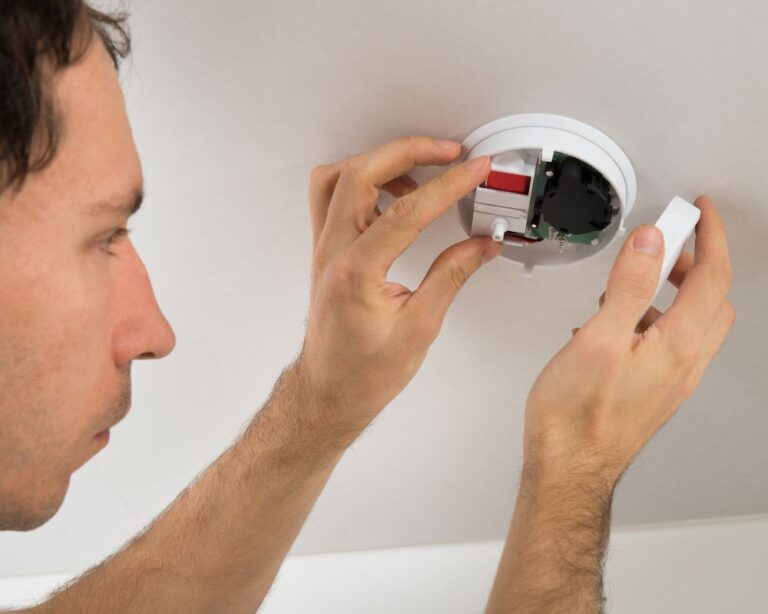
Many detectors, especially photoelectric ones, work by having a light source and a sensor. If smoke enters the chamber, it scatters the light into the sensor, setting off the alarm. Steam, with its dense water particles, can scatter light in a very similar way. It's like your detector is an overzealous bouncer, mistaking a harmless fog machine for a genuine threat. Annoying, perhaps, but also a testament to its incredible sensitivity, right?
The Critter Caper: Tiny Tourists
This one might make you a little squirmy, but sometimes the "reason" is incredibly small and very much alive. A tiny spider spinning a web inside the chamber, or an unsuspecting insect deciding to explore the cozy confines of your detector, can be enough to trigger an alarm.

Think about it: a spider web is a physical obstruction, and a bug fluttering around can mimic the presence of particles. It's like a tiny, unwanted tenant causing a huge ruckus. Our smoke detector isn't just looking for smoke; it's looking for anything out of the ordinary within its delicate sensing world. And a spider web definitely counts as "out of the ordinary"!
The Battery Blues: A Cry for Help
Okay, this isn't usually a full-blown alarm, but the insistent, sporadic chirp of a low battery is arguably even more frustrating because it happens at 3 AM and gives you jump scares. While it feels like it's going off "for no reason," it's actually your detector's way of sending an SOS. It's saying, "Hey! My power is fading, and I need juice to keep protecting you!"

This isn't a malfunction; it's a feature. It's a reminder that even these seemingly simple devices are constantly monitoring their own health, ensuring they're ready when you truly need them. It's a vigilant little robot asking for a snack!
Old Age Quirks: The Golden Years of Alarms
Just like us, smoke detectors don't last forever. Most have a lifespan of about 8-10 years. As they age, their internal components can degrade, sensors can become less reliable, and dust can accumulate permanently within the chamber. This can lead to what we call "nuisance alarms" – alarms that go off for truly unidentifiable reasons, often just because the device is at the end of its functional life.
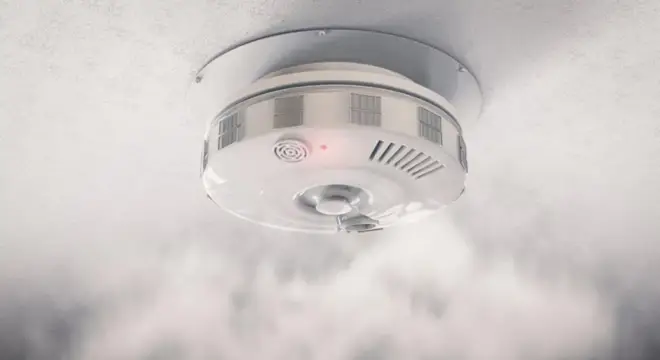
It's like an old car starting to make weird noises, or an ancient computer freezing up randomly. It’s not necessarily a fire; it’s just a sign that it’s time for a well-deserved retirement and a shiny new replacement.
So, What's the Takeaway?
Next time your smoke detector goes off "for no reason," instead of just grumbling, take a moment to appreciate the sophisticated little guardian on your ceiling. It's not being difficult; it's simply doing its job with an incredible level of precision and sensitivity. It’s an always-on watchman, diligently scanning its environment for even the slightest hint of trouble.
Those false alarms are a weird, noisy reminder of the invisible world our devices interact with – a world of tiny particles, water vapor, and microscopic critters. It prompts us to understand our homes and the technology within them a little better. And that, in itself, is pretty cool, don't you think?