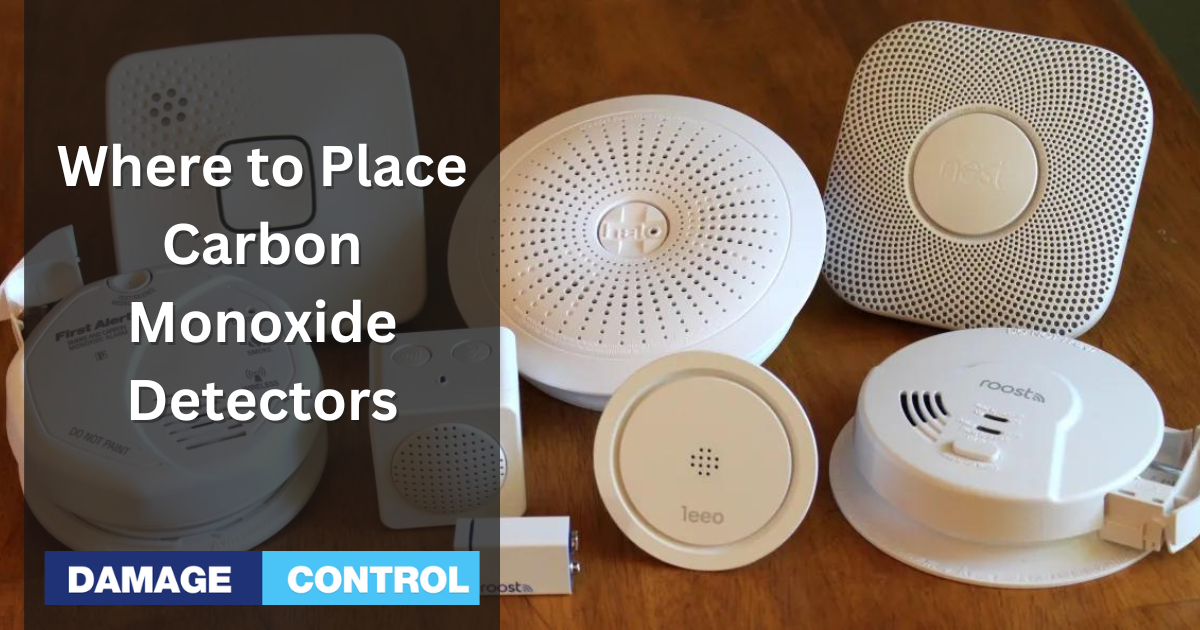
Should Carbon Monoxide Detector Be Placed High Or Low
Lisa Davis
Okay, let's talk about one of those nagging little questions that pops into your head when you're trying to be a responsible adult: "Where on earth do I put this thing?" We're talking about your Carbon Monoxide detector, of course! It’s not just a blinking gadget; it’s a tiny hero. But should this hero be perched high on a wall, like a watchful eagle, or hugging the floor, like a trusty guardian dog?
It’s a truly baffling riddle for many. You might think, "Well, smoke rises, so CO must too, right? High up it goes!" Or perhaps you’ve heard, "It's a heavy, deadly gas, so it must sink to the floor, where we breathe when we sleep!" Both sound perfectly logical, don't they? It's like a mini-mystery playing out in your living room, and everyone has a different theory.
The truth is, this little conundrum is more interesting than you might expect, and solving it is super important for keeping your home safe. It’s not about choosing between a ceiling fan and a dust bunny’s eye view. It's about understanding how this invisible, odorless danger actually behaves in your home.
First, let’s get acquainted with our invisible opponent: Carbon Monoxide, often called the "silent killer." It’s sneaky. You can't see it, smell it, or taste it. It's produced by burning fuels – think gas furnaces, stoves, fireplaces, cars in an attached garage. In small doses, it can make you feel unwell; in higher doses, it can be fatal. Scary stuff, but your detector is your superpower against it!
Now, back to the placement puzzle. Many gases have very distinct behaviors. Helium floats to the sky. Propane, being heavier than air, tends to pool low. But Carbon Monoxide is a bit of an outlier. It’s very, very similar in weight to the air we breathe. Technically, it’s slightly lighter than air, but here's the kicker: it doesn't behave like a hot air balloon, diligently rising to the ceiling, nor does it sink like a stone.
Importance Of Carbon Monoxide Detector Placement — Air Dynamics HVAC
Think of it like adding a tiny drop of food coloring to a glass of water. It doesn't instantly float to the top or sink to the bottom. Instead, it slowly, but surely, mixes throughout the entire glass. That's pretty much what happens with Carbon Monoxide in a room.
The air in your home isn't perfectly still. There are drafts, air currents from heating and cooling, and general movement. These forces are usually enough to ensure that CO, once released, will mix pretty evenly throughout a room. So, if it’s mixing everywhere, does placement even matter?
Yes, it absolutely does! And here's why the mystery of placement becomes truly special.
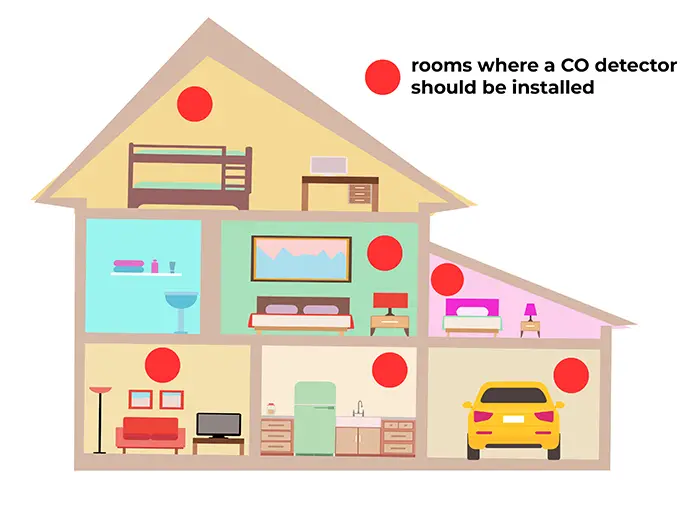
Where Should Carbon Monoxide Detectors Be Placed?
The Breathing Zone: Where You Live and Breathe
Since Carbon Monoxide spreads out, the most crucial factor for detector placement isn't really about its "weight" in a static sense. It’s about detecting it where it matters most: where you and your loved ones breathe.
Manufacturers often recommend placing CO detectors at chest height or eye level. Why? Because that’s typically where our noses and mouths are when we’re awake and moving around. It’s the "breathing zone." If you're asleep, your head might be lower, but the mixing effect usually means if there's CO in the room, it will be at all levels eventually.
Placing detectors too high might delay an alert, especially if the air circulation is poor or the leak is very slow. Placing them too low could mean they get bumped, covered by furniture, or affected by floor-level dust and debris. So, that middle ground, around five feet off the floor, often makes the most sense. It's a happy medium that accounts for human presence.
Should Carbon Monoxide Detectors Be Low at Carolyn Bevers blog
Your Home's Safety Map: Strategic Placement
So, instead of debating high or low, think about strategic placement. You want a detector:
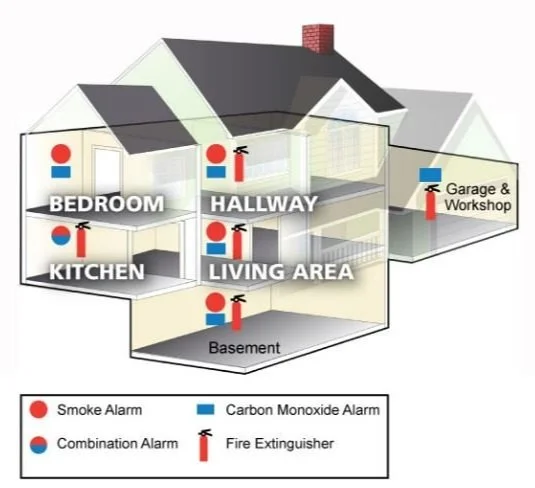
Near or in every sleeping area. If CO starts to build up while you're asleep, you want to know immediately.
On every level of your home, especially if you have multiple floors.
Near any appliance that burns fuel (furnace, water heater, gas stove, fireplace). Just not too close, as normal combustion can trigger nuisance alarms.
And definitely, if you have an attached garage, place one near the door leading into your living space.
But wait, there's one golden rule that overrides all the clever gas theories and breathing zone ideas:
Always, always, always follow the specific instructions that come with your CO detector!
Carbon Monoxide Detector Placement: A Helpful Illustrated Guide
Seriously, those engineers and safety experts who designed your device know its quirks and capabilities best. Different models might have slightly different ideal placements based on their sensors and how they are calibrated. So, crack open that little instruction booklet – it’s not just for packing lists!
Be a Home Safety Superhero!
So, the next time you look at that little device, remember it’s not just a simple sensor. It’s a guardian playing a subtle game of hide-and-seek with an invisible danger, strategically placed to protect you. The mystery isn't about where CO "goes," but about where you are and how best to catch it early.
This little piece of home safety knowledge is quite special, isn't it? It takes a seemingly simple question and reveals a practical, life-saving answer. Go on, check your detectors! Are they at the right height? Do you have enough of them? A quick check today can bring priceless peace of mind tomorrow. Be curious, be safe, and let those little heroes do their vital work!


.jpg?format=2500w)