
Reactive Power Formula In 3 Phase
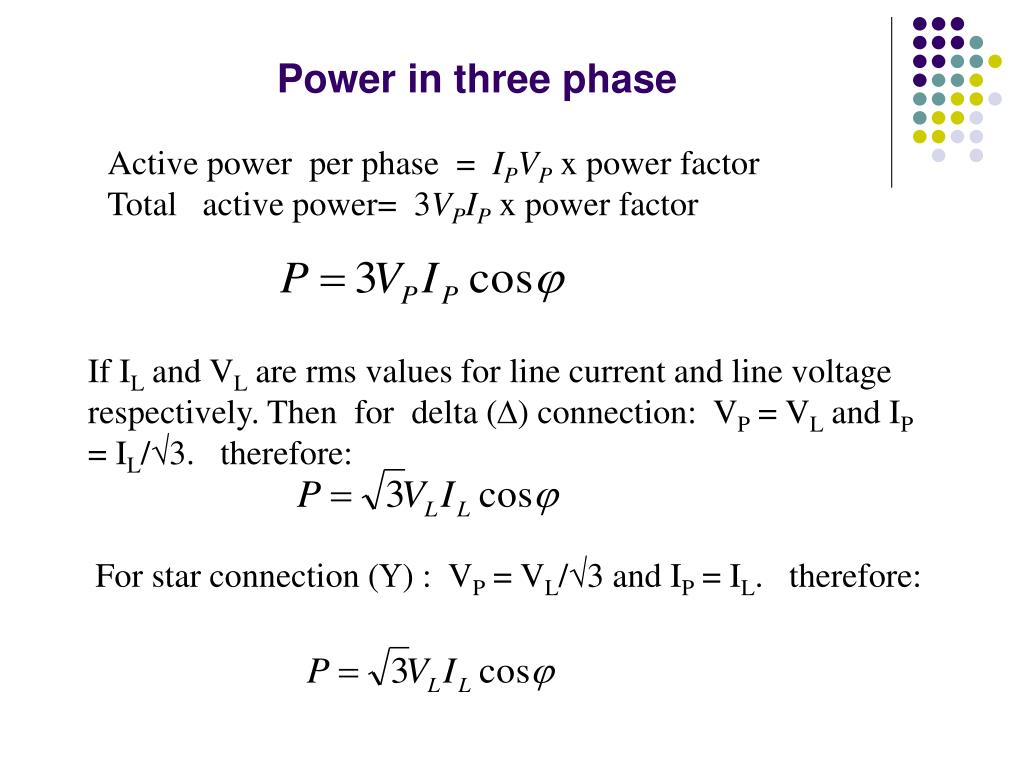
Okay, let's talk about reactive power in three-phase circuits. Buckle up, because even the name sounds like something out of a sci-fi movie. "Reactive Power! Engage!" It’s not as scary as it sounds, I promise. (Maybe.)
Now, before your eyes glaze over, I want to confess something. I think the whole concept of reactive power is… slightly dramatic. Bear with me. We're all friends here, right?
Think of electricity as trying to move a sofa. Active power, that's your burly friend who's actually lifting and carrying the sofa. Doing real work. Reactive power? That's the friend who's rocking back and forth, making a lot of noise, but not really helping to move the darn thing. Just… there.
Must Read
And in the world of three-phase power, this rocking friend gets even more… complicated. But also, arguably, more interesting. Because we need to calculate how much rocking is going on.
The Formula: A Necessary Evil?
Alright, let's face it. Nobody likes formulas. They're like brussel sprouts: supposedly good for you, but you’d rather have pizza. But, gotta do what you gotta do. So, here it is, the dreaded (but essential) formula for reactive power (often denoted as Q) in a balanced three-phase system:
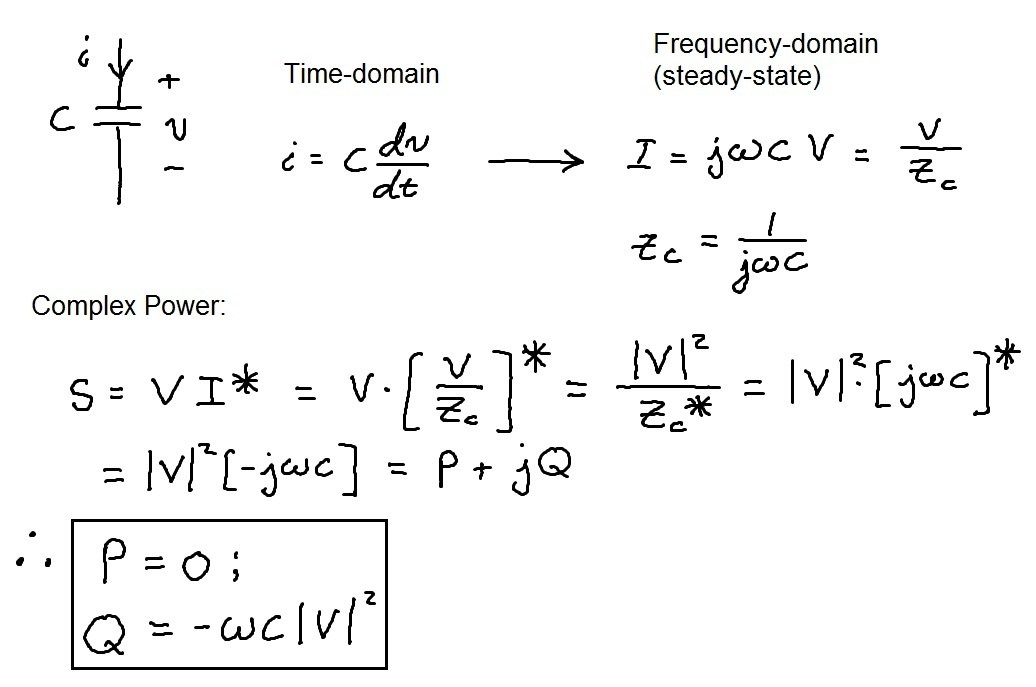
Q = √3 * VL * IL * sin(θ)
Whoa. Okay, let’s break that down before we all run screaming for the hills.
First, √3. That's the square root of three. Don't ask me why. It's just… there. Blame Pythagoras, or some other dead Greek guy.
Next, VL. That's the line voltage. Think of it as the voltage measured between any two of the three phases coming into your building. Like measuring the height of the sofa, phase to phase. Okay maybe that analogy is failing me. Let’s just move on.
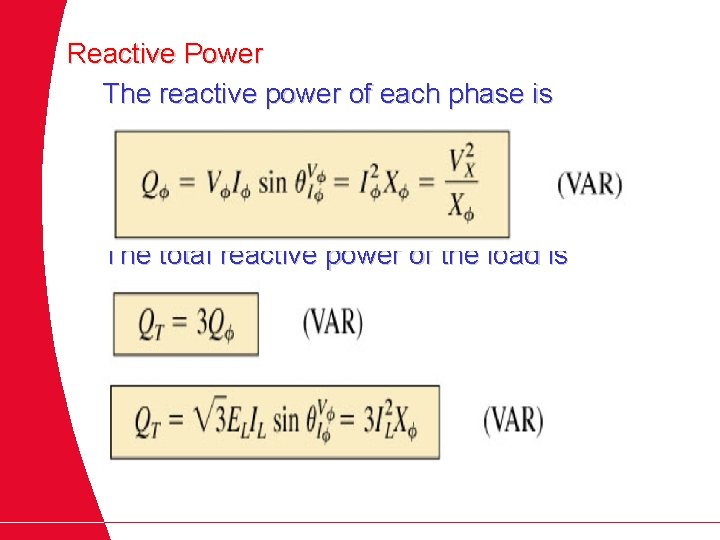
Then, IL. That’s the line current. How much electricity is flowing through each phase wire. Imagine how hard each phase is actually carrying current through the electrical circuit. High five!
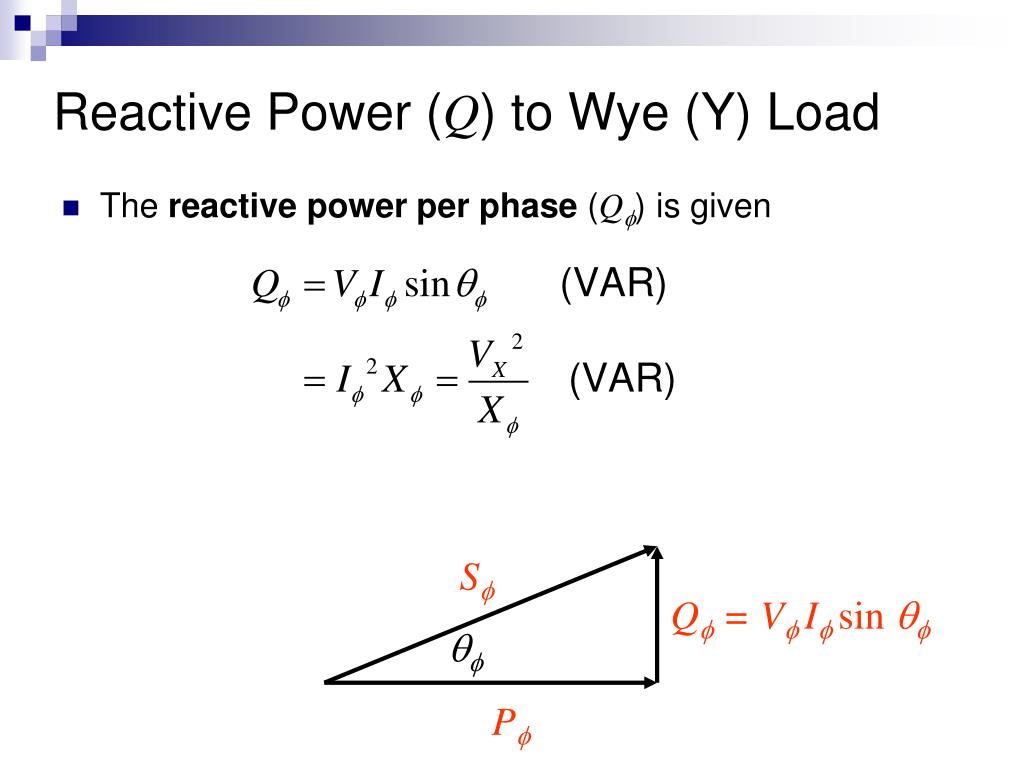
And finally, sin(θ). Ah yes, trigonometry strikes again! θ (theta) is the phase angle. Think of it as the angle between the voltage and the current waveforms. Sin(θ) just means we’re taking a specific trigonometric function of that angle. It essentially tells us how much the voltage and current are out of sync. The bigger the angle, the more reactive power we have.
See? Not so scary after all! Just a bunch of… symbols and numbers. And trigonometry. Okay, maybe still a little scary.

My Unpopular Opinion (Prepare to be Shocked!)
Okay, here's where I get controversial. I think we sometimes overcomplicate the importance of reactive power. Yes, it’s important for system stability. Yes, it can affect voltage levels. But sometimes, I think we treat it like the boogeyman under the bed.
Think of it this way: a little reactive power is like a little bit of seasoning in your soup. Too much, and it’s awful. But a little bit helps bring out the flavor. The goal is balance! Like all things in life.
And let's be honest, calculating it perfectly to the nth degree? Unless you're designing power grids for a living, probably not necessary. A good approximation is usually just fine.
Now, the power engineers are probably sharpening their pitchforks right now, ready to argue with me. And that’s okay! I love a good debate. But I stand by my statement. Reactive power is important, but sometimes, we need to take a chill pill and remember it’s not the end of the world.
So, the next time you hear someone talking about reactive power and throwing around that formula, take a deep breath. Remember the rocking sofa friend. And remember that a little common sense goes a long way. Even with trigonometry involved.
And hey, if all else fails, just blame it on Pythagoras.