
R410a Pressure Chart High And Low Side
Alright, picture this: you're at a café, sipping a lukewarm latte because, let's face it, your AC is acting up again. This time, instead of calling that suspiciously tanned "HVAC expert" who quotes prices higher than a giraffe's expectations, you're thinking, "Maybe, just maybe, I can understand this R410a business."
Well, friend, you've come to the right (virtual) café. Today, we're diving into the slightly intimidating, but ultimately understandable, world of R410a pressure charts. Don’t worry, it's not rocket science, unless your AC unit is powering a rocket… in which case, you probably have bigger problems.
Understanding the Two Sides of the Story
First things first, let's talk sides. We're not talking about which way to part your hair, but the high side and the low side of your AC system. Think of it like a hot dog – one end is plump (high pressure, like a well-fed dachshund), and the other is, well, less plump (low pressure, like a dachshund on a diet). Okay, maybe not the best analogy, but you get the picture!
Must Read
The high side is where the refrigerant is all hot and bothered, under immense pressure, and generally feeling like it needs a vacation to the Arctic. It's after the compressor has squeezed the living daylights out of it. This is where heat is rejected. The low side, on the other hand, is the chill zone. The refrigerant has cooled down, the pressure has dropped, and it's ready to absorb more heat from your sweltering living room. It's where the refrigerant is evaporating. Think of it as the refrigerant equivalent of a relaxing spa day.
The Magical R410a Pressure Chart: Your Guide to Coolness
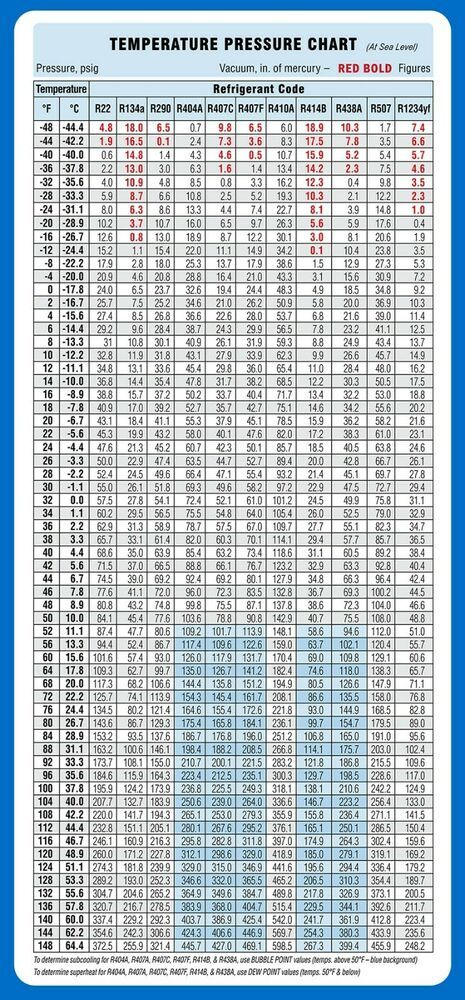
Now, the R410a pressure chart is like a secret decoder ring for your AC. It tells you what the pressures should be, based on the outdoor temperature. Why outdoor temperature? Because your AC is trying to fight against that heat! The hotter it is outside, the harder your AC has to work, and the higher the pressures will be. It’s basically a temperature vs. pressure tango.
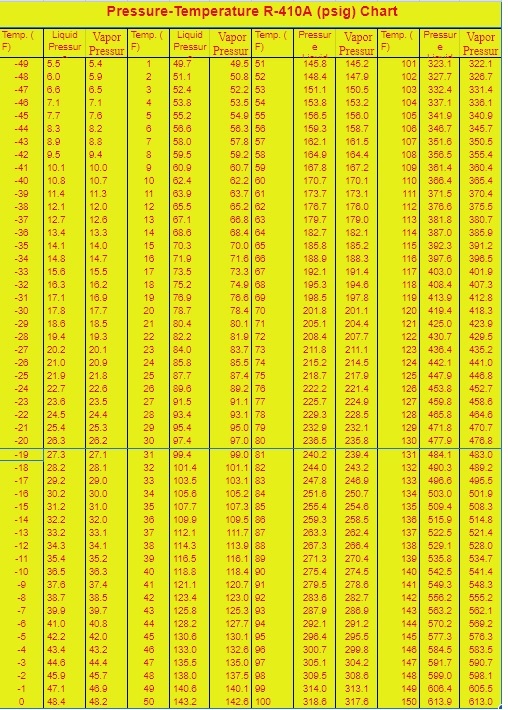
Finding an R410a pressure chart is easy. A quick Google search will reveal a plethora of options, often looking like a spreadsheet designed by a caffeinated squirrel. Don't be intimidated! The key is to find the outdoor temperature on the chart and then look across to find the corresponding pressure readings for the high and low sides.
Here’s a simplified (and slightly exaggerated) example:
- Outdoor Temperature: 90°F (feeling like the surface of the sun)
- Expected Low Side Pressure: 125 PSI (pounds per square inch) – relatively calm.
- Expected High Side Pressure: 350 PSI (pounds per square inch) – holding back a fiery rage of compressed refrigerant.
Important Note: These are examples! The actual pressures will vary depending on your system and specific conditions. ALWAYS consult a reliable R410a pressure chart.
What If Your Pressures Are Off? (Cue Dramatic Music)
So, you've bravely strapped on your safety goggles, hooked up your gauges (more on that later), consulted the chart, and… Houston, we have a problem! Your pressures are way off. What now?

Well, this is where things get a little more involved. Off-kilter pressures can indicate a few different things:
- Low Refrigerant: Think of this like your AC being thirsty. It needs a refrigerant "drink" to keep things cool. This is often due to a leak, which needs to be found and fixed by a qualified technician. (Because, seriously, messing with refrigerant leaks is bad news bears.)
- Overcharged Refrigerant: Too much of a good thing can be bad. Too much refrigerant can cause high pressures and inefficiency.
- Compressor Issues: The compressor is the heart of your AC system. If it's failing, your pressures will be all over the place. (Think of it as a heart murmur for your AC.)
- Restricted Airflow: A dirty air filter, blocked vents, or a clogged evaporator coil can restrict airflow, causing pressure problems. (Clean those filters, people!)
Important Disclaimer: Diagnosing and fixing AC problems can be tricky and potentially dangerous. If you're not comfortable working with refrigerants and electrical components, call a qualified HVAC technician. Seriously. Your safety (and the life of your AC unit) is worth it.
The Gauge Game: Tools of the Trade
To actually measure the pressures, you'll need a set of refrigerant gauges. These hook up to service ports on your AC unit. But proceed with extreme caution! Refrigerant can cause frostbite, and messing with pressurized systems can be dangerous. Again, if you're not 100% confident, leave it to the pros.
The gauges will show you the actual pressures in your system. Compare these readings to the R410a pressure chart for your outdoor temperature to see if everything is within the normal range.
Final Thoughts: Knowledge is Power (and Cool Air)
Understanding the R410a pressure chart and the high and low sides of your AC system won't necessarily make you an HVAC guru overnight. But it will give you a better understanding of how your AC works, and it might even help you diagnose simple problems before calling in the cavalry. And hey, knowing a little bit about your AC might just save you from being overcharged by that suspiciously tanned "expert." Now, go forth and conquer… the summer heat!