Priority Queue Time Complexity
Ever wondered how your GPS finds the absolute fastest route, even with traffic jams and detours popping up? Or how your hospital's emergency room manages to treat the most critical patients first, ensuring everyone gets the attention they need? The secret ingredient often lies in a powerful data structure called the Priority Queue, and understanding its time complexity is surprisingly... well, fun! Okay, maybe "fun" is a strong word, but it's definitely useful!
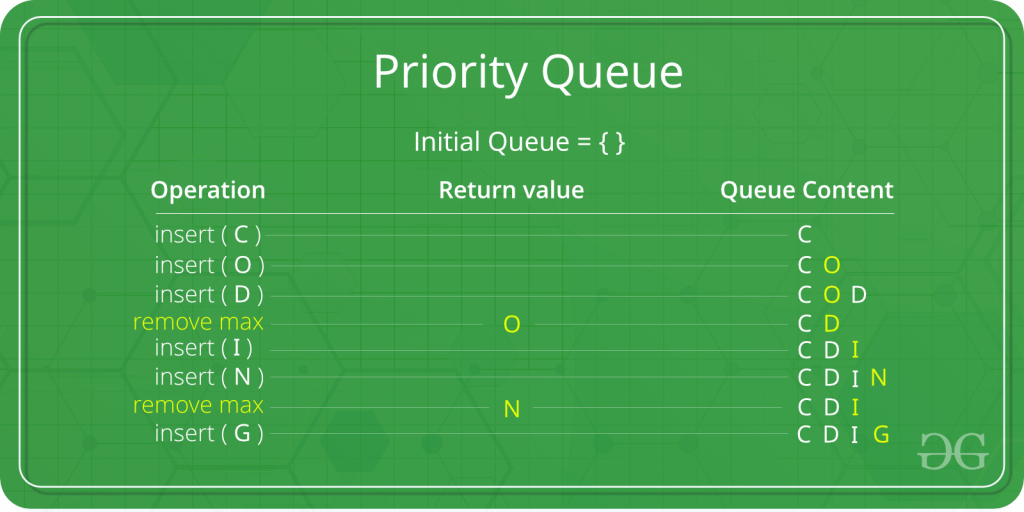
So, what exactly is a Priority Queue? Think of it like a regular queue (first in, first out), but with a twist. Each item in the queue has a priority associated with it. When you want to retrieve an item, the Priority Queue doesn't just grab the oldest one; it grabs the one with the highest priority. Imagine a to-do list: you might have tasks entered at different times, but you'll tackle the most urgent (highest priority) tasks first.
The benefit? Efficiency! By always processing the most important items first, Priority Queues optimize resource allocation in a wide range of applications. From task scheduling in operating systems to pathfinding algorithms in games and even data compression, these clever queues are working behind the scenes to make things faster and more efficient.
Must Read
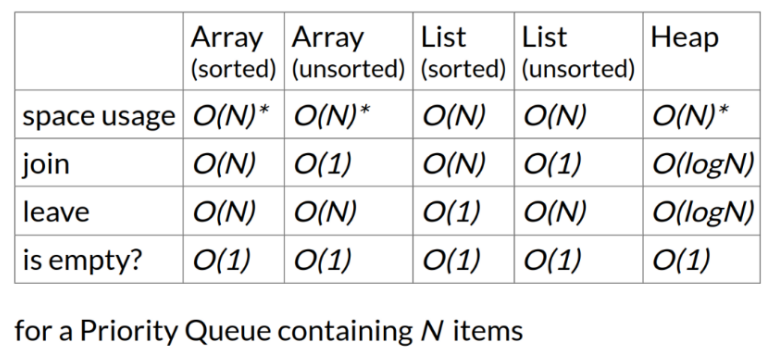
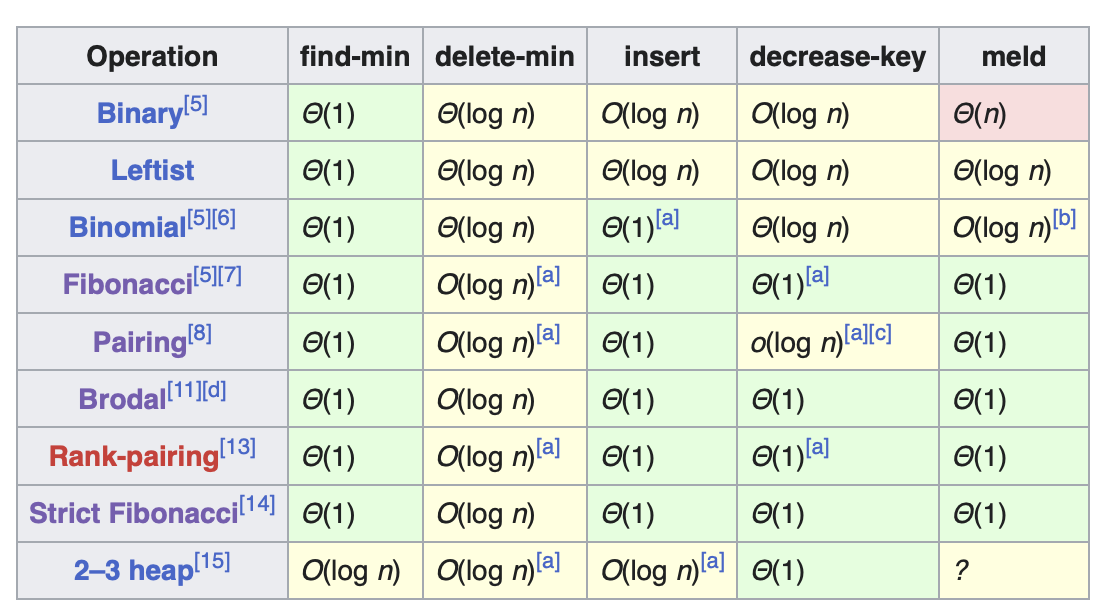
Now, let's talk about the juicy part: time complexity. This tells us how long different operations (like adding or removing elements) take as the number of items in the queue grows. Different implementations of Priority Queues have different performance characteristics. The two most common are:
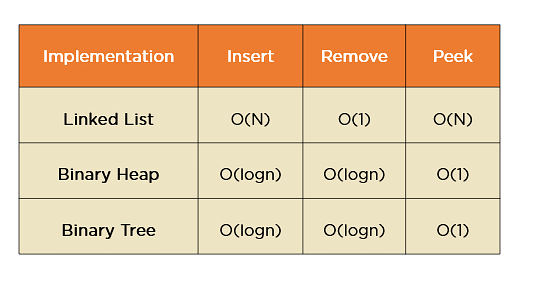
- Binary Heap: This is a popular and efficient implementation. Adding an element (enqueue) typically takes O(log n) time, where 'n' is the number of elements. Removing the highest priority element (dequeue) also takes O(log n) time. Think of it like climbing a tree; as the tree gets bigger, it takes a bit longer to climb to the top (or bottom), but not linearly.
- Sorted Array: You could technically use a sorted array as a Priority Queue. Finding the highest priority element is easy (it's just the first element!), so dequeueing is O(1). However, adding a new element requires inserting it into the correct position to maintain the sorted order, which takes O(n) time in the worst case.
Why does O(log n) matter so much for Binary Heaps? Because it scales incredibly well! As the size of your dataset doubles, the execution time only increases by a small, logarithmic amount. This makes Binary Heaps a fantastic choice for applications dealing with large amounts of data. Imagine finding the shortest route in a city with millions of roads; O(log n) complexity allows the algorithm to still find the optimal solution in a reasonable timeframe.
Understanding the time complexity of Priority Queues helps you choose the right implementation for your specific needs. While a sorted array might seem appealing for simple scenarios, the Binary Heap's O(log n) performance provides a significant advantage when dealing with larger and more complex problems. So, the next time you're using a map app or benefiting from efficient task management, remember the unsung hero: the Priority Queue!