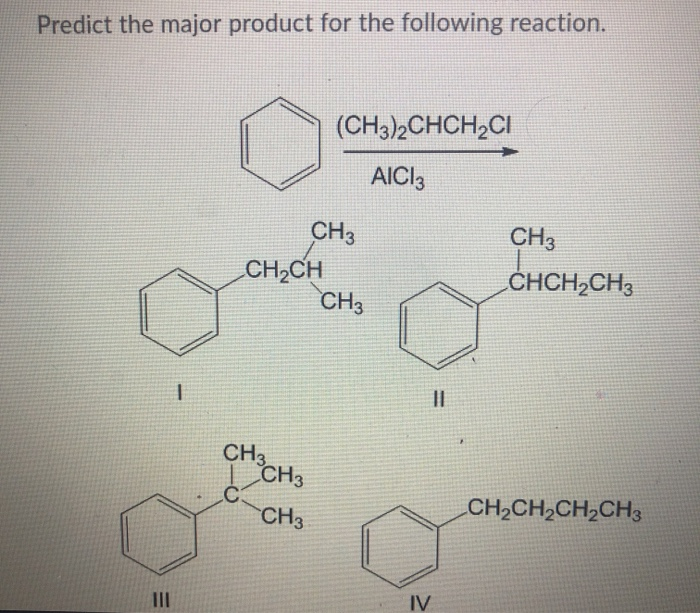
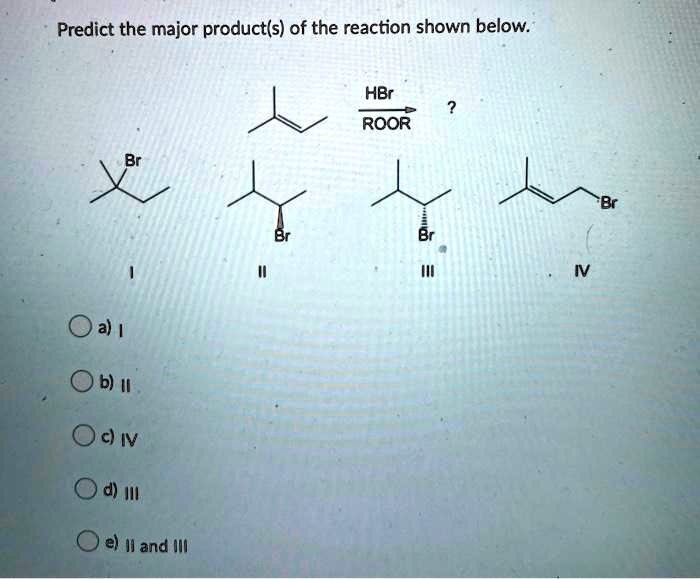
Predict The Major Product For The Reaction Shown.
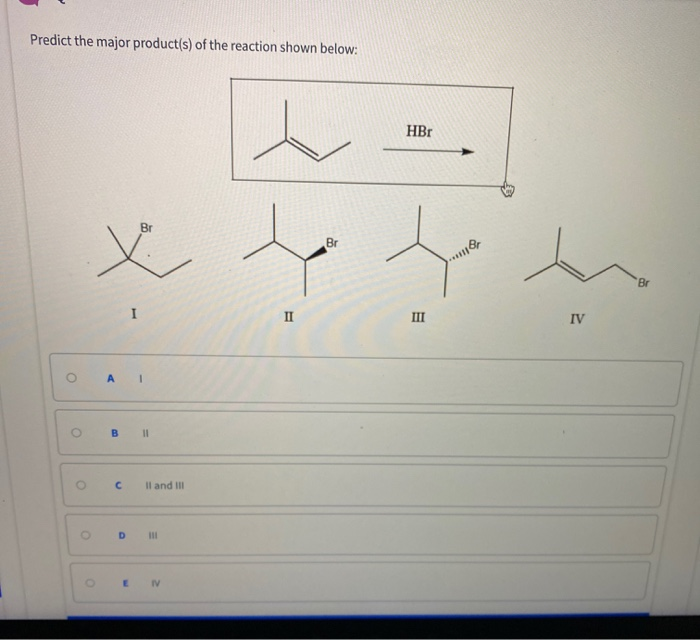
Okay, so picture this: you’re chilling with me, maybe sipping a latte (or something stronger, no judgment!), and we’re staring at a gnarly organic chemistry reaction. The prompt? “Predict the Major Product For the Reaction Shown.” Sounds intimidating, right? Don’t sweat it! We’ll break it down, chem-style.
First things first: What even IS that reaction showing us? I mean, squint at it... really squint. Is it an acid-base dance? A sneaky substitution? Or perhaps, the dramatic elimination? Identifying the type of reaction is key, my friend. It's like figuring out what kind of party you're going to – affects your whole outfit!
Look for the reagents. Are we rocking strong acids or bases? Maybe some snazzy nucleophiles eager to attack? These guys are the catalysts of chaos – they dictate what's likely to happen. No pressure, right?
Must Read
Let's say, for the sake of argument, we see a tertiary alkyl halide (fancy, I know!) and a bulky base, like potassium tert-butoxide. Alarm bells should be ringing! Why? Because bulky bases and hindered substrates practically scream "E2 elimination!". They're basically saying, "Ain't no room for substitution here! Let's just rip off a proton and form a double bond!"
Understanding E2 Elimination
E2, short for Elimination, bimolecular – because naming things in chemistry is clearly designed to confuse us all – is a one-step process. Everything happens at once. The base snatches a proton, the leaving group (like our halogen) bids adieu, and BAM! A double bond appears. Magic? Maybe. Chemistry? Definitely.
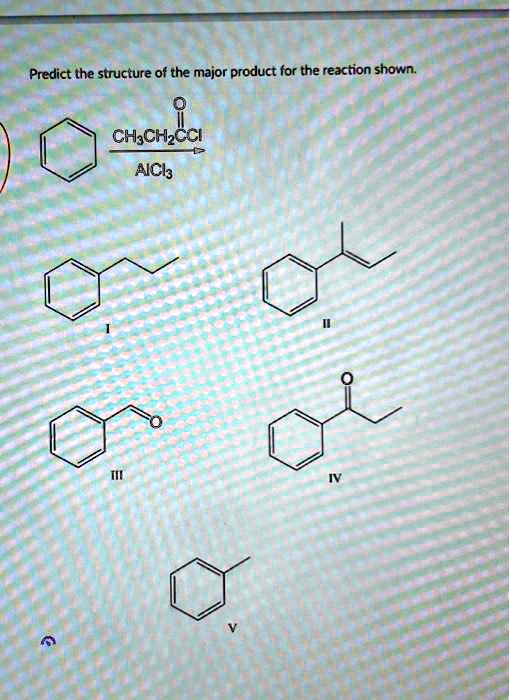
But wait! There's more! It’s not just about forming any double bond. We need to think about regioselectivity. Basically, where does that double bond prefer to form? Is it the more substituted alkene (Zaitsev's Rule, baby!) or the less substituted one (Hoffman's Rule!). Think of it like real estate – more substituents (alkyl groups attached to the double bond carbons) usually mean a more stable, and therefore more desirable, alkene.
However, remember that bulky base? It loves to grab the most accessible proton, even if it means forming the less substituted alkene. The steric hindrance makes it harder to attack the more substituted (and often, therefore more buried) proton. So, if you spot a bulky base, Hoffman product becomes more likely.
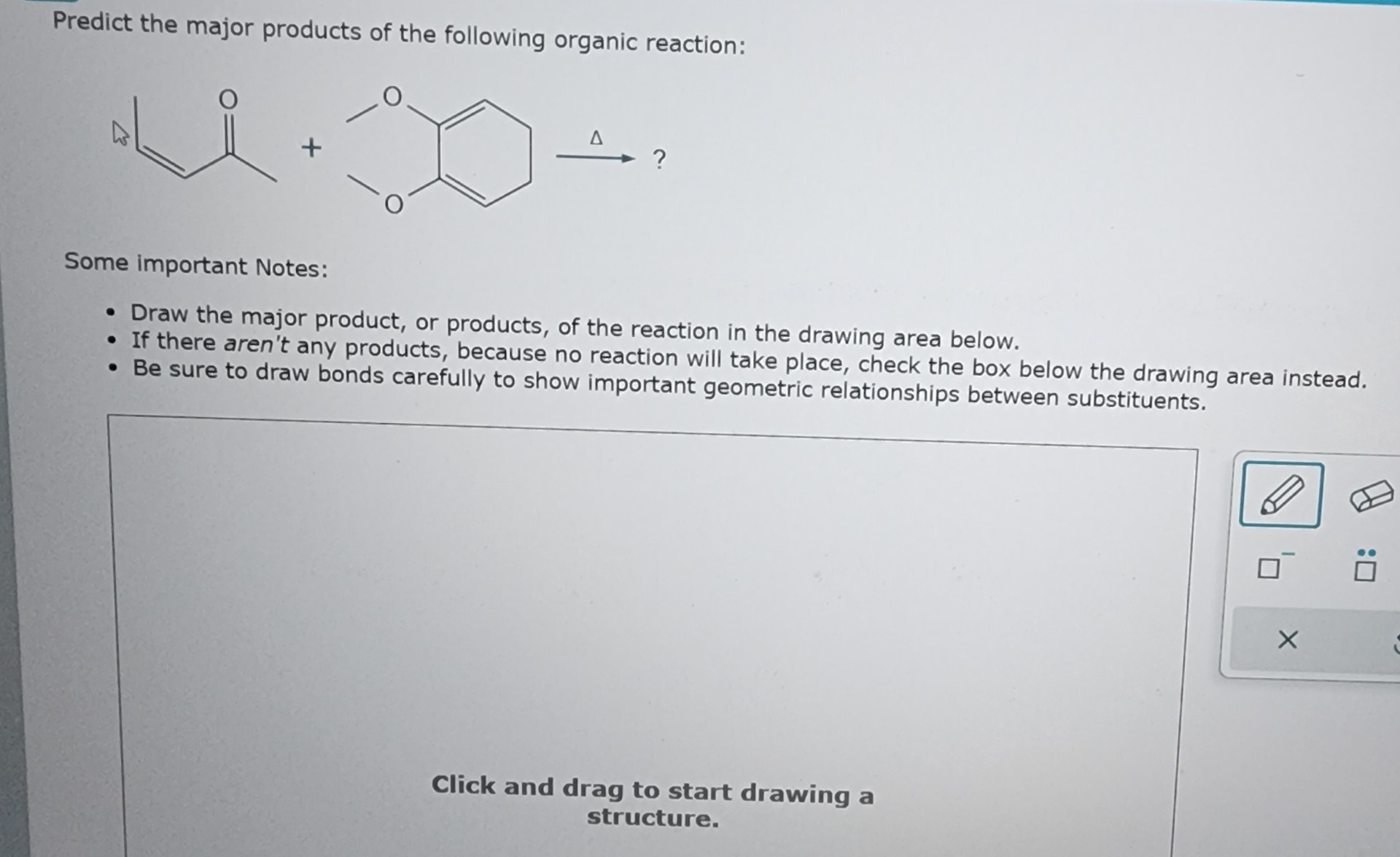
And what about stereochemistry? Can the alkene be cis or trans? (Or, even more fancy, E or Z?). This is where drawing out the mechanism helps! Consider the conformation of the molecule. For E2 to happen, the proton and the leaving group need to be anti-periplanar (180 degrees apart). It's like they need to be in perfect alignment to pull off this simultaneous exit. That’s crucial.
Let's say our molecule can form both cis and trans alkenes. Which is the major product? Usually, the trans alkene wins out, because it minimizes steric strain. Think of it as two big groups wanting to be as far away from each other as possible. Personal space is important, even in chemistry!
Putting it all Together
So, back to the reaction we were staring at. After analyzing the reagents, the substrate, and the stereochemical possibilities, we confidently (or, at least, with a reasonable degree of confidence!) predict the major product. Is it the Zaitsev product? The Hoffman product? Cis? Trans? Ta-da! We've cracked the code! (Hopefully!).
Of course, real life throws curveballs. Sometimes, there's more than one major product. Sometimes, side reactions occur. But hey, that's chemistry! It's a never-ending adventure, full of unexpected twists and turns. And the best part? We get to figure it out together, one reaction at a time!
Now, about that coffee refill...