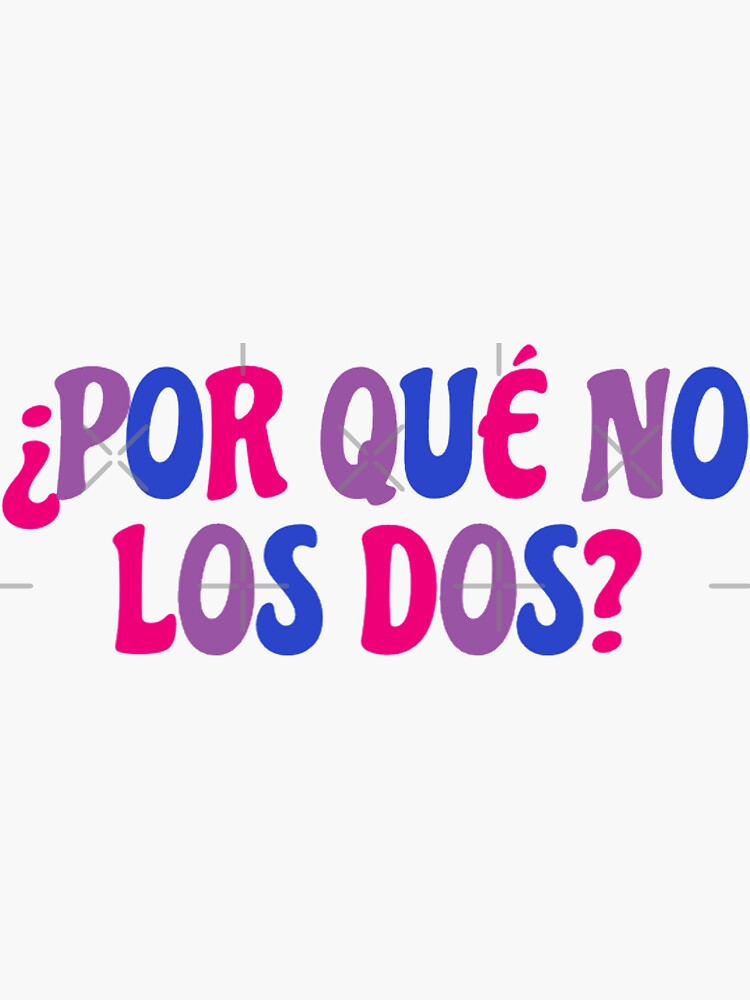
Porque No Los Dos Meaning

Ever scrolled through TikTok or overheard a conversation and caught the phrase "¿Por qué no los dos?" and wondered what all the fuss was about? It's more than just a catchy string of Spanish words; it's a whole vibe. Let's unpack this pop-culture gem and see how it can actually make your life a little more fun.
Decoding the Deliciousness: What Does it Mean?
Straight up, "¿Por qué no los dos?" translates to "Why not both?" It's the ultimate expression of wanting your cake and eating it too. But, of course, with a playful, slightly mischievous wink.
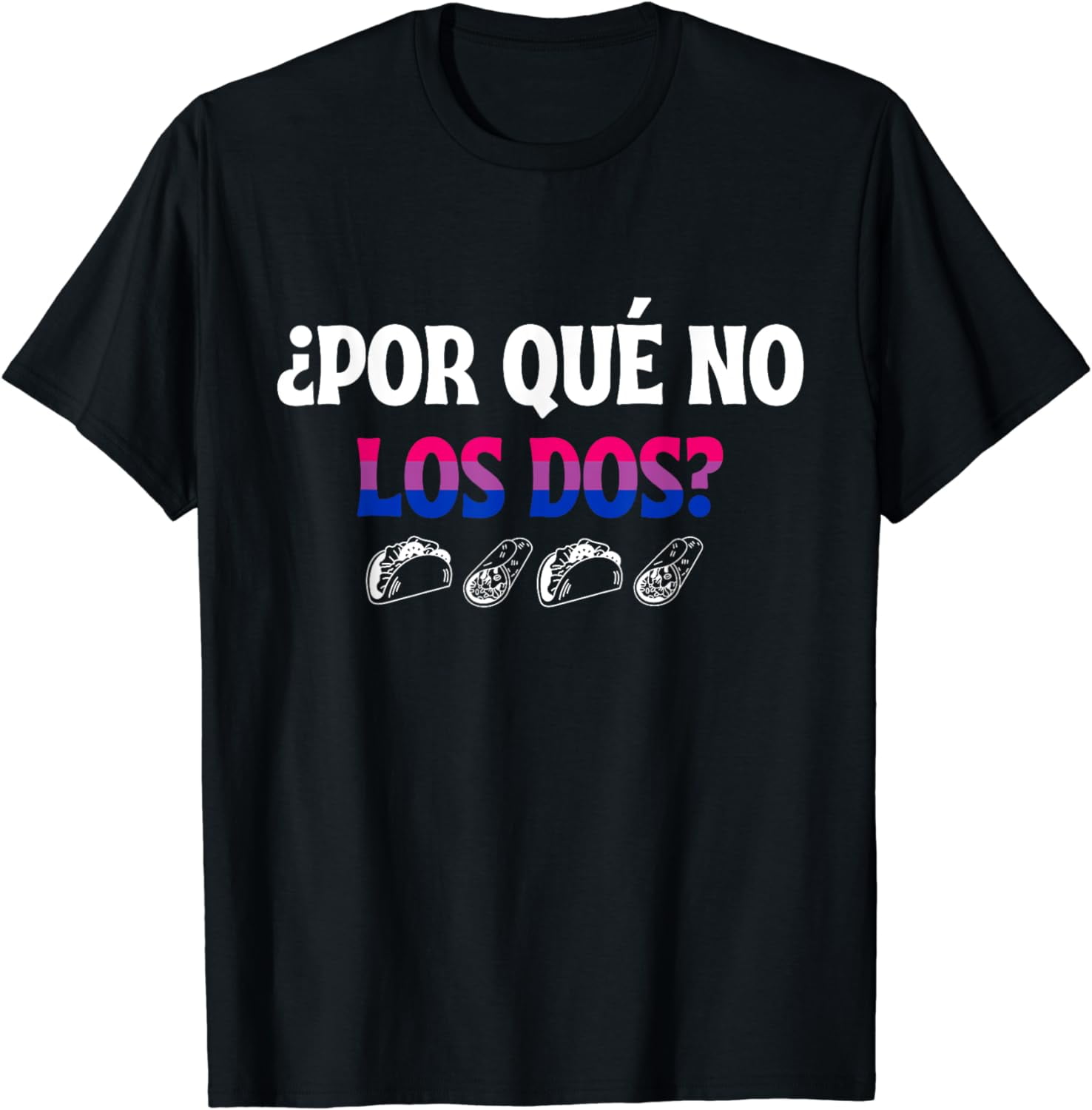
The phrase skyrocketed to fame thanks to a ridiculously funny Old El Paso commercial from 2005. Picture this: a young girl is faced with the daunting decision of hard or soft taco shells. Her solution? A perfectly delivered, "¿Por qué no los dos?" The commercial, and the line, became an instant meme, embedding itself into our cultural lexicon.
Must Read
Beyond Tacos: Embracing the "Why Not Both?" Mentality
While its origin is in tacos, "¿Por qué no los dos?" has evolved into so much more. It's a philosophy, a mantra, a way of approaching decisions with a sense of playful abundance. It encourages us to challenge limitations and consider possibilities we might otherwise dismiss.
Think about it: We often box ourselves in with either/or thinking. Do I pursue a stable career or my passion? Do I save money or travel the world? "¿Por qué no los dos?" nudges you to find a way to integrate seemingly opposing desires. Maybe you can freelance in your field while slowly building your dream business. Or create a travel budget that allows for both exploring new cultures and securing your financial future.

Tips for Implementing a "¿Por qué no los dos?" Lifestyle
Ready to embrace the spirit of "Why not both?" Here are a few practical tips:
- Brainstorm creatively: When faced with a decision, don't just consider the binary options. Ask yourself: Is there a third option that allows me to blend the best aspects of each?
- Challenge assumptions: Often, we limit ourselves based on perceived constraints. Are those constraints actually real, or are they just assumptions you've made?
- Embrace the experiment: Not every "Why not both?" solution will be perfect. Be willing to experiment, adjust, and learn from your experiences.
- Prioritize and compromise: Realistically, you can't always have everything. Figure out what's truly important to you and be willing to compromise on the less crucial aspects.
- Don't be afraid to ask for help: Sometimes, finding a "Why not both?" solution requires creative problem-solving. Don't be afraid to bounce ideas off friends, mentors, or even a therapist.
Cultural Cousins: Other Expressions of Abundance
The "¿Por qué no los dos?" mentality isn't unique to the Spanish-speaking world. Many cultures have similar expressions that celebrate abundance and resourcefulness. Think of the Yiddish phrase "Ess gezunterhayt!" (Eat in good health!), which often implies enjoying as much as you can. Or the American expression, "Have your cake and eat it too," although that one carries a slightly more negative connotation, implying a possible consequence.
Consider the Danish concept of hygge. It's all about creating cozy, comfortable moments. But you can still go to work, be productive, and build your business. You don't have to choose one over the other; you can create a life that blends both hard work and relaxation.
Fun Fact: The Rise of the Hybrid Lifestyle
The "¿Por qué no los dos?" spirit is reflected in many modern trends. Look at the rise of the "hybrid lifestyle," where people blend remote work with travel, or side hustles with traditional employment. It's all about carving out a life that integrates multiple passions and priorities.

A Final Thought: Choosing Joy and Possibility
At its heart, "¿Por qué no los dos?" is about choosing joy and embracing possibility. It's about recognizing that life isn't always a zero-sum game. It's about finding creative solutions that allow you to live a richer, more fulfilling life.
So, the next time you're faced with a seemingly impossible choice, ask yourself: "¿Por qué no los dos?" You might be surprised at the possibilities that open up.