Poorly Written Business Memo Examples
We've all received them. The dreaded business memo. Often dry, sometimes confusing, and occasionally so poorly written they're practically works of accidental art. But what if we told you that these paragons of professional miscommunication held a hidden, creative value? Yes, you read that right! The poorly written business memo – it's not just office fodder, it's a muse.
For artists, hobbyists, and even casual learners, dissecting a bad memo offers a surprising array of benefits. Think of it as deconstructing language to understand what not to do. It's a masterclass in clarity through the lens of chaos. You can analyze sentence structure, identify misused jargon, and marvel at the sheer audacity of grammatical errors. Plus, it’s incredibly entertaining. Who knew workplace communication could be so…inspirational?
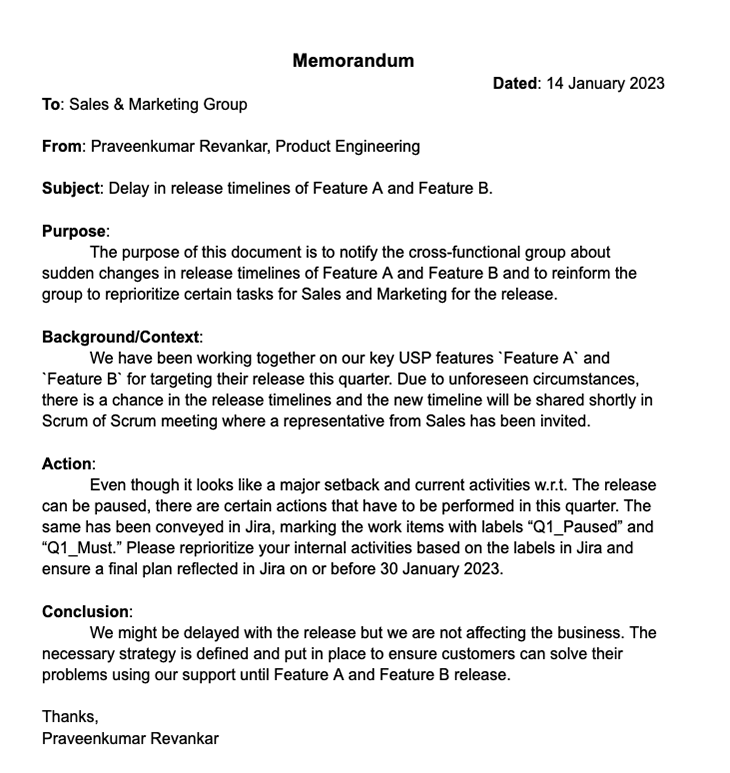
Let's dive into some examples of memo mayhem. There's the "Rambling Report" style, a sprawling narrative that starts with Q3 profits and somehow ends with the CEO's cat's grooming habits. Subject line: "Update." Then we have the "Jargon Jamboree," a memo so packed with acronyms and corporate buzzwords that it's virtually unintelligible. Think phrases like "synergistic paradigm shifts" and "blue-sky thinking" sprinkled liberally throughout. The "Grammar Gauntlet" presents a different challenge: a minefield of typos, misplaced modifiers, and subject-verb disagreements that will leave you questioning everything you thought you knew about the English language. Finally, don’t forget the classic "Vague Directive," a memo that issues instructions so broad and ambiguous that everyone interprets them differently, leading to delightful workplace pandemonium. Example: "Improve efficiency." How? When? Nobody knows!
Must Read
Want to try your hand at appreciating (or even creating) poorly written memos at home? First, gather your source material. Real memos are gold, but you can also find examples online or, for a real challenge, try to write your own intentionally bad memo based on a mundane task. Pro Tip: embrace ambiguity. Use long sentences, complicated vocabulary, and avoid clear calls to action. Add in a random exclamation point or two for good measure! Experiment with formatting inconsistencies – different fonts, varying indents, and random bolding can add to the overall effect. Remember, the goal is not to communicate effectively, but to create a piece of communication that is memorable for all the wrong reasons.
Ultimately, enjoying poorly written memos is about finding humor in the mundane and appreciating the absurdity of human communication. It's about recognizing that even in the most serious of settings, mistakes happen, and sometimes, those mistakes can be downright hilarious. So, the next time you receive a memo that makes you scratch your head, take a moment to appreciate its unintentional artistry. It might just be the inspiration you need for your next creative project, or at the very least, it will give you a good laugh. And in the grand scheme of things, isn’t that a valuable workplace asset?
![Free Printable Business Memo Templates [PDF, Word] Sample](https://www.typecalendar.com/wp-content/uploads/2023/07/Business-Memo-1200x675.jpg)