
Oxidation Number Of Iodine

Okay, let’s talk iodine. That purplish element lurking in your first aid kit. We all know it's important for healthy thyroids and disinfecting minor cuts. But today, we're diving headfirst into something slightly more…nerdy. Oxidation numbers. Dun dun DUN!
Now, before your eyes glaze over, trust me. This isn't as scary as balancing chemical equations in high school. Oxidation numbers are essentially imaginary charges assigned to atoms in a compound. They tell us who's "winning" the electron tug-of-war. And with iodine, the story gets interesting.
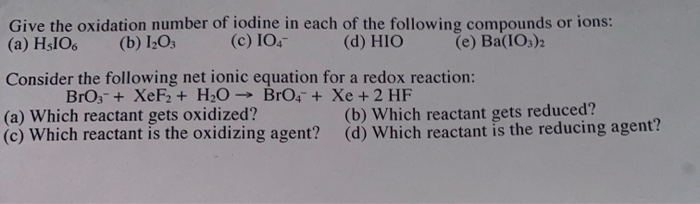
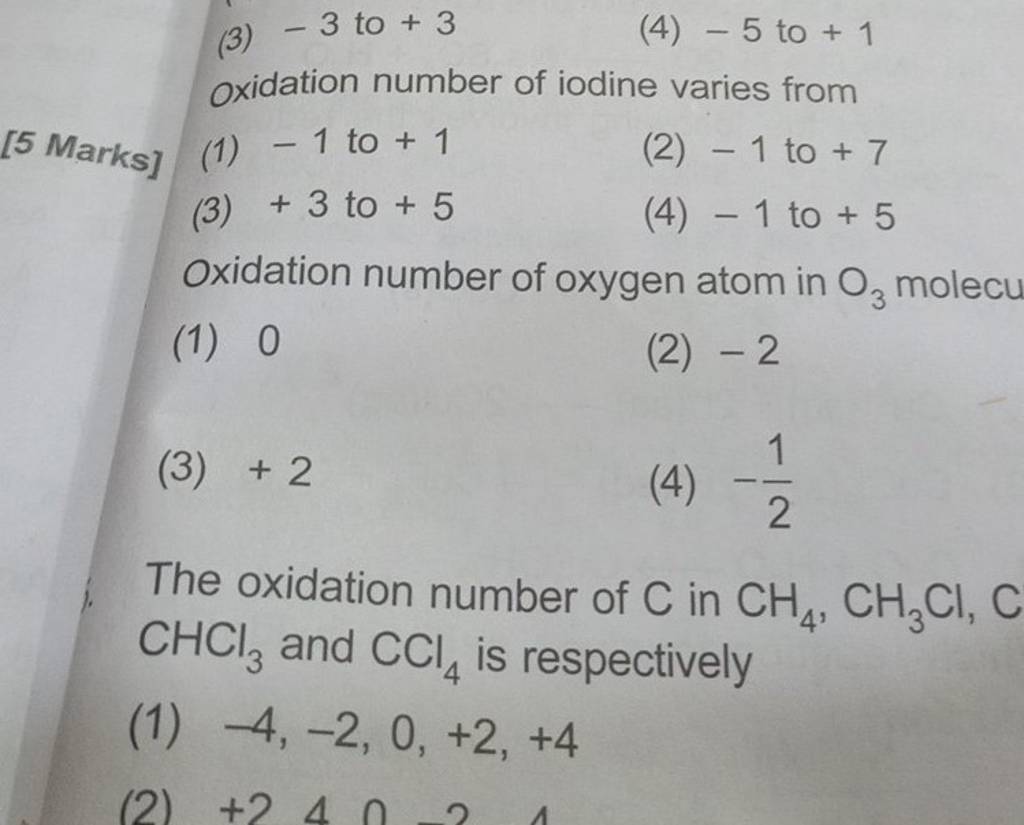
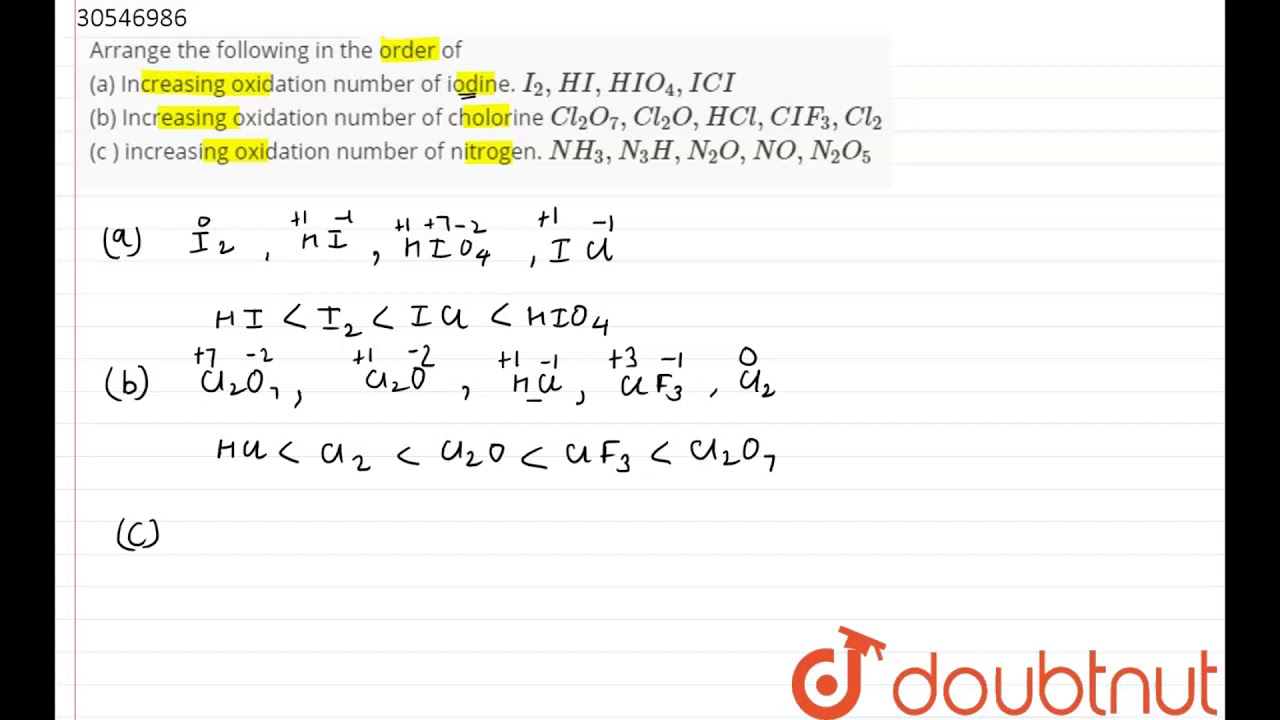
Iodine, bless its electron-loving heart, is a bit of a chameleon. It can rock a whole range of oxidation numbers. From a cheerful -1 to a positively exuberant +7, it's a veritable oxidation number rainbow. You'll see it as -1 in good old sodium iodide (NaI), which you might find in iodized salt. And then BAM! Suddenly, it’s strutting around as +5 in iodate ions (IO3-). Talk about range!
Must Read
This brings me to my slightly unpopular opinion. And brace yourselves, chemistry purists. I think we give iodine way too much credit for its oxidizing abilities. We hear about iodine being a halogen, like chlorine and bromine, which are famous oxidizers. But iodine? It's the chill, laid-back halogen. It’s more likely to be reduced than the others.
Think about it. When does iodine really shine as an oxidizer? Usually, only when it's practically forced into it. We have to practically bribe it with incredibly electronegative elements like oxygen and fluorine to make it cough up its electrons. Chlorine and bromine? They grab electrons like it’s Black Friday. Iodine? More like a leisurely Tuesday afternoon browsing session.

Okay, okay, I know. Iodine can oxidize. It's not completely useless in the electron-grabbing game. But, c'mon. Compare it to chlorine in water purification or bromine in, well, pretty much anything. Iodine is more about being a reluctant participant than an enthusiastic player.
Iodine's Identity Crisis
It's almost like iodine is having an identity crisis. It desperately wants to be a strong oxidizer. It sees chlorine and bromine getting all the attention, effortlessly ripping electrons from unsuspecting atoms. And iodine's just standing there, awkwardly sipping its tea, hoping no one asks it to do anything too strenuous.
We see this reluctance reflected in its standard reduction potential. Compared to chlorine and bromine, iodine’s reduction potential is significantly lower. This means it has less of a driving force to gain electrons. It's like it’s saying, "Yeah, I guess I could take an electron… if you really want me to. But honestly, I’m quite comfortable as I am."
Perhaps I'm being too harsh on our purple friend. Maybe iodine just prefers a more nuanced approach to chemistry. It's not about brute force oxidation. It's about… strategic electron redistribution. Or maybe it's just lazy. I'm leaning towards lazy.
Don’t get me wrong, I appreciate iodine. I’m grateful for its role in keeping my thyroid happy and my minor scrapes disinfected. But let's be honest about its oxidation number personality. It's not the electron-hungry beast we sometimes make it out to be. It’s more like a reluctant participant in the redox world.
The Exception To The Rule
Now, before the chemistry professors come for me with their textbooks, there's always an exception. When combined with super-electronegative atoms like oxygen, iodine can achieve those higher oxidation states (+5, +7). In compounds like periodates (IO4-), it can be a formidable oxidizer. But that's more about the oxygen doing the heavy lifting, right?
And speaking of exceptions, let’s give a shout-out to Iodine Heptafluoride (IF7). That’s iodine bonded to SEVEN fluorine atoms! With fluorine being the most electronegative element, iodine is basically stripped of its electrons, reaching a +7 oxidation state. But come on, that’s an extreme scenario! We’re talking about subjecting poor iodine to fluorine. That's chemical bullying!
So, next time you hear someone talking about iodine as a powerful oxidizer, remember this article. Remember the reluctant halogen. Remember the electron-shunning purplish element that just wants to be left alone to… well, whatever it is that iodine does when it's not being forced to oxidize things.
And maybe, just maybe, you'll agree with my unpopular opinion: Iodine’s oxidation numbers are impressive, but its oxidizing enthusiasm? Not so much.
Let the debate begin!