
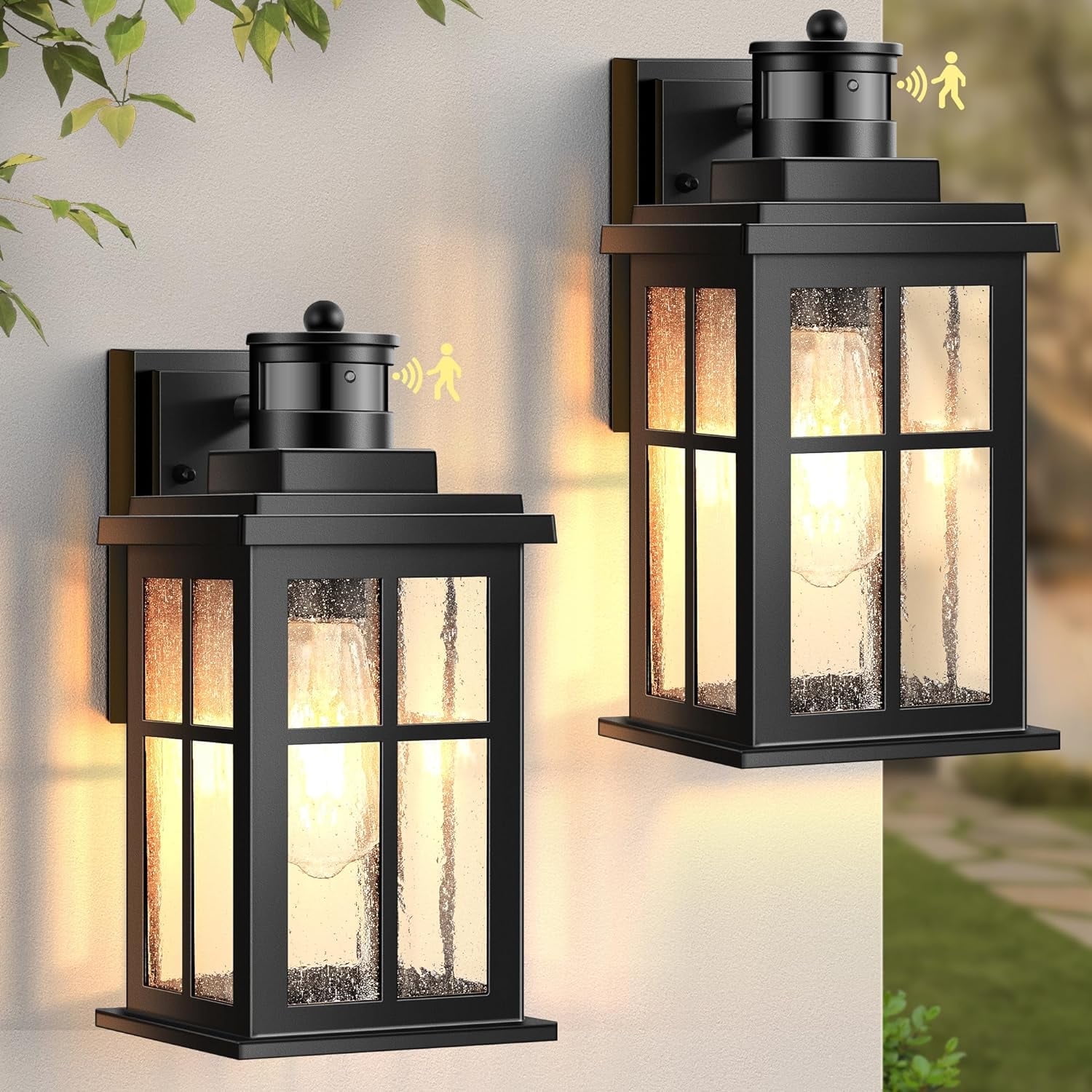
Outdoor Lighting Fixtures Motion Sensor

Alright, gather ‘round, folks, and let me spin you a yarn about a true unsung hero of the modern home. We’re talking about those brilliant, sometimes dramatic, always-there-when-you-need-them (mostly) gadgets that stand sentinel outside our doors: outdoor lighting fixtures with motion sensors.
You know the drill. It’s midnight. You’ve just wrestled your way out of the car, arms laden with groceries, a forgotten purse, and possibly a small, bewildered badger you accidentally picked up at the store (don’t ask). You’re fumbling for your keys, doing that awkward, one-legged interpretive dance while trying not to trip over the garden hose you swear wasn’t there this morning. Your porch light, bless its heart, is firmly in the “off” position because, well, you forgot to flip the switch. Again.
Then, suddenly, BAM! A floodlight erupts, blinding you for a glorious, disorienting moment. You squint, drop a carton of eggs, and realize your hero has arrived. The motion sensor light. Or, as I like to call it, your home’s personal, slightly over-eager spotlight operator.
Must Read
The Magic Behind the Beam (It’s Not Actually Magic, But Close)
So, how do these little guardians of the night work their wonders? It’s not a tiny ninja lurking in the bushes, ready to flip a switch. Most common motion sensors, especially for outdoor lighting, use something called a Passive Infrared (PIR) sensor. And here’s a fun little fact: they don’t actually “see” motion in the way you or I do with our eyeballs. Instead, they detect changes in infrared radiation – basically, heat signatures.
Think of it like this: everything gives off some level of heat. When a warm body (like you, me, or that bewildered badger) moves into the sensor’s field of view, it causes a rapid change in the infrared energy detected. The sensor goes, “Aha! Something’s moved! Let there be light!” And poof, your yard is suddenly brighter than a Broadway stage on opening night. It’s surprisingly sophisticated for something that essentially just yells, “Hey, you! Move it!” at the darkness.

Why We Love Our Light Show Commanders
Beyond saving you from a perilous grocery-spill incident, these motion-activated marvels offer a few rather compelling benefits:
1. Convenience (and Not Tripping Over Stuff)
This is the big one. No more fumbling for switches, no more venturing into the abyss. Whether you’re coming home late, taking out the trash, or just letting the dog out for a midnight constitutional, the light is there, waiting. It’s like having a personal butler for your illumination needs, only this butler doesn’t judge your pajama choices.
2. Security (Scaring Off More Than Just Squirrels)
Nothing screams “Someone’s home!” quite like a sudden, unexpected blast of light. It’s an incredibly effective deterrent for potential mischief-makers. Imagine you’re a nefarious ne’er-do-well, slinking around in the shadows, planning… whatever ne’er-do-wells plan. Then, BAM! Spotlight! You’d probably jump ten feet in the air, drop your nefarious tools, and decide that particular house wasn’t worth the sudden cardiac arrest. It’s like a tiny, silent alarm system, but with more drama.

3. Energy Efficiency (Saving the Planet, One Light-Burst at a Time)
Unlike those neighbors who leave their porch light on all night (bless their hearts, but their electric bill must be astronomical), your motion sensor light only activates when it’s actually needed. This means less wasted electricity, which is good for your wallet and, you guessed it, good for the planet. You’re practically an eco-warrior, just by walking to your front door! Who knew?
The Quirks and Charms (Sometimes, They Have a Mind of Their Own)
Now, let’s be honest. As much as we adore these luminous sentinels, they do come with their own unique personalities. Sometimes, they’re a little too sensitive. Have you ever seen your lights flicker on because a rogue leaf drifted past? Or perhaps a particularly ambitious cat decided your yard was the perfect place for a midnight ballet? My lights once went off because a moth, a single, tiny moth, had the audacity to fly into the sensor’s zone. It was like a tiny disco for insects.
And let’s not forget the existential dread of that sudden flash of light at 3 AM. Is it an intruder? Is it a ghost? Is it just the wind making a tree branch dance a little too vigorously? Usually, it’s just the wind. But for a split second, your heart is doing the Macarena.
Mastering Your Light Guardian: A Few Tips
To ensure your motion sensor light is a helpful guardian rather than an erratic spotlight performer, keep these in mind:
- Placement is Key: Aim it where you need it most – pathways, entry points, dark corners. Avoid pointing it directly at the street, unless you enjoy entertaining your entire neighborhood with spontaneous light shows.
- Adjustable Sensitivity: Many models allow you to tweak how sensitive they are. If your lights are going off every time a squirrel sneezes, dial it down. If they’re missing actual humans, dial it up. It’s a delicate balance, like seasoning a fine stew.
- Time Duration: You can often set how long the light stays on after activation. A quick 30-second burst is usually plenty for walking to your door. A five-minute rave might be a bit much for everyday use.
So, next time you’re wrestling with keys in the dark, or you spot a neighbor’s house suddenly erupt in light because their cat is chasing a laser pointer, give a little nod to the humble motion sensor light. It’s more than just a bulb; it’s a beacon of convenience, a guardian of peace, and sometimes, a source of mild nocturnal amusement. And for that, we salute it!
