Nuclear Power Plants Benefits And Drawbacks

Alright, buckle up, energy enthusiasts! We're diving into the fascinating, sometimes controversial, world of nuclear power. Why is this fun? Because energy powers everything! From the lights in your house to the phone in your hand, understanding where that energy comes from is like having a superpower. And nuclear power? It's a big player in the energy game, so let's explore its ups and downs. Think of it as a thrilling rollercoaster – exciting highs and some nail-biting drops!
So, what's the deal with nuclear power plants? Essentially, they're like giant, super-sophisticated kettles. Instead of burning coal or gas to boil water (like in traditional power plants), they use nuclear fission. This is where the nuclei of atoms, usually uranium, are split, releasing an enormous amount of heat. This heat boils water, creates steam, and that steam spins a turbine connected to a generator, which then produces electricity. Voila! Power!
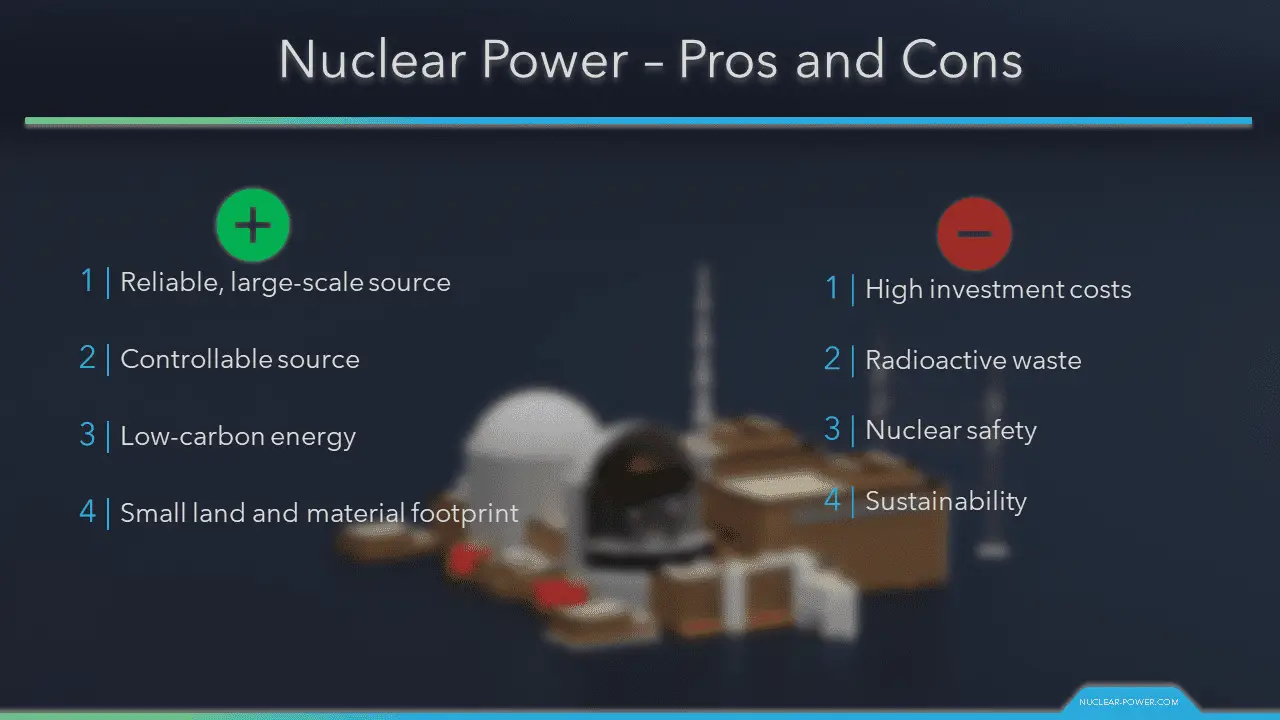
Now, for the benefits, and there are some serious ones. First and foremost, nuclear power is incredibly efficient. A small amount of uranium can produce a massive amount of energy. This means we need less fuel overall, reducing our reliance on other, potentially less sustainable, sources. Secondly, nuclear power plants are remarkably reliable. Unlike solar or wind, they can operate around the clock, regardless of the weather. This consistent energy supply is crucial for keeping our grids stable. Finally, and perhaps most importantly, nuclear power is low-carbon. While the construction of plants and the mining of uranium do have some emissions, the actual process of generating electricity produces very little greenhouse gas, making it a potential tool in combating climate change.
Must Read
However, every rose has its thorns, and nuclear power is no exception. The biggest concern? Nuclear waste. The used nuclear fuel remains radioactive for thousands of years and needs to be safely stored and managed. This is a complex and expensive undertaking, and finding suitable long-term storage solutions is a global challenge. Another concern is the risk of accidents. While nuclear power plants have multiple safety systems, the potential for a catastrophic event, like Chernobyl or Fukushima, is a valid worry. Finally, the initial cost of building a nuclear power plant is incredibly high. This can make it difficult for governments and companies to invest in nuclear energy, even with its long-term benefits.
In conclusion, nuclear power is a complex issue with compelling advantages and significant drawbacks. It offers a reliable, low-carbon energy source, but also presents challenges related to waste disposal and safety. Understanding these pros and cons is essential for making informed decisions about our energy future. The debate continues, and your informed opinion matters!