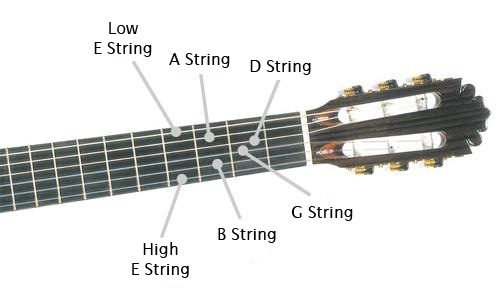
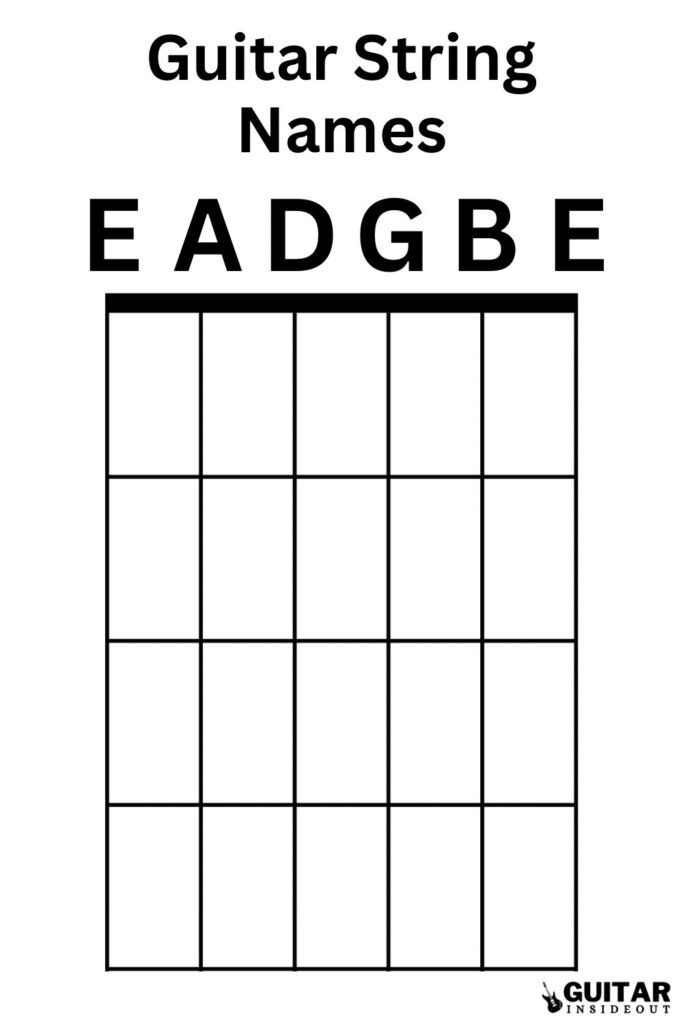
Names Of The Strings On The Guitar
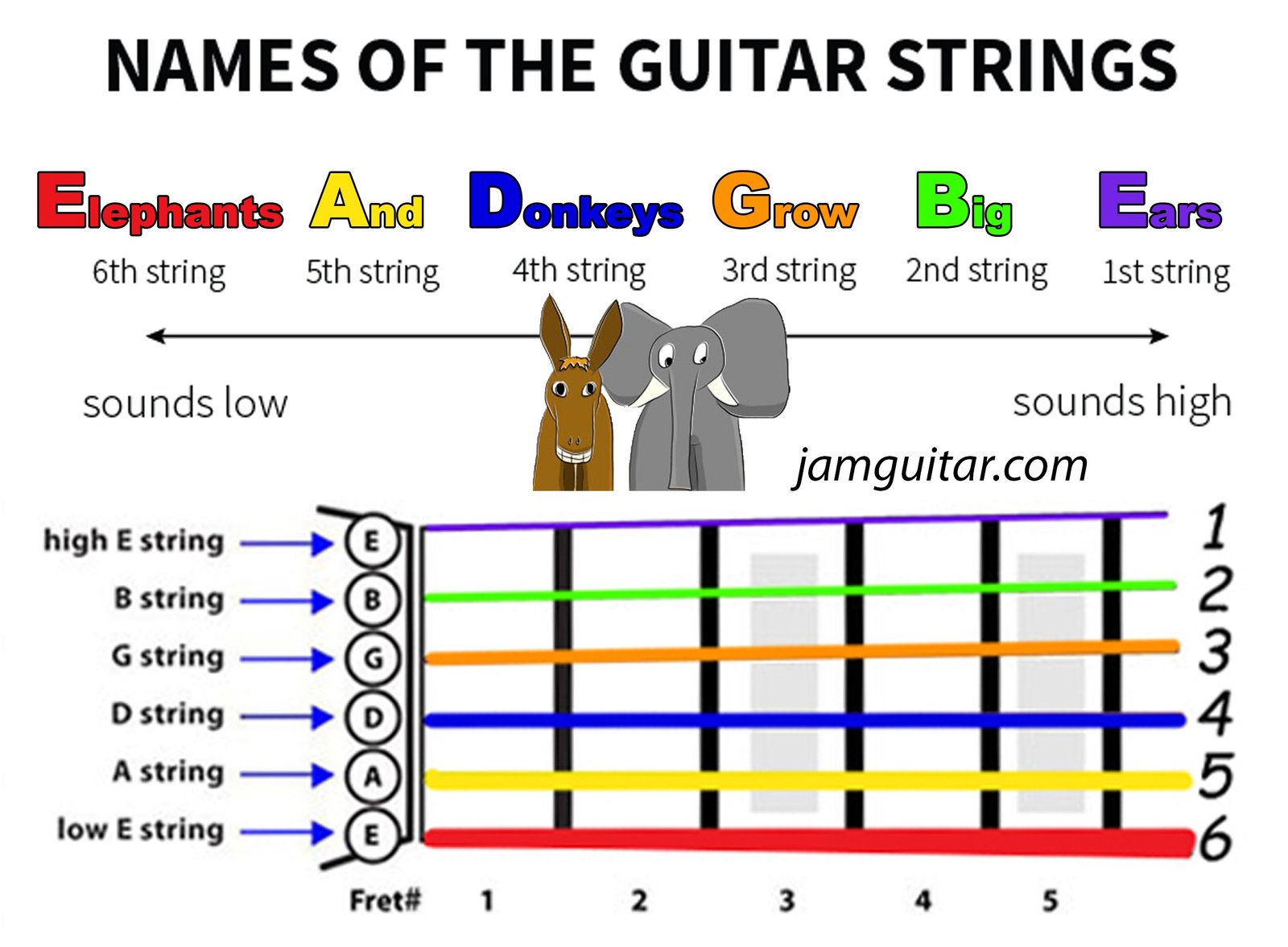
The guitar: a globally beloved instrument, capable of producing everything from delicate melodies to roaring riffs. Its versatility makes it a cornerstone of countless genres, and its relatively accessible nature has inspired millions to pick one up and try their hand at creating music. But before you shred like a rockstar or strum a heartfelt ballad, there's a fundamental piece of knowledge every guitarist, beginner or seasoned pro, needs to know: the names of the strings.
Why bother memorizing these seemingly arbitrary names? Well, for artists and songwriters, knowing the strings' names unlocks a deeper understanding of chord voicings and allows for more creative expression. You'll be able to communicate more effectively with other musicians, discuss arrangements with confidence, and even explore alternative tunings to find your unique sound. For hobbyists, it's about building a solid foundation. Learning the strings' names is like learning the alphabet before writing a novel; it's a necessary stepping stone to fluency. And even for the casual learner, simply knowing the names – E, A, D, G, B, and E – provides a sense of accomplishment and a gateway to further exploration.
Consider how different musical styles utilize the strings. In blues, the lower strings (E, A, D) often provide the backbone for driving rhythms and soulful riffs. Think of the iconic opening riff of "Smoke on the Water" – primarily played on the lower E string. Country music, on the other hand, might emphasize the bright sounds of the higher strings (G, B, E) for those twangy, melodic lines. Jazz guitarists often use complex chord shapes spanning all six strings, requiring a deep understanding of each string's function within the chord. And even within a single genre, there's variation. Some fingerstyle players might focus on the melody on the higher strings while simultaneously playing a bassline on the lower strings, showcasing the instrument's full potential.
Must Read
Ready to put this knowledge into practice? Here are a few tips for learning the strings' names at home:
- Mnemonic Devices: Use a mnemonic like "Every Adult Dog Growls Barks Eats" to remember EADGBE.
- Repetition: Say the names aloud while plucking each string, repeatedly.
- Online Resources: There are countless online resources, including videos and interactive games, to help you learn.
- Practice Songs: Find beginner-friendly songs that call out specific strings in their instructions.
Most importantly, remember that learning the guitar should be enjoyable. Don't get bogged down in perfection. Embrace the process, celebrate small victories, and allow yourself to make mistakes. The satisfaction of playing a simple chord or mastering a new riff is a reward in itself. Knowing the names of the strings is just the first step on a journey filled with creative expression, musical discovery, and, most importantly, fun. So, pick up your guitar, say hello to E, A, D, G, B, and E, and start making some music!