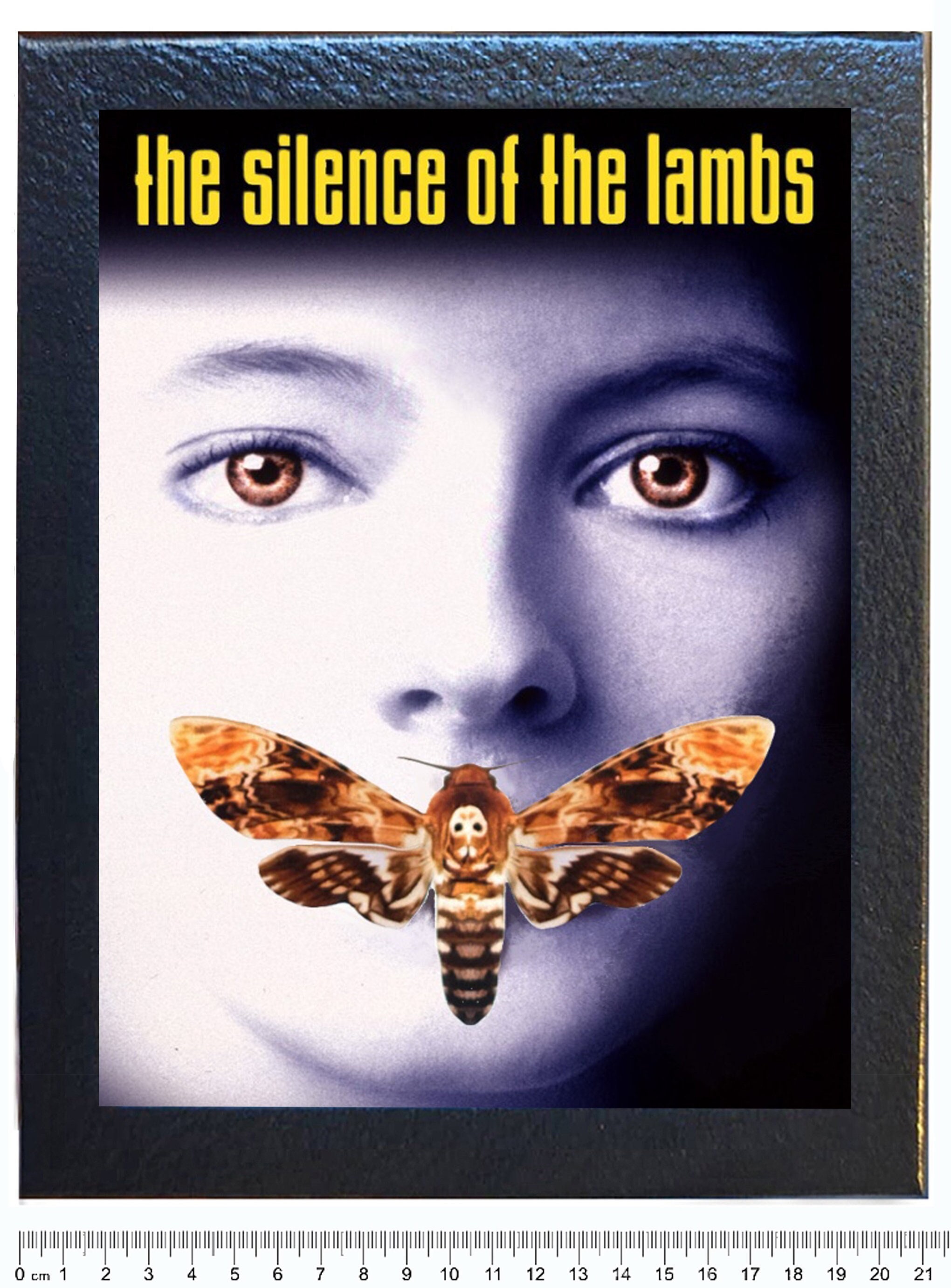
Moth Silence Of The Lambs

Okay, let’s talk moths. Not just any moths, but the kind that bring to mind dimly lit interrogation rooms and the chilling whisper of "Hello, Clarice." We're diving into the surprisingly fascinating world of the Death's-head Hawkmoth, the iconic insect gracing the poster of The Silence of the Lambs. Prepare to be enthralled.
Forget everything you think you know about dusty, insignificant insects. These guys are rock stars. Or, well, maybe metal gods.
Decoding the Death's-Head
First, the name. "Death's-head" isn't exactly subtle. This moniker comes from the distinct skull-shaped marking on the moth's thorax. Spooky, right? It's like nature's own heavy metal album cover. There are actually three species in the Acherontia genus that sport this feature: Acherontia atropos, Acherontia styx, and Acherontia lachesis.
Must Read
Fun Fact: The Acherontia atropos is the most common species and the one most often linked to folklore and superstition.
These moths are large, with a wingspan that can reach up to 5 inches. Think of them as the Labrador Retrievers of the moth world. They're found across Europe, Asia, and Africa, demonstrating a remarkable ability to adapt to diverse environments. These creatures have made appearances throughout history, with mentions of them dating back centuries.
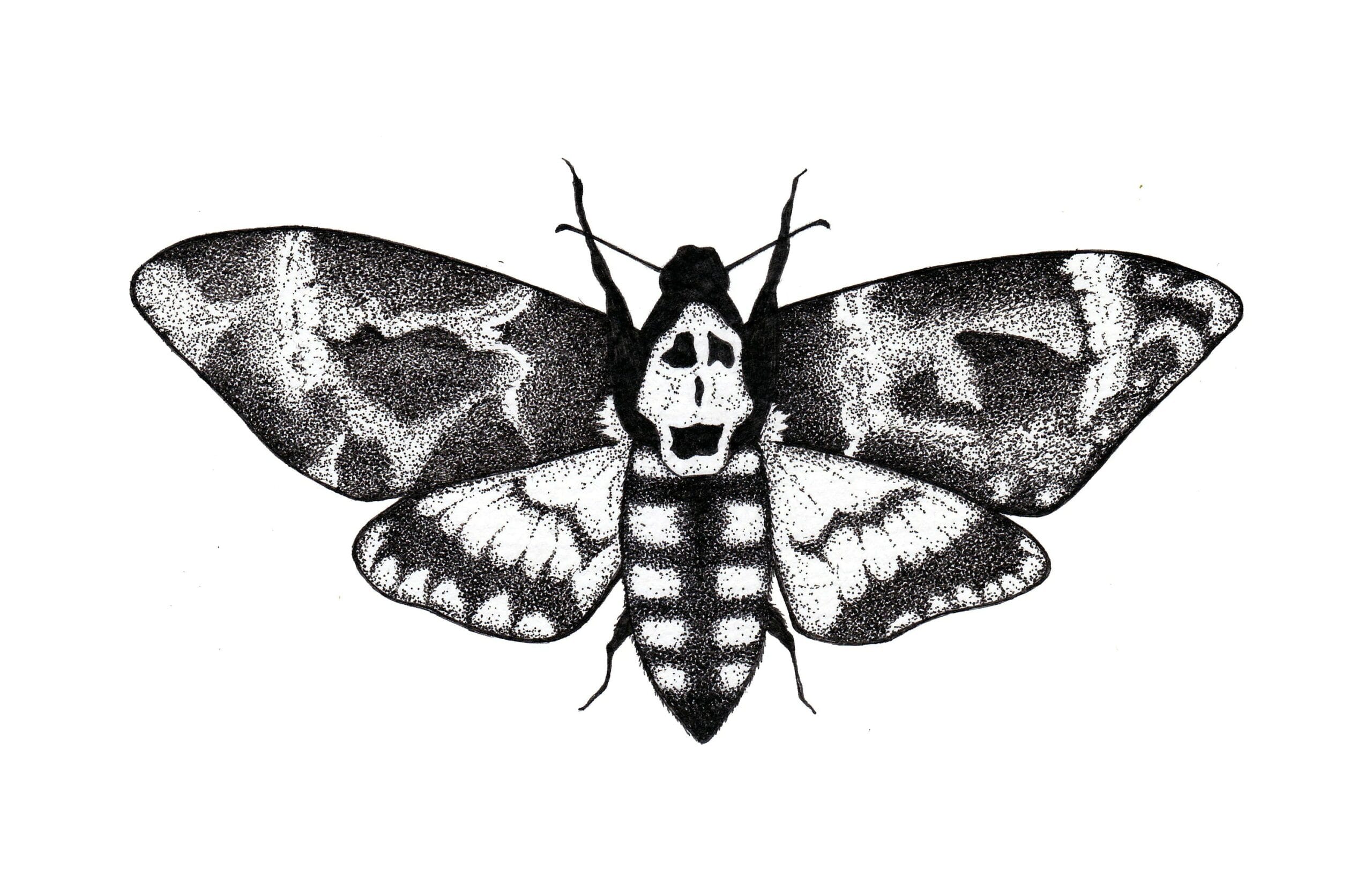
But why the association with Hannibal Lecter? Well, the film brilliantly leverages the moth's already eerie reputation, transforming it into a symbol of transformation and duality. The moth itself becomes a metaphor for Buffalo Bill's twisted desire to metamorphose into a woman, shedding one skin for another.
More Than Just a Pretty (Creepy) Face
Beyond its striking appearance, the Death's-head Hawkmoth boasts some truly remarkable behaviors.
Honey Thief: Unlike most moths, the Death's-head Hawkmoth is a honey bandit. It raids beehives, using its thick exoskeleton and a chemical disguise to avoid being stung. It even mimics the scent of bees! Talk about infiltration. They have also been known to make a loud squeaking noise when agitated - a trait which has also led to their ominous reputation.

Flight Master: These moths are powerful fliers, capable of migrating long distances. They're the marathon runners of the insect kingdom. Consider this your inspiration to finally sign up for that 5k.
Bringing it Home: The Moth in Your Life (and Garden)
Okay, so you probably won't find a Death's-head Hawkmoth chilling on your porch. But, you can appreciate the role of moths in the ecosystem. Most moths are important pollinators. Here are a few ways to befriend the moths in your area:

- Plant a Moth-Friendly Garden: Choose plants with pale or white flowers that bloom at night. Evening Primrose, Moonflower, and Nicotiana are all great options.
- Reduce Light Pollution: Turn off unnecessary outdoor lights. Artificial light disorients moths, disrupting their natural behavior.
- Avoid Pesticides: Pesticides are harmful to all insects, including beneficial moths. Opt for natural pest control methods.
Pro Tip: Create a "moth-attracting" sugar wash by mixing brown sugar, molasses, and overripe fruit. Smear it on a tree trunk and see who comes to visit (at night, of course!).
And while you're at it, revisit The Silence of the Lambs. Appreciate the film's masterful use of symbolism and the chilling performance of Anthony Hopkins. (But maybe don't watch it alone, late at night.)
A Moment of Reflection
The Death's-head Hawkmoth, with its association with darkness and transformation, reminds us that even the most unsettling things can hold a certain beauty. It challenges us to look beyond the surface and appreciate the complexity of the natural world. Just like Clarice Starling had to confront her own fears to solve the case, we too can find strength and understanding by embracing the unknown and recognizing the power of change. So, next time you see a moth, remember the Death's-head Hawkmoth, and consider the hidden stories it might be carrying. You might just be surprised at what you discover.