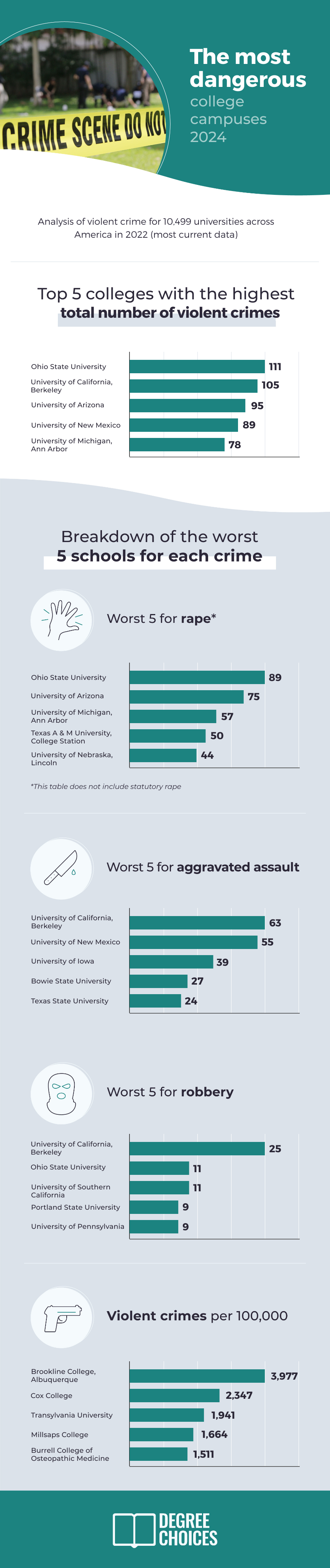
Most Dangerous College Campuses 2024

Choosing a college is a thrilling adventure, isn't it? It’s all about finding the perfect fit – the right major, a vibrant social scene, maybe even a great coffee shop on campus. But amidst all the excitement of brochures and campus tours, there's another, often quieter, consideration that deserves our attention: campus safety. Now, before you imagine sirens and dramatic headlines, let's approach the idea of 'most dangerous college campuses' not as a scary warning, but as an intriguing dive into data and awareness. It's less about fear and more about being smart, informed, and prepared for one of life's biggest transitions, turning what could be an anxiety-inducing topic into a valuable learning experience.
So, what's the real point of pondering which campuses might rank higher on a 'danger' scale? The purpose isn't to shame or scare, but to empower. For prospective students and their families, understanding these metrics offers a crucial piece of the puzzle, allowing them to make truly informed decisions that go beyond academic prestige or party reputation. It helps align a student's personal safety needs with their educational aspirations. For universities themselves, this kind of analysis can be a powerful self-assessment tool, shining a light on areas where safety protocols might need bolstering or where community engagement could be improved. It fosters a proactive approach to student well-being, moving beyond mere compliance to genuine care. Ultimately, the benefit is creating safer, more transparent environments for everyone involved, from freshmen to faculty.
This exploration isn't confined to just future students and administrators. In education, high school guidance counselors can use such insights to offer more nuanced advice, helping students assess their comfort levels with different urban or rural settings and the associated risks. Criminology departments might analyze these trends to study the socio-economic factors influencing campus crime rates, turning raw data into valuable academic research and potential policy recommendations. In daily life, parents aren't just looking at dorm layouts; they're checking local crime maps and university security reports with a critical eye. Current students, armed with awareness, might choose to walk in groups after dark, utilize campus escort services, or simply be more mindful of their surroundings. Even local communities benefit, as universities often share crime statistics that reflect on the surrounding neighborhoods, encouraging collaborative safety initiatives that extend beyond campus borders.
Must Read
Ready to become a campus safety detective? It's simpler and more empowering than you think! First, don't just rely on sensational clickbait headlines or anecdotal stories. Dive into official, verifiable sources like the U.S. Department of Education's Clery Act data, which mandates that all colleges receiving federal funding report crime statistics. Many universities also publish their own detailed annual security reports, often readily available on their websites. Second, if possible, take a virtual or physical tour with a keen eye for safety features: adequate lighting, visible emergency call boxes, and the presence of security personnel. Third, and perhaps most importantly, talk to current students. They are invaluable sources of firsthand experience and can offer a realistic perspective on what it feels like to live there. Ask about campus escorts, emergency alert systems, and general feelings of security. Remember, 'dangerous' is a relative term; what might be a concern for one student could be perfectly manageable for another. The goal isn't to find a perfectly sterile environment, but to choose a place where you feel informed, prepared, and ultimately, safe.