
Molar Mass Of Potassium Dichromate
Hey there, chemistry curious cats! Ever stumbled across a weird-sounding chemical name like "potassium dichromate" and thought, "Ugh, what is that stuff?" Don't worry, we've all been there. Today, we're going to unravel the mystery of this tongue-twister and, more specifically, figure out its molar mass. Trust me, it's not as scary as it sounds! Think of it as cracking a code, like figuring out the recipe for a delicious (but non-edible, please!) chemical concoction.
What’s Molar Mass Anyway?
Okay, let's break this down. What even is molar mass? Simply put, it's the mass of one mole of a substance. Now, a mole isn’t a furry little animal digging in your garden! In chemistry, a mole is a specific amount of a substance. It’s like saying "a dozen." When you say "a dozen," you automatically know you mean 12 of something. Similarly, one mole means 6.022 x 10²³ of something – that’s Avogadro's number, by the way! This "something" could be atoms, molecules, ions, or even bananas if we're feeling particularly whimsical.
So, molar mass is essentially the weight of 6.022 x 10²³ of those things. Why is this important? Well, imagine you’re baking a cake. You need specific amounts of flour, sugar, and eggs to get the perfect result, right? Chemistry is similar! Molar mass helps us measure out the right amounts of different chemicals for our reactions. It's like a secret ingredient to making amazing chemical transformations happen!
Must Read
Potassium Dichromate: A Chemical Compound Under the Spotlight
Alright, let's bring potassium dichromate (K2Cr2O7) back into the picture. That’s a mouthful, isn’t it? It's a bright orange, crystalline solid. But what does that formula actually mean? It tells us what elements are in the compound and how many atoms of each element are in one molecule of potassium dichromate.
We've got:
- Potassium (K): There are two potassium atoms.
- Chromium (Cr): There are two chromium atoms.
- Oxygen (O): There are seven oxygen atoms.
Think of it like a tiny molecular LEGO set! Knowing this is the first step to calculating the molar mass.
Cracking the Code: Calculating the Molar Mass
Now for the fun part – the calculation! To find the molar mass of potassium dichromate, we need to look up the atomic masses of each element on the periodic table. Don't worry, you don't have to memorize them! You can find them on any periodic table or even online.
Here are the approximate atomic masses we'll use:
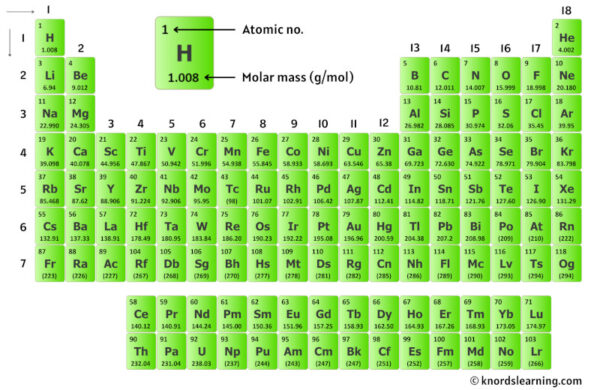
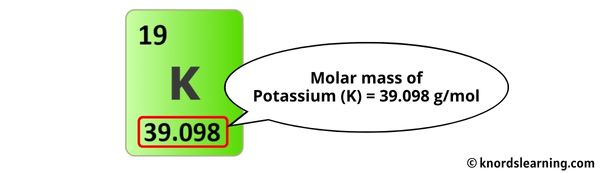
- Potassium (K): 39.10 g/mol
- Chromium (Cr): 52.00 g/mol
- Oxygen (O): 16.00 g/mol
Now, we multiply each atomic mass by the number of atoms of that element in the formula, and then add them all together:
(2 x 39.10 g/mol) + (2 x 52.00 g/mol) + (7 x 16.00 g/mol) = ?
Let's break it down step by step:

- Potassium: 2 x 39.10 g/mol = 78.20 g/mol
- Chromium: 2 x 52.00 g/mol = 104.00 g/mol
- Oxygen: 7 x 16.00 g/mol = 112.00 g/mol
Finally, we add them all up:
78.20 g/mol + 104.00 g/mol + 112.00 g/mol = 294.20 g/mol
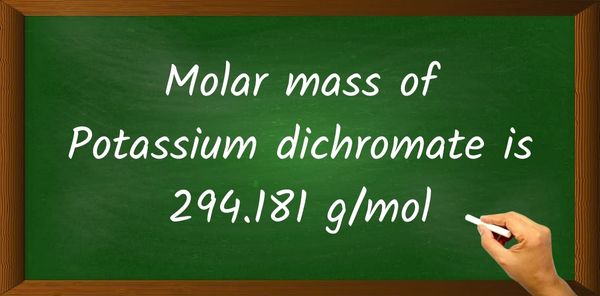
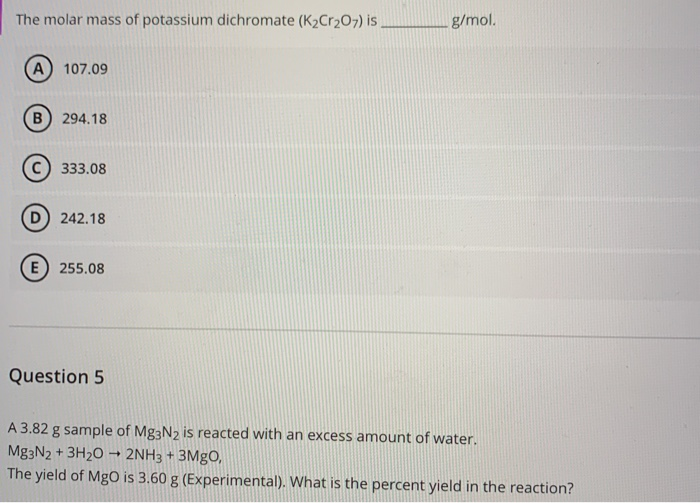
Voila! The molar mass of potassium dichromate (K2Cr2O7) is approximately 294.20 g/mol.
Why is this Cool?
So, why should you care about the molar mass of potassium dichromate? Well, beyond being a fascinating puzzle, it's incredibly useful in a lot of real-world applications. Potassium dichromate is used in a variety of industrial processes, from leather tanning to cleaning glassware in labs (though it's being phased out for safer alternatives due to its toxicity). Knowing its molar mass allows chemists and other scientists to accurately measure and use it in these processes.
Think of it this way: understanding molar mass is like having a universal translator for the language of chemicals. It lets you speak their language, understand their behavior, and ultimately, control them! And that, my friends, is pretty darn cool.
So, next time you hear about some complicated-sounding chemical, remember that it's just a bunch of atoms hanging out together, and you can figure out its properties with a little bit of know-how. Happy calculating!