
Is Smoke Detector Same As Carbon Monoxide Detector
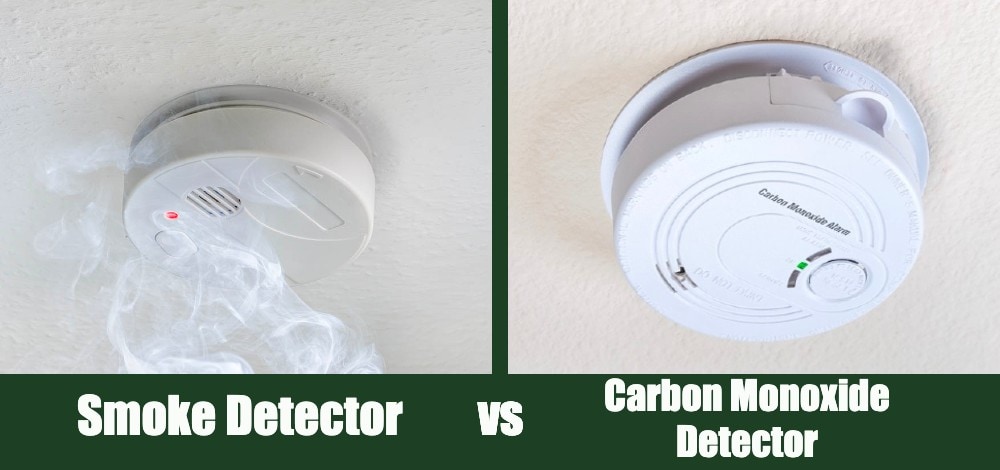
Alright, gather ‘round, folks, and let’s talk about something that might just save your bacon (literally, if you’re a terrible cook like me). We’re diving into the thrilling, often confusing, world of those little plastic discs on your ceiling. You know, the ones that decide to belt out an earsplitting shriek at 3 AM because a rogue dust bunny floated by, or because your toaster decided to go rogue.
The big question on everyone’s mind, whispered in hushed tones over burnt coffee and soggy toast: “Is a smoke detector the same as a carbon monoxide detector?”
Spoiler alert, my friends: No. No, they are absolutely not. And confusing them is like thinking a bouncer and a DJ at a club do the same job. Both are crucial for a good night, but one’s dealing with rowdy drunks and the other’s spinning Beyoncé. Let’s break it down, shall we?
Must Read
The Smoke Detector: Your Fire-Fighting Hype Man
First up, we have the OG. The classic. The one that’s been traumatizing pets and startling sleepyheads for decades: the smoke detector. Think of this guy as your home’s personal, extremely loud, alarm clock for disaster. Its sole mission in life? To sniff out smoke particles.
When there’s smoke – whether it’s from an actual fire, a forgotten pizza, or your attempt at making artisanal charcoal – this hero springs into action. It doesn’t care if you just set off the smoke alarm because you tried to caramelize onions. It just knows: smoke detected! Initiating panic mode!
It’s designed to give you that early warning, that precious few minutes, to get out of the house when a fire starts. It’s like having a tiny, furious watchdog that barks only when it smells trouble. And trust me, you want that watchdog barking when flames are involved.

The Carbon Monoxide Detector: The Silent Assassin's Nemesis
Now, let’s meet its mysterious, far more understated cousin: the carbon monoxide (CO) detector. This isn’t a party animal; it’s more like a secret agent. Its job is to detect something you absolutely cannot see, smell, or taste. We're talking about carbon monoxide gas.
Here’s the chilling truth: CO is often called the "silent killer" because it’s completely undetectable by human senses. It’s a byproduct of incomplete combustion from things like furnaces, gas stoves, water heaters, fireplaces, and even car exhaust. And if it builds up in your home, it silently suffocates you by replacing oxygen in your blood.
Symptoms of CO poisoning can mimic the flu – headache, dizziness, nausea – making it incredibly insidious. You might just think you’re having a particularly rough Monday, when in reality, your body is slowly being starved of oxygen. That’s why the CO detector is so utterly, profoundly important. It’s the only thing that can alert you to this invisible threat before it’s too late.

So, while the smoke detector is yelling, "FIRE! GET OUT!", the CO detector is quietly, subtly alerting you, "Invisible, odorless gas approaching! Get fresh air, stat!" Two very different threats, demanding two very different watchful eyes.
Why the Mix-Up? (And Why It Matters)
I get it. They’re both round. They both live on ceilings or walls. They both have batteries that inevitably die at inconvenient times. But functionally, they are as different as a light switch and a toaster oven. One responds to visible particles, the other to invisible gas.
A smoke detector cannot detect carbon monoxide. And a carbon monoxide detector cannot detect smoke. It's like asking your coffee maker to brew tea. Sure, it's a hot beverage, but the mechanism is all wrong!
Thinking one covers the other is a dangerous misconception. You might feel safe because you have smoke detectors, but if your furnace starts leaking CO, you'd have no warning. Conversely, a CO detector won't save you from a house fire.

The Dynamic Duo: Combo Detectors!
“But wait!” I hear you cry, “What about those fancy ones that do both?” Ah, yes, the multi-talented marvels! These are your combination smoke and carbon monoxide detectors. Think of them as the Swiss Army knife of home safety.
They contain two separate sensors – one for smoke, one for CO – cleverly packed into a single unit. So, while they look like one device, they’re actually performing two distinct, equally vital, jobs. It’s like having both the bouncer and the DJ perfectly synced in one person. Efficient, right?
These are fantastic for convenience and making sure you’re covered. Just remember, it’s not one sensor doing double duty; it’s two specialized components living under the same roof.

Placement and TLC (Tender Loving Care)
Now, a quick word on where these unsung heroes should live. Smoke detectors should be on every level of your home, inside and outside sleeping areas. CO detectors? Near sleeping areas and on every level, especially where fuel-burning appliances are located.
And for goodness sake, test them regularly! That little button isn't just for show. Push it once a month. Change batteries twice a year (the "spring forward, fall back" daylight saving time changes are a great reminder). And remember, these devices don't last forever. Most have a lifespan of 7-10 years. After that, they’re basically just ceiling décor, not life-saving tech.
The Takeaway: Be Smart, Be Safe!
So, there you have it. Smoke detector = fire alarm. Carbon monoxide detector = silent gas alarm. Two different roles, both absolutely critical for keeping your home and your loved ones safe. Don't play roulette with your safety by confusing these two essential gadgets.
Go forth, check your detectors, and enjoy that slightly-less-burnt toast with the peace of mind that you’re protected from both visible flames and invisible threats. And maybe, just maybe, try not to set off the smoke alarm with your culinary experiments tonight. Unless, of course, you're going for that "charred" aesthetic.