
Is Polyester And Nylon The Same
Alright, grab your coffee, settle in, because we're about to tackle one of life's great mysteries, right up there with "Where do all my missing socks go?" and "Is it really that bad if I skip leg day again?" We're talking about those two synthetic superstars of the fabric world: Polyester and Nylon. Are they the same? Are they secretly long-lost twins separated at birth, or just really good friends who happen to dress alike? Let's spill the beans.
You’ve seen them everywhere. Your running shorts? Probably one of them. That ridiculously durable backpack? Yep. Even your fancy new activewear that promises to wick sweat while also making you look like a superhero? Absolutely. But try to tell them apart on a whim, and suddenly you feel like you’re back in high school chemistry, desperately trying to remember the periodic table. Don’t worry, it’s not just you. This is a common conundrum, a textile tiff, if you will!
Nylon: The OG Party Animal
Let's kick things off with Nylon. Imagine a fabric so revolutionary that it practically won World War II. Okay, maybe not single-handedly, but it sure helped! Nylon burst onto the scene in the late 1930s, a true marvel of modern science. It was originally hailed as a synthetic silk, and boy, did it deliver. Its first big splash was in... wait for it... women's stockings! Yup, before it was parachutes and ropes, it was making legs look fabulous. Talk about a glow-up!
Must Read
What makes Nylon special? Think of it as the strong and stretchy friend in your fabric group. It’s got an incredible tensile strength, meaning it can take a serious beating without breaking. You know those climbing ropes? Often nylon. Seatbelts? Nylon. That incredibly tough fishing line? You guessed it. It’s also got fantastic elasticity, which means it can stretch quite a bit and then bounce right back into shape. This makes it perfect for things like swimwear, hosiery, and anything that needs a bit of give without getting baggy. It’s also relatively soft and smooth, often having a rather luxurious, silky feel. The downside? It can be a bit more absorbent than its cousin, and it's not a huge fan of intense heat.
Polyester: The Practical Powerhouse
Now, let's turn our attention to Polyester. If Nylon is the flashy, adventurous one, Polyester is the reliable, no-nonsense workhorse. It came along a little later, really gaining traction in the 1950s and 60s. And bless its heart, it got a bit of a bad rap in the 70s with those... well, those polyester suits that seemed to repel both water and good taste. But don't hold that against it! Polyester has truly come into its own.

What's Polyester's superpower? It’s all about durability and resilience. This fabric is practically immune to wrinkles – seriously, it wakes up looking fabulous. It’s incredibly resistant to shrinking, stretching, and most chemicals. It also laughs in the face of moisture, which is why it’s a favorite for outdoor gear like raincoats, tents, and anything that needs to dry in a flash. That fleece jacket keeping you toasty? Probably polyester. Your reusable shopping bag that somehow holds an entire grocery store? You bet. It’s less stretchy than nylon but holds its shape like a champion. It’s also generally more heat-resistant, so your iron won't give it a meltdown as easily.
The Great Divide: More Than Just a Name
So, are they the same? Absolutely not! While both are synthetic polymers – meaning they're made from repeating units of chemical compounds – they're like different types of cookies. Both are delicious, but one's an oatmeal raisin and the other's a chocolate chip. They have different chemical structures, which gives them their unique personalities and properties.
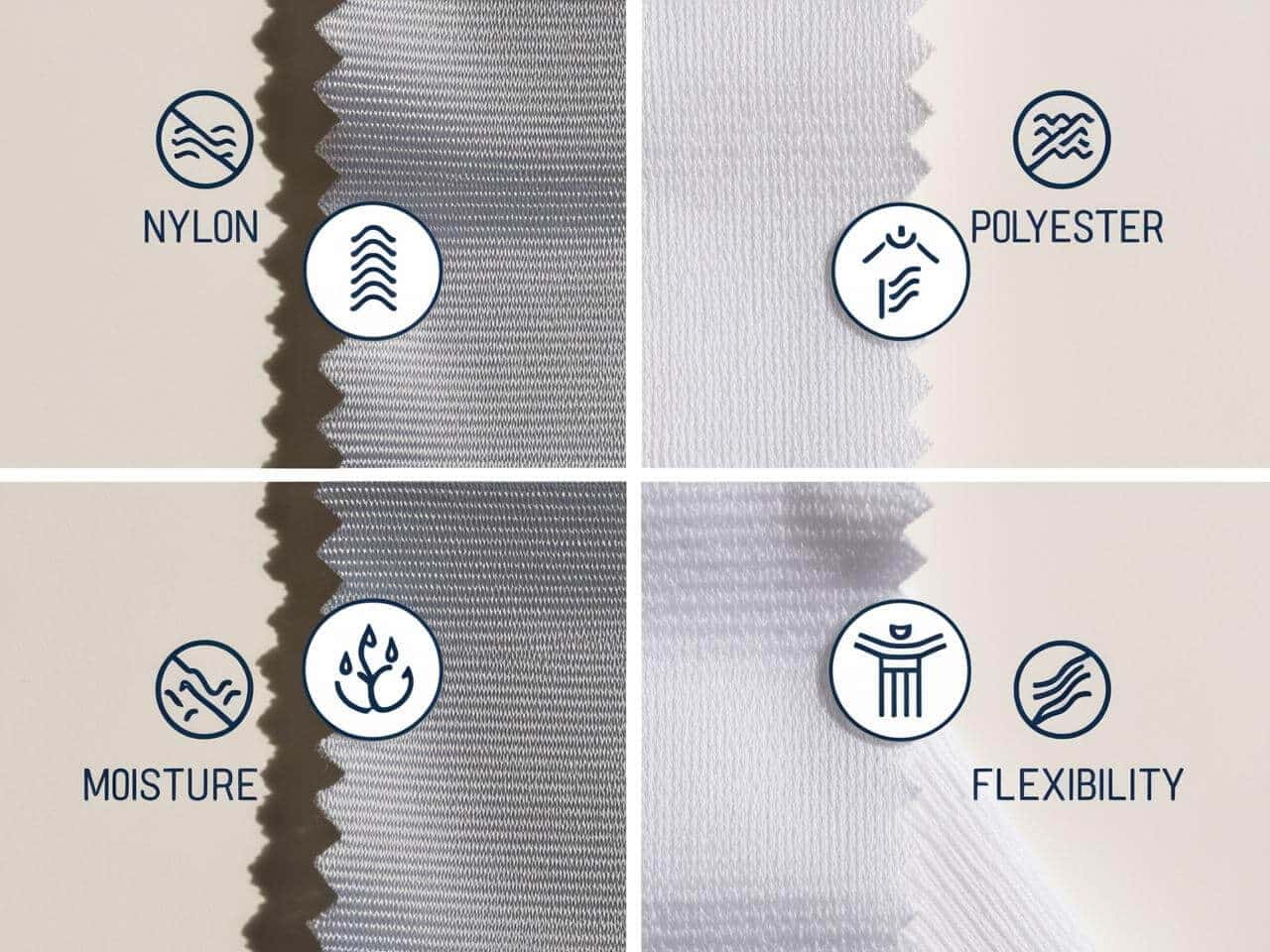
Think of it this way:
- Nylon is a polyamide. It’s like the graceful ballerina – strong, flexible, a bit shiny, and can handle a tumble.
- Polyester is a polyethylene terephthalate (try saying that five times fast!). It’s the stoic bodybuilder – incredibly strong, holds its form, and shrugs off the elements.
Nylon often feels smoother and silkier, a bit more lustrous. Polyester can feel a little more substantial, sometimes a tad rougher, especially in its staple fiber forms (like fleece). Nylon is generally more expensive to produce than polyester. And while both are pretty good at repelling water, polyester is generally more water-resistant and quicker to dry. Nylon, on the other hand, is a bit more absorbent but still dries faster than natural fibers.

When They Team Up: The Blended Besties
Sometimes, fabric designers decide these two are better together. You'll often find nylon and polyester blended with each other, or with other fibers like cotton or spandex. Why? Because they complement each other beautifully! A blend might get you the stretch and softness of nylon with the wrinkle-resistance and quick-drying power of polyester. It’s like creating a super-fabric, combining their individual strengths to conquer the world, or at least, your laundry pile.
The Verdict: Two Different, Wonderful Warriors
So, the next time you're staring at a garment label, wondering if "100% Polyester" is the same as "100% Nylon," you can confidently say, "Nope! They're distinct!" They both serve incredible purposes in our modern world, from saving lives in airbags to keeping you comfy on your morning run. They might both be synthetic, but they’re definitely not interchangeable.
So, there you have it. The mystery is solved! You can now impress your friends at your next coffee break with your newfound textile wisdom. And maybe, just maybe, you'll finally understand why that one pair of athletic shorts feels just a little bit different from the other. You're welcome!
