Is Crushing A Can A Physical Or Chemical Change

Have you ever absentmindedly crushed a soda can after finishing your drink? Or maybe you've seen someone meticulously compacting aluminum cans for recycling? It might seem like a mundane act, but crushing a can actually touches on a fundamental concept in science: the difference between physical and chemical changes. Exploring this difference is more than just a nerdy pursuit; it’s a great way to understand the world around us! It's a simple question with surprisingly broad applications, making it a fun and useful topic for everyone.
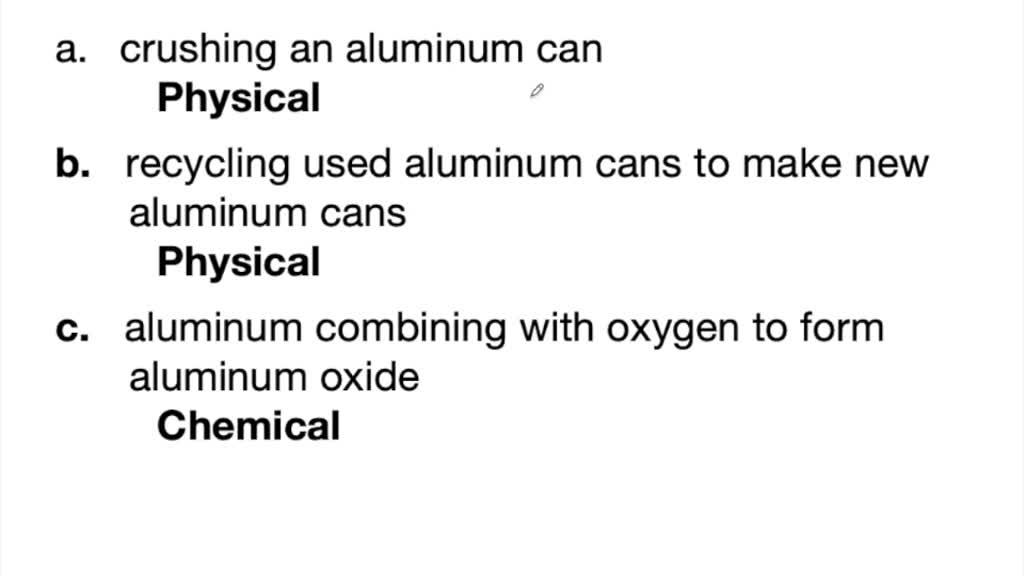
So, is crushing a can a physical or chemical change? The answer is: it's a physical change. But why? Let's break it down.
A physical change alters the form or appearance of a substance, but doesn't change its chemical composition. Think of it like rearranging building blocks – you can create a different structure, but the individual blocks (atoms and molecules) remain the same. In the case of the can, you're just changing its shape. It's still aluminum, even if it's now a crumpled mess.
Must Read
A chemical change, on the other hand, involves the formation of new substances. This happens through chemical reactions, where atoms are rearranged and new bonds are formed. Think of burning wood – the wood is transformed into ash, smoke, and gases, which are entirely different substances from the original wood.
Why is this useful?

- For Beginners: Understanding physical and chemical changes is a core concept in basic science. It helps you classify the many transformations you see every day, from melting ice (physical) to rusting iron (chemical).
- For Families: This is a fantastic topic to explore with kids! You can turn everyday activities into science experiments. Discuss what happens when you freeze water, bake a cake, or cut vegetables.
- For Hobbyists: Whether you're a cook, a gardener, or a DIY enthusiast, knowing the difference between physical and chemical changes helps you understand the processes involved in your hobbies. For example, understanding chemical reactions is crucial for successful baking or mixing paints.
Examples and Variations:
- Melting ice: Physical change – the water is still H2O, just in a different state (solid to liquid).
- Boiling water: Physical change – the water is still H2O, just in a different state (liquid to gas).
- Cutting paper: Physical change – the paper is still paper, just in smaller pieces.
- Rusting iron: Chemical change – iron reacts with oxygen to form iron oxide (rust), a new substance.
- Burning wood: Chemical change – wood reacts with oxygen to produce ash, smoke, and gases.
- Mixing sugar and water: Physical change – the sugar dissolves, but it's still sugar, and the water is still water. You can separate them again by evaporation.
Getting Started:

The easiest way to grasp this concept is to start observing everyday phenomena and asking yourself: "Is the substance changing into something new, or is it just changing its form?" Experiment! Mix things together (safely, of course!), observe what happens when you heat or cool things, and see if you can identify the physical and chemical changes taking place.
Ultimately, understanding the difference between physical and chemical changes unlocks a deeper appreciation for the science happening all around us. So, next time you crush a can, take a moment to appreciate the simple yet powerful concept of a physical change. It's a fun way to connect with the world and learn something new!