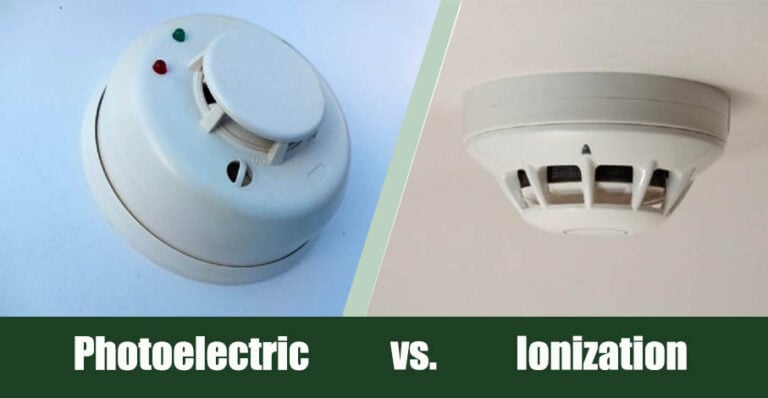
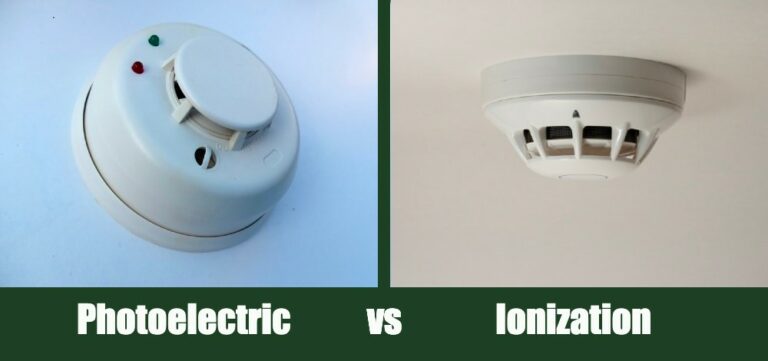
Ionization And Photoelectric Smoke Detectors

Ever been startled by that sharp, insistent chirp from your smoke detector, only to realize it's just telling you its battery is low? Or perhaps you've accidentally set it off while cooking a particularly enthusiastic stir-fry? These little guardians in our homes are often taken for granted, but behind that simple beeping lies some truly fascinating science! Learning a bit about how they work isn't just a fun peek behind the curtain of everyday tech; it's also incredibly important for keeping our families safe.
At their core, smoke detectors serve a vital purpose: to give us early warning of a fire. This early alert can be the difference between a minor incident and a tragedy, buying precious minutes to evacuate safely. They are silent sentinels, constantly on duty, ensuring our peace of mind whether we’re awake or asleep. But not all smoke detectors are created equal, and understanding the two main types – ionization and photoelectric – helps us appreciate the clever ways they detect danger.
Let's start with ionization smoke detectors. These devices are pretty clever! Inside, they contain a tiny, safe amount of a radioactive material, Americium-241. Don't worry, it's completely sealed and poses no health risk. This material ionizes the air in a small chamber, creating a continuous electrical current between two plates. When smoke particles, typically from a fast-flaming fire (like burning paper or wood), enter this chamber, they attach to the ions, disrupting the current. When the current drops below a certain threshold, ping! the alarm sounds. They're excellent at sensing the tiny, invisible particles produced by these rapid fires.
Must Read
Then there are photoelectric smoke detectors, which use a different kind of magic – light! These have a light source (like an LED) and a light sensor, often positioned in a chamber so that the light beam normally misses the sensor. However, when smoke particles, usually from a smoldering fire (like a mattress slowly burning), enter the chamber, they scatter the light beam. This scattered light then hits the sensor, triggering the alarm. Photoelectric detectors are particularly good at detecting the larger, visible particles produced by smoldering fires and are often less prone to nuisance alarms from cooking fumes.
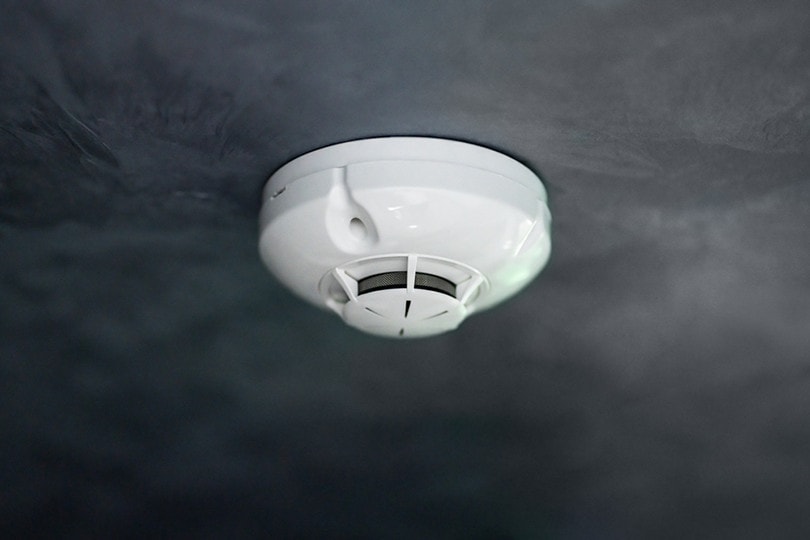
You’ll find these crucial devices everywhere – from your own kitchen and bedrooms to schools, offices, and even libraries. In education, they offer a brilliant real-world example of physics in action: ionization detectors demonstrate principles of radioactivity and electrical conductivity, while photoelectric detectors showcase optics and light scattering. They're a fantastic starting point for discussions on home safety, emergency preparedness, and basic science.
Want to explore them yourself? A simple tip is to check the labels on your own smoke detectors at home. You might find "Ionization" or "Photoelectric" printed on the back. It's often recommended to have a mix of both types in your home for comprehensive protection, or to opt for "dual-sensor" alarms that combine both technologies. And here's the most practical tip: always, always test your smoke detectors monthly by pressing the test button, and remember to change their batteries annually (or follow the manufacturer's recommendations for sealed units). A quick clean with a vacuum cleaner can also keep them dust-free and working efficiently. Next time that little device chirps, you'll know there's a whole world of science inside, silently protecting you.