
Increase Assets Decrease Liabilities And Stockholders' Equity
Okay, so picture this: I'm at a garage sale, right? Spotted this vintage record player – the kind my grandpa used to have. It's marked "FREE." Score! But then, as I'm lugging it to my car, the guy running the sale yells, "Wait! Just kidding! It's gonna cost you… negative $50!" I blink. "You're paying me to take it?" He shrugs. "Yeah, cleaning out the basement. Consider it a finders' fee."
Weird, right? But stick with me, because that (admittedly bizarre) scenario kinda illustrates a fundamental accounting principle: how an increase in assets can sometimes be tied to a decrease elsewhere. Hold onto your hats, folks, because we're diving into the wild world of the accounting equation: Assets = Liabilities + Stockholders' Equity. Sounds scary, but trust me, it's less intimidating than a basement full of dusty record players.
Assets: What You Own (or are Owed)
Let's start with the easy part: assets. Think of assets as everything your business owns or controls that has future economic value. Cash in the bank? Asset. Shiny new espresso machine? Asset. Even that unpaid invoice from your best client? You guessed it - asset! They owe you, so it counts.
Must Read
Think of it like your personal belongings. Your car, your laptop, your (hopefully not free) vintage record player - all assets. Now, imagine your business is a bigger, slightly more organized version of your own life. Same principles apply!
Liabilities: What You Owe
Okay, onto liabilities. This is the flip side of the coin. Liabilities are what your business owes to others. Bank loans? Liability. Unpaid bills from your supplier? Liability. That awkward promise you made to bake cookies for everyone if you hit your sales target? (Okay, maybe not that one, but you get the idea.)

Basically, it's debt. And just like in your personal life, debt isn't necessarily a bad thing. Sometimes you need a loan to buy a house (a big asset!), and businesses often use loans to grow. It's just important to keep track of it.
Side note: Sometimes I think of liabilities as the "adulting" side of the accounting equation. All those responsibilities! Sigh.
Stockholders' Equity: What's Left for the Owners
Finally, we have stockholders' equity (or owner's equity if it's a sole proprietorship or partnership). This is the residual value of the business after you subtract liabilities from assets. Think of it as the "net worth" of the company. It represents the owner's stake in the business.

Imagine you sell your record player for $100. You immediately owe your friend $30 for helping you lug it to the garage sale. The remaining $70 is your equity - what's rightfully yours after paying your dues!
The Accounting Equation in Action: The Weird Part
Now, here's where it gets interesting. The fundamental accounting equation (Assets = Liabilities + Stockholders' Equity) always has to balance. Always. That's why it's called an equation! So, what happens if one side goes up?
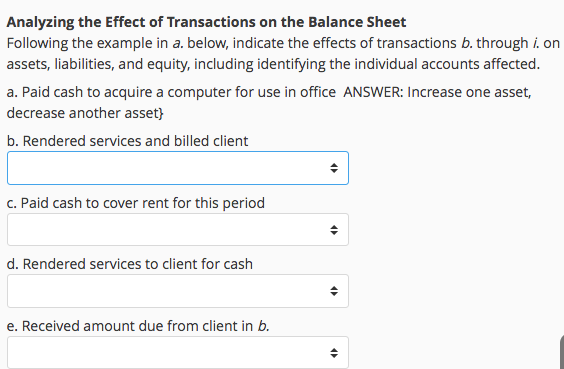
Well, either the other side goes up by the same amount, or something within that side has to change. And that's where we see how an increase in assets can sometimes lead to a decrease in liabilities or stockholders' equity.
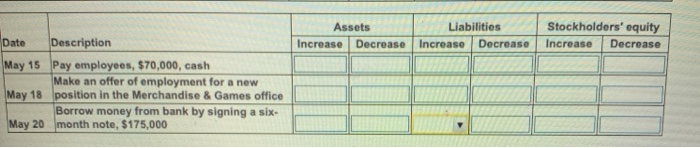
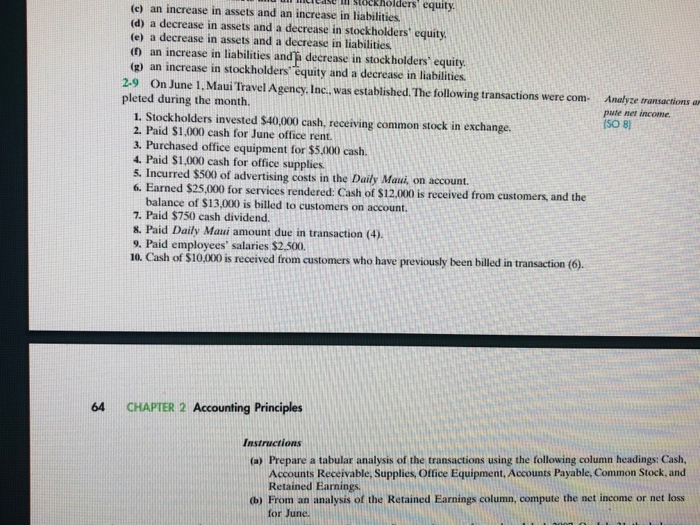
Let's say you borrow money from the bank (increasing your liabilities - you owe them now!). You take that money and buy a new delivery truck (increasing your assets). Assets go up, liabilities go up. Balanced! But what if you sell inventory (an asset) at a loss? You get cash (another asset – that goes up!), but your stockholders' equity decreases to reflect the loss. See how that works?
One more example: Let’s say your business got sued (ouch!). This situation can decrease your asset because maybe you need to pay fines. It also decreases your stockholder's equity because you are paying using profits from the company!
Why Does This Matter?
Understanding this relationship is crucial for anyone involved in business. It allows you to see the bigger picture of how your business is performing and how different transactions impact your overall financial health. It helps you make informed decisions about borrowing money, investing in assets, and managing your equity.
So, next time you're at a garage sale and someone offers you money to take something off their hands, remember the accounting equation. It might not help you snag a free record player, but it will help you understand the complex (and sometimes counterintuitive) world of finance.
And hey, if you do find a free record player, let me know. I'm always up for a good deal... and maybe a little accounting weirdness.