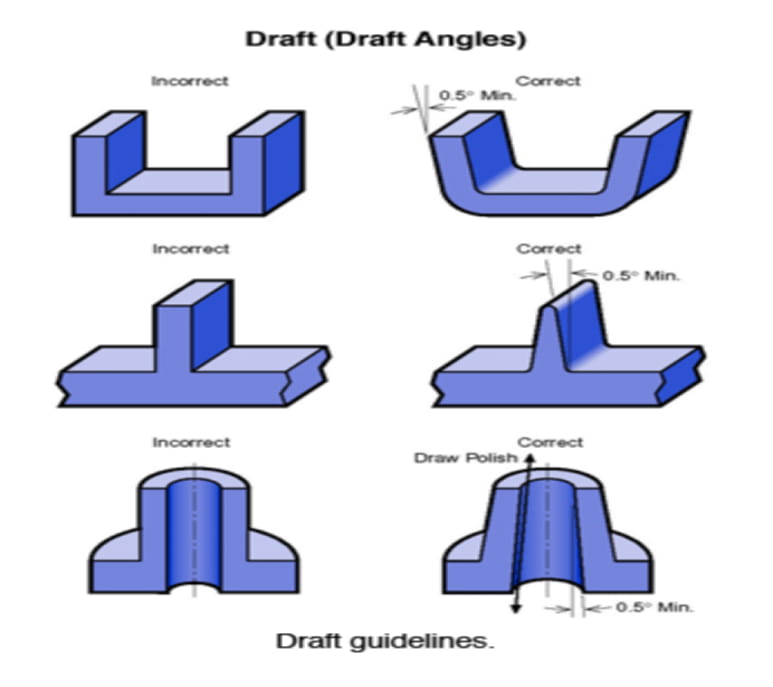
Incorrect Draft Angle In Solidwork

Ever tried to bake a cake and it sticks to the pan like your toddler to your leg when you try to leave for work? That’s kind of like incorrect draft angle in SolidWorks. You designed this beautiful, intricate part, envisioned it popping out of the mold perfectly, but BAM! It's stuck. And you’re left wondering, "What went wrong?"
Let's break it down. Imagine you’re building a sandcastle. You meticulously pack the sand into your bucket, pat it down, and then… the moment of truth. You flip the bucket over and gently lift… Only half the castle comes out, leaving a sad, crumbly mess. That, my friend, is the tragedy of a missing (or incorrect) draft angle in the real world!
In SolidWorks, draft angle is that slight taper you add to the sides of your part so it can be easily removed from a mold or die. It’s the unsung hero of manufacturing. Think of it like giving your part a little nudge, a gentle "farewell" as it leaves its cozy mold-home. Without it, you're basically gluing your design into the tooling. And trust me, that's a headache nobody wants.
Must Read
Why Does This Even Happen?
Well, there are a few culprits. Sometimes, it's simply forgetting. You're in the zone, creating this masterpiece, and poof, draft angle vanishes from your mind like your keys right before an important meeting. Other times, it’s assuming your design doesn't need it. "It's just a small part," you think. "It'll be fine!" Famous last words.
But let's be honest, sometimes it's just plain stubbornness. You love the sharp, clean lines of your design. That slight taper? It just ruins the aesthetic! But remember, form follows function, and a beautiful part that's impossible to manufacture is about as useful as a chocolate teapot.

The Consequences: A Comedy of Errors
So, what happens when you neglect this crucial detail? Buckle up, because it's not pretty.
- Part Distortion: Trying to force a part out of a mold without draft can warp it beyond recognition. Imagine squeezing a tube of toothpaste from the bottom – it's going to come out all wonky.
- Mold Damage: You might actually damage the mold itself trying to extract your stubbornly stuck part. Think of it like trying to remove a burnt cake from a pan with a metal spatula – sparks might fly (and your cake will definitely be ruined).
- Increased Cycle Times: If you do manage to get the part out, it'll take forever. More time fiddling, more time wrestling, more time… wasted! This translates directly into higher production costs. Nobody wants that.
- Scrap Parts: Sometimes, the damage is irreversible. You end up with a pile of unusable parts, destined for the recycling bin. It's a tragic waste of materials and effort.
How to Avoid Draft Angle Disasters
Fear not! There are simple ways to keep your parts happy and mold-friendly.
![Core and Cavity in Injection Molding: Ultimate Guide [2025]](https://hitopindustrial.com/wp-content/uploads/Diagram-showing-stepped-parting-line-shut-off-angle-and-draft.webp)
First, always consider draft angle early in the design process. It's much easier to incorporate it from the start than to try and shoehorn it in later. Think of it like putting on sunscreen before you go to the beach, not after you're already lobster-red.
Second, use SolidWorks' Draft tool religiously. It's there for a reason! Learn how to use it properly, and make it your best friend. There are also Draft Analysis tools which are useful to see where potential problems could arise.
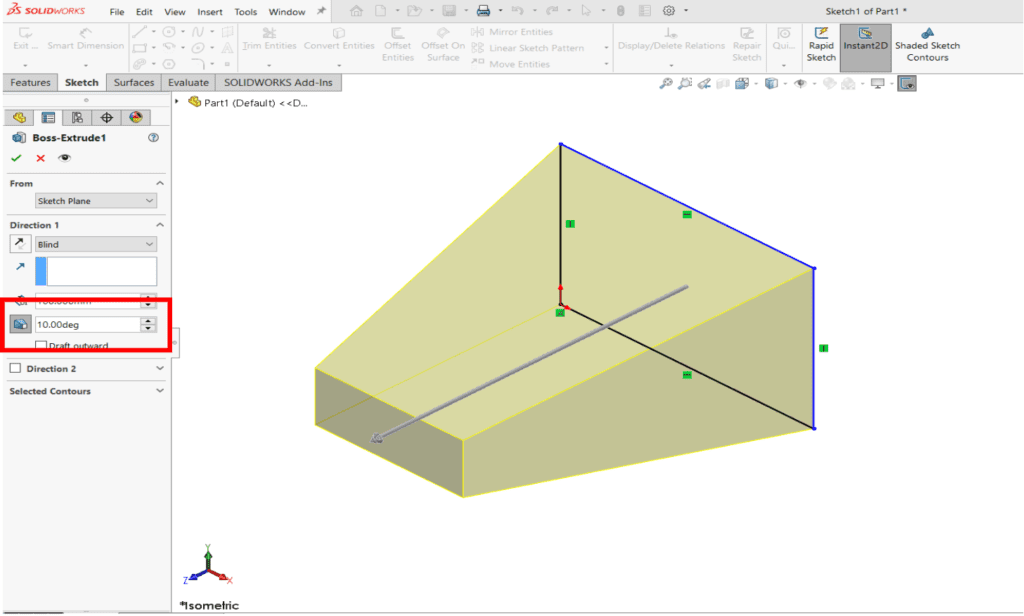
Third, know your materials! Different materials require different draft angles. A rigid plastic will need a greater angle than a more flexible one. Do your research or consult with a manufacturing expert.
Finally, when in doubt, add more draft! A slightly larger draft angle is almost always better than not enough. You can usually adjust the design later if needed, but you can't magically add draft to a finished part.
So, the next time you're designing in SolidWorks, remember the importance of draft angle. It's the difference between a smooth, successful manufacturing process and a frustrating, costly disaster. Give your parts a little love, a little taper, and they'll thank you for it!