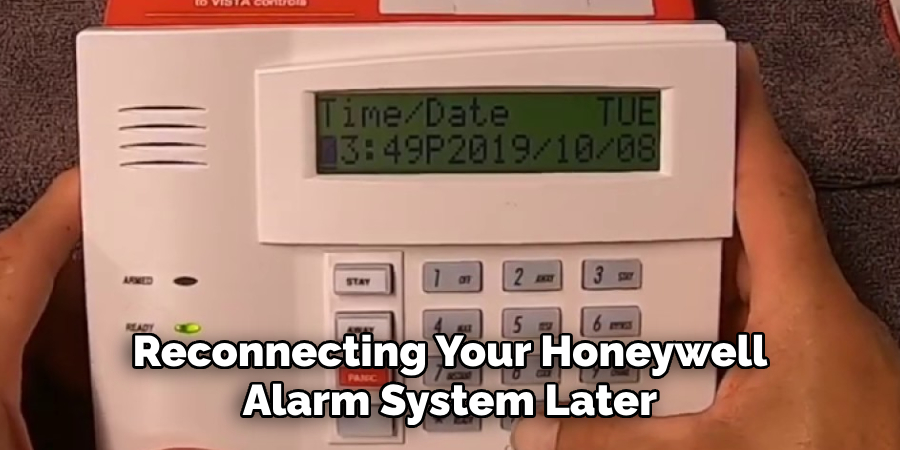
How To Turn Off A Honeywell Alarm System

There it goes again. That shrill, insistent wail that cuts through the morning quiet like a rusty saw through butter. Your heart, doing a frantic salsa in your chest, instantly knows the culprit. It’s the house’s overzealous, metallic-voiced guardian, the Honeywell alarm system, convinced a rogue dust bunny or perhaps a particularly ambitious housefly has breached the perimeter. It usually kicks off with such gusto that you half expect to see tiny, uniformed officers rappelling down the chimney.
You stumble out of bed, a bleary-eyed superhero in pajamas, on a mission to restore peace. The sound is a physical presence, bouncing off walls, making the very air vibrate. The dog, meanwhile, has chosen this precise moment to perform its most convincing impression of a confused, vibrating rug. This isn't just a sound; it's an event. A full-blown domestic emergency declared by a box on the wall.
Your first thought is always a rapid-fire inventory: Did I leave a window open? Did the cat achieve flight? Is there an actual villain in the pantry? But deep down, you know. It’s almost certainly nothing more sinister than a forgotten task or a dramatic shift in air pressure. Still, the alarm doesn’t care about your rationalizations. It just… blares.
Must Read
Making your way to the main keypad feels like an obstacle course. Each step is punctuated by the piercing shriek, growing louder, more urgent. It's a race against the clock, or more accurately, a race against your own sanity and the impending ire of your neighbors. You reach the glowing panel, a beacon of technological might, intimidating in its purpose, yet ultimately serving your every command. The lights on the keypad blink like tiny, accusatory eyes.
"Oh, for crying out loud, little box of noise," you might mumble under your breath, a half-hearted plea to the electronics. "Let's just get this over with."
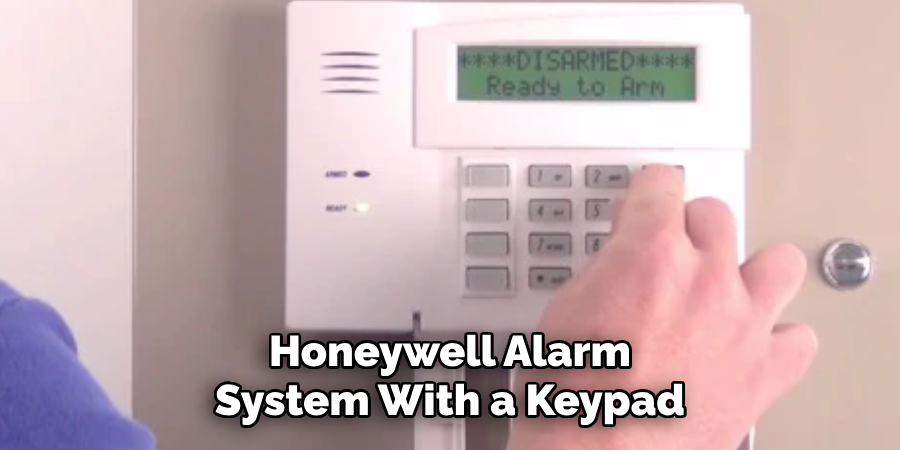
You square up to the challenge. This is where the magic, or rather, the muscle memory, kicks in. There's no fancy sequence, no secret handshake. Just the familiar array of numbers, waiting for their specific, chosen order. With a practiced ease that belies your current state of panic, your fingers dance across the buttons. Click, click, click, click. Four distinct taps, each one a step closer to blissful silence. This isn't just entering a code; it's performing a small, vital ritual, a pact between human and machine.
Once your unique four-digit code is entered, the keypad lights up, often with a helpful, reassuring glow. It’s like the alarm system is pausing, taking a deep breath, and saying, "Are you sure about this?" And then, almost anticlimactically, comes the grand finale. You press the button that usually says something like OFF or DISARM. It’s typically the largest, most prominently labeled button, a beacon of hope in a sea of numeric options. One solid press.

And then… just like that… silence. Glorious, profound, utterly beautiful silence. The kind of silence that feels like a warm blanket on a cold day. The kind of silence that makes you realize just how incredibly loud it was just moments before. The dog, sensing the shift in atmospheric tension, un-vibrates itself and looks at you with an expression that clearly says, "Finally, human. Took you long enough."
You stand there for a moment, basking in the return of quietude, a feeling of deep relief washing over you. It's a strange kind of power, isn't it? To command such a powerful, noisy guardian with just a few flicks of the finger. The Honeywell, once a blaring tyrant, now settles back into its role as a silent sentinel, patiently waiting for its next moment of perceived heroic action. It’s a testament to the fact that even the most startling technology often has the simplest on-off switch, a surprising reminder that peace is often just a code and a button press away. And that, in its own quirky way, is a rather heartwarming thought to start the day.