
How To Tell If A Birkin Is Real

Alright, settle in, grab your latte, because we're about to delve into the thrilling, often terrifying, world of Birkin authentication. You see that woman across the cafe with the "effortlessly" chic bag? Is it real? Is she secretly a Russian oligarch? Or did she snag a convincing dupe from a back alley in Canal Street? Let's find out how to become Birkin detectives, shall we?
The Stitch Witchery: Inspecting the Seams
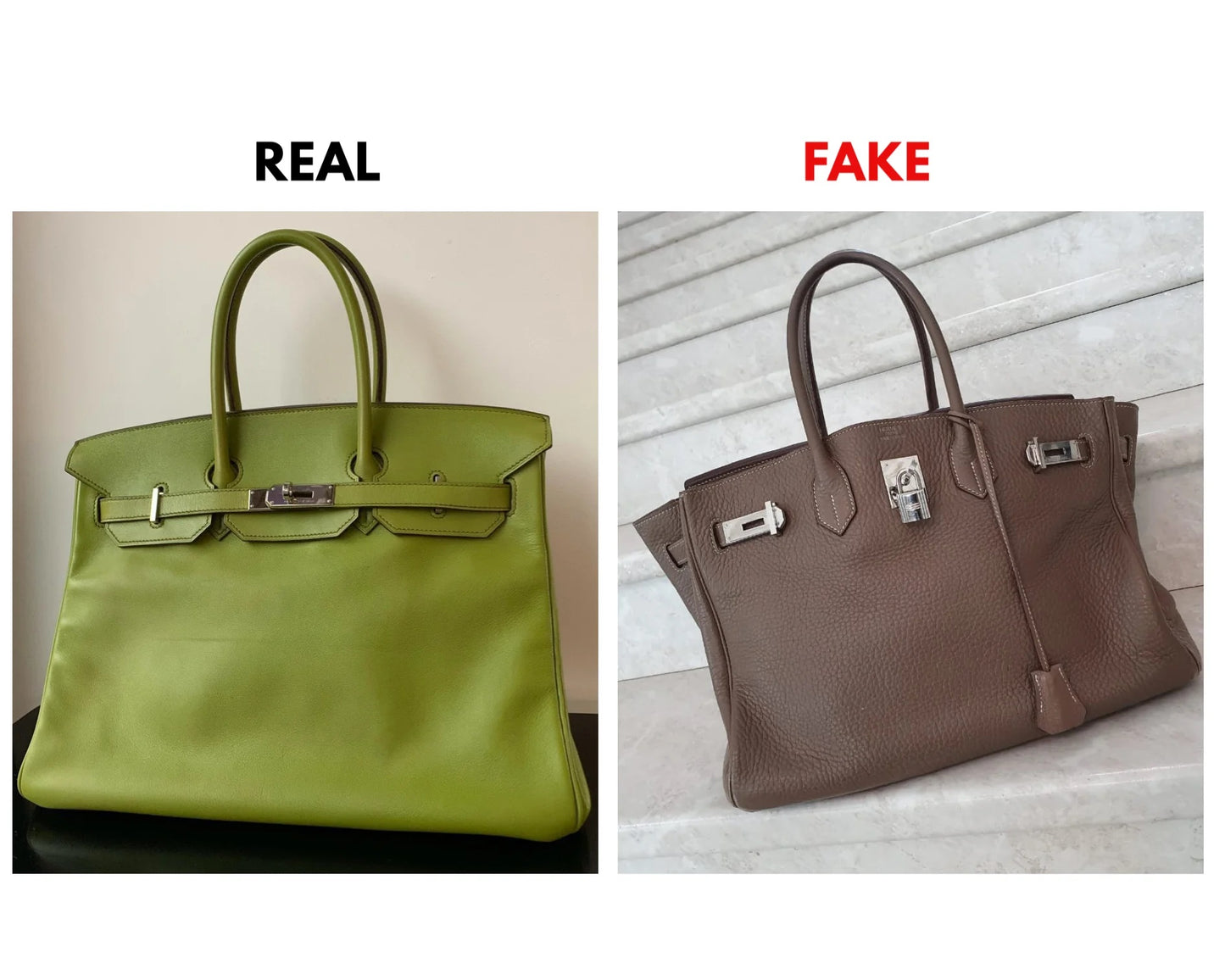
First things first, we're going to play seamstress. But don't worry, you don't need a sewing machine. Just your eyeballs. A real Birkin's stitching is like a tiny, perfect army marching in unison. Each stitch is uniform, precise, and consistent. Forget the wobbly, spaced-out stitches of a fake. Those are the tell-tale signs of a counterfeit catastrophe.
Think of it this way: a real Birkin's stitching is like a Swiss watch, each component working in harmony. A fake Birkin's stitching is more like... well, like my attempt at baking a soufflé. A complete and utter disaster.
Must Read
Hardware Harmony: Shiny, Not Shady
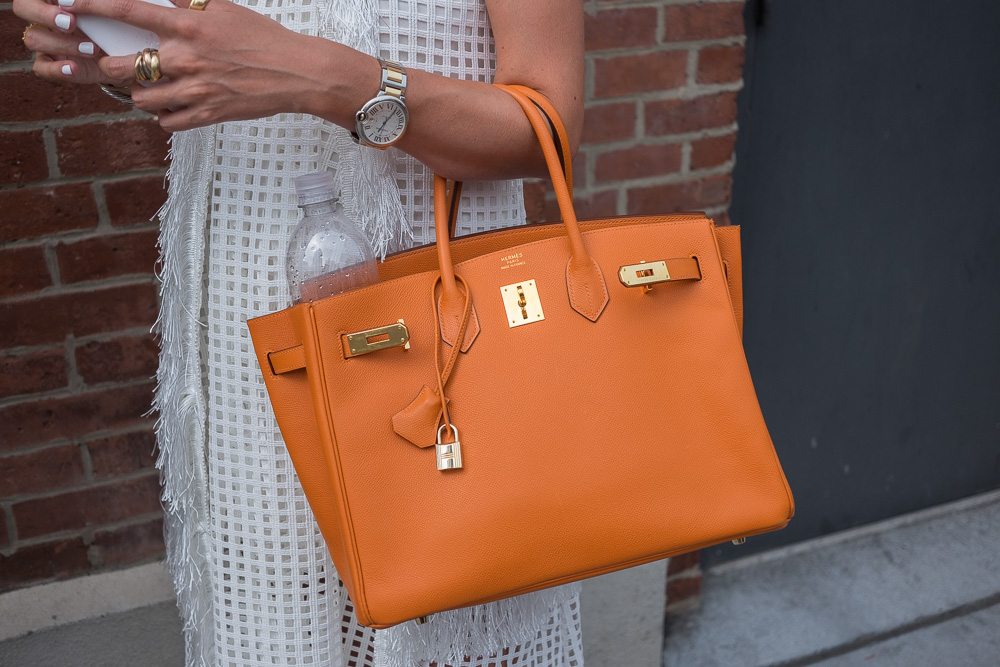
Next up: bling! We're talking about the hardware – the lock, keys, and any other metallic bits. A genuine Birkin uses precious metals, often plated in gold or palladium. This means they’ll have a lovely, deep shine, not a cheap, plastic-y gleam. The weight is also important; these aren't featherlight, bargain-bin buckles.
Pro tip: The hardware should feel substantial in your hand. If it feels like it could snap in half if you looked at it wrong, chances are you're holding a fake. Imagine Indiana Jones swapping his golden idol for a bag – he’d definitely notice the weight difference!
Leather Lottery: Feeling is Believing
Ah, the leather! This is where things get… tactile. A real Birkin is crafted from top-quality leather, sourced from exotic locales (think: crocodile farms in Australia, or tanneries in France). The leather should feel supple, luxurious, and almost… alive. It should have a distinctive aroma, a sort of “expensive leather” smell that’s impossible to replicate. (Seriously, people have described it as “buttery” and “heavenly.” I'm not kidding!)
A fake Birkin will often use cheap, stiff leather that feels more like cardboard than, well, crocodile. Run your fingers over it. Does it feel like you're stroking a baby alligator, or a sad, synthetic couch cushion?
And here's a crazy fact: the type of leather used impacts the price drastically. A Birkin made of Ostrich leather can cost more than a small car. (And a real car, not one of those tiny electric ones that look like they escaped from a theme park.)
The Stamp of Approval: Examining the Markings
Every Birkin has a heat stamp located somewhere on the bag (usually under the flap). This stamp includes the Hermès logo, "Made in France," and a date code that reveals when the bag was made. The font should be crisp, clean, and perfectly aligned. If it looks like it was stamped on by a drunk octopus, you've got a problem.
Furthermore, the date code uses a specific letter and number combination that corresponds to the year the bag was produced. There are handy charts online that can help you decipher this Birkin code. Think of it as cracking the Da Vinci code, but instead of saving the world, you're just saving yourself from a fashion faux pas.

The Accessories Aren't Optional
A genuine Birkin comes with all the bells and whistles: a dust bag, a raincoat (yes, a tiny raincoat for your ridiculously expensive bag!), and a lock and key set. The dust bag should be made of high-quality materials, like thick cotton or linen, and should bear the Hermès logo. The raincoat is, well, adorable and functional, and further proof that you're dealing with the real deal.
If your "Birkin" arrives wrapped in newspaper with a lock that looks like it came from a child's playset, politely decline. Or maybe not so politely, because, come on, you deserve better!
The Price is Right… Or Is It?
Let's be brutally honest here: Birkins are expensive. Like, "mortgage-your-house" expensive. If someone's offering you a "Birkin" for a price that seems too good to be true, it probably is. No one's selling a real Birkin for the price of a used Honda Civic. (Unless, of course, they’re incredibly generous and slightly insane, in which case, grab it and run!)
Do your research on current market prices. A mint condition Birkin can sell for tens of thousands of dollars, sometimes even hundreds of thousands for rare editions. And remember, that’s usually on the secondary market – buying directly from Hermès requires a certain level of commitment (and a relationship with a sales associate that rivals a therapist-patient bond).
When in Doubt, Consult the Experts
Ultimately, if you're still unsure, the best course of action is to seek the opinion of a professional authenticator. These experts have seen it all and can spot a fake Birkin from a mile away. Think of them as the Sherlock Holmes of handbags, sniffing out deception with their eagle eyes and magnifying glasses.
So there you have it! Your crash course in Birkin authentication. Now go forth, and happy hunting! Just remember, even if you can't afford a real Birkin (and let's be honest, most of us can't), you can still rock a stylish bag with confidence and grace. After all, it's not the bag that makes the woman, it's the woman who makes the bag… Unless, of course, it's a really convincing fake. Then it’s just awkward.