
How To Site A Newspaper Article
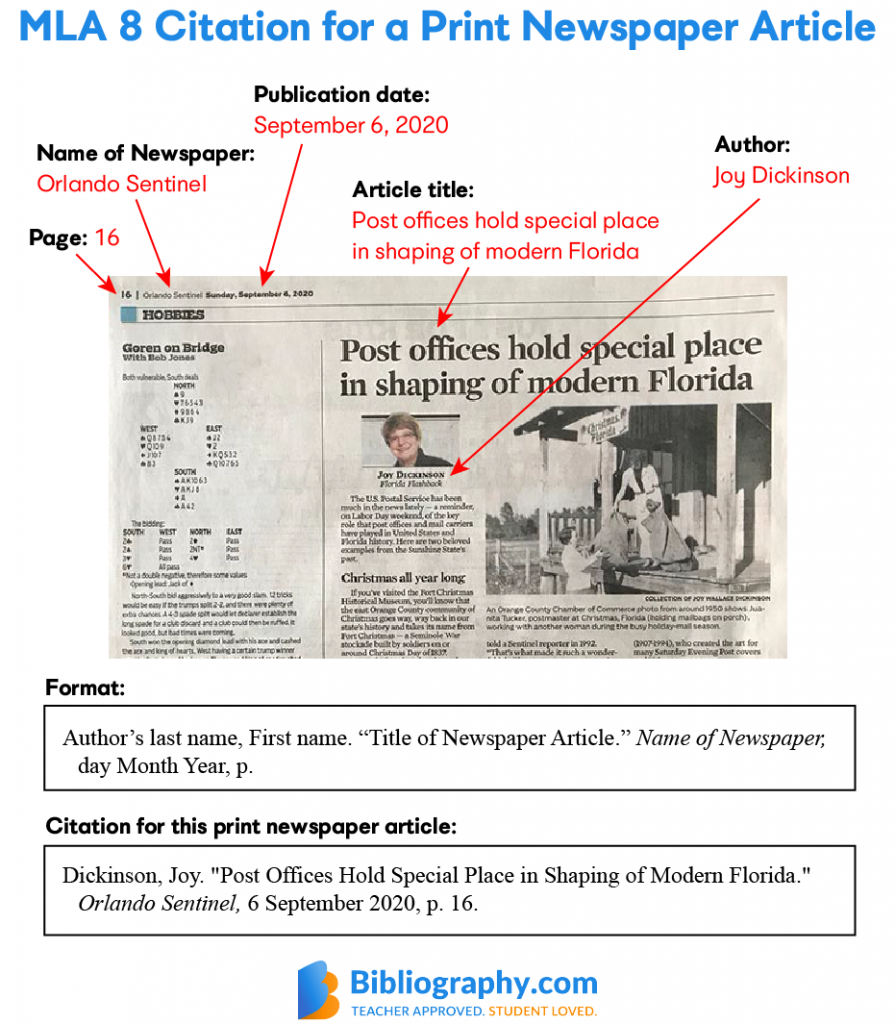
So, you stumbled upon a newspaper article that's, like, totally changed your life? Maybe it's about a cat who learned to play the piano (amazing, right?) or a local bakery that’s figured out how to make croissants that levitate (okay, maybe not, but work with me!). Either way, you're using this earth-shattering news in your essay, blog post, or even a strongly worded email to your neighbor about his noisy lawn gnome collection. Now comes the slightly less glamorous, but equally important, part: citing it! Don't panic, it's easier than training that piano-playing cat!
The Basic Recipe: It's Not Rocket Science, I Promise!
Think of citing a newspaper article like giving credit where credit is due. You wouldn't want someone stealing your amazing croissant-levitating recipe, would you? Here's the basic formula:
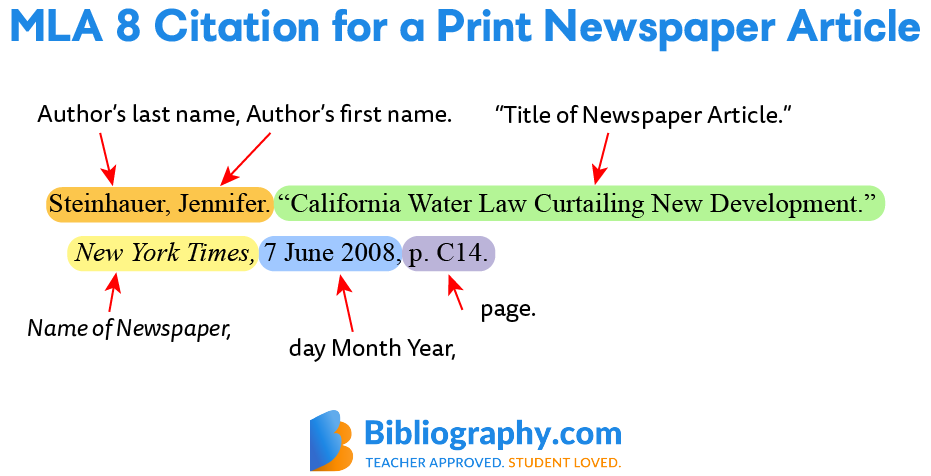
Author (if given). "Title of Article." Newspaper Title, Date of Publication, Page Number(s).
Must Read
Okay, let's break that down, ingredient by ingredient. Imagine we’re citing a fictitious article from the "Daily Squirrel Gazette" (because why not?):
Example:
Jane Doe. "Squirrels Declare War on Bird Feeders." Daily Squirrel Gazette, October 27, 2023, p. 1, 4.

See? Not so scary! Let's dive deeper into each part:
Author: The Name Game
Sometimes, newspaper articles have an author listed. Hooray! Give them their due! If there's no author (it happens!), you can skip this part and jump straight to the article title. Think of it as a journalist's version of incognito mode. But if there's a name, use it!
Title of Article: The Headline Hero
This is the actual title of the article. Put it in quotation marks. It's the star of the show, the catchy phrase that lured you in. It could be anything from "Local Man Finds Lost Sock, Solves World Peace" to our squirrelly example.
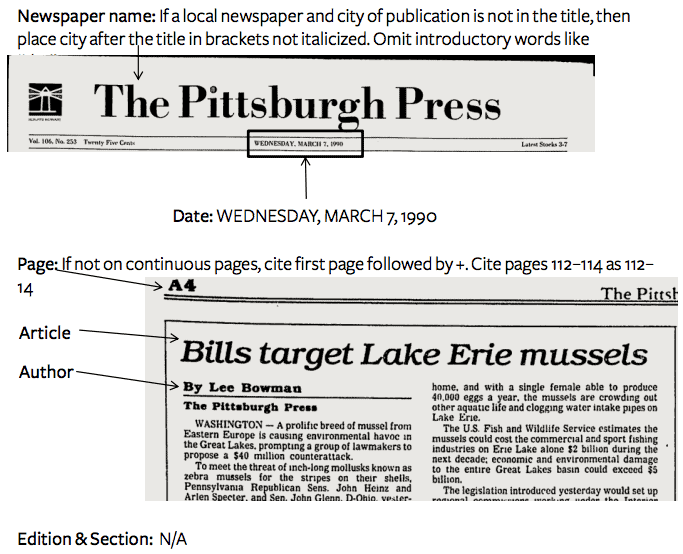
Newspaper Title: The Publication Powerhouse
This is the name of the newspaper itself. This gets italicized! It's like the newspaper's fancy dress. Think The New York Times, The Washington Post, or, of course, our beloved Daily Squirrel Gazette.
Date of Publication: The Time Traveler
This tells everyone when the article was published. Use the format: Month Day, Year. So, October 27, 2023, in our example.
Page Number(s): The Great Location Hunt
If you're citing a print version of the newspaper, include the page number(s) where the article appears. If the article jumps from page 1 to page 4 (like our squirrel invasion!), list both: p. 1, 4. If it's online, and there are no page numbers (which is super common these days!), you can usually skip this. Consider it a digital treasure hunt without the treasure (aka, the page number).
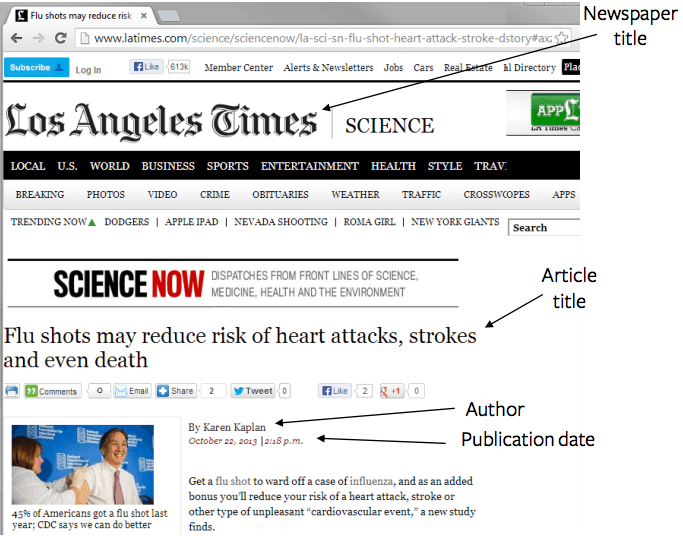
Online Articles: The Digital Frontier!
Citing online articles is almost the same, but with a slight twist! Because there are no page numbers, you often just leave that part out. But! You might want to include the URL (the website address) if your instructor or style guide requires it.
Example (Online):
Jane Doe. "Squirrels Declare War on Bird Feeders." Daily Squirrel Gazette, October 27, 2023. dailysquirrelgazette.com/squirrel-war-2023 (This is a fake URL, don't go clicking!).
See that? Pretty similar! The URL helps people find the article if they want to check it out for themselves. Think of it as a breadcrumb trail leading to the truth… about squirrels and bird feeders.
Style Guides: The Citation Police (But They're Actually Helpful!)
Now, here’s the deal: different style guides (like MLA, APA, Chicago) have slightly different rules for citing things. Your teacher or professor will usually tell you which style guide to use. So, double-check! It’s like knowing whether you should use a fork or a spoon for your levitating croissant – proper etiquette matters!
If you're unsure, a quick Google search of "[Style Guide Name] Newspaper Article Citation" will be your best friend. There are also tons of helpful websites and online citation generators that can do the work for you (though always double-check their output!).
And that's it! You've successfully cited a newspaper article! You’re practically a citation superhero now. Go forth and spread the knowledge (and maybe a little bit of fear, thanks to those rebellious squirrels!). Remember, citing is about giving credit where it's due, and acknowledging the sources that helped you learn and grow. Now go tackle that paper and maybe invest in some squirrel-proof bird feeders, just in case.