How To Report Accrued Market Discount On 1099 B

Hey there, fellow investor! Ever stumbled upon something called "accrued market discount" on your 1099-B form and thought, "Huh? What's this all about?" You're not alone! It sounds complicated, but trust me, it's not rocket science. Let's break it down in a way that's easy (and maybe even a little fun!).
What Exactly Is Accrued Market Discount?
Okay, imagine you're buying a used car. It's a solid make, but the previous owner didn't exactly baby it. So, you get it for a lower price than a brand new one. That difference? That's kind of like market discount in the bond world.
Essentially, a market discount happens when you buy a bond for less than its face value (the amount you get back when the bond matures). Why would a bond trade at a discount? Well, maybe interest rates have gone up since the bond was issued, making its fixed interest rate less attractive. Or perhaps the company that issued the bond isn't looking so financially stable. Whatever the reason, you get a deal!
Must Read
Now, the "accrued" part just means this discount builds up over time. You're slowly earning the difference between what you paid and what you'll eventually get back. Think of it like gradually leveling up in a video game. Each day, you're getting a little closer to that final redemption value!
Why Should You Care About This Discount?
Here's the cool part: that accrued market discount is usually treated as interest income when you sell the bond (or when it matures). And interest income is taxable. Uncle Sam wants his cut! So, it's crucial to report it correctly on your tax return.
Ignoring it? Well, that's like ignoring a speed limit sign. You might get away with it, but it's generally not a good idea. The IRS might send you a friendly (or not-so-friendly) letter asking for more information.
Finding the Magic Numbers on Your 1099-B
Your broker will typically report this information to you and the IRS on Form 1099-B, "Proceeds From Broker and Barter Exchange Transactions." Look for a box – it might be labelled something like "Accrued Market Discount." Don't see it? It's possible that the discount wasn't significant enough to trigger reporting, or the bond might not have qualified for market discount treatment in the first place.
Pro Tip: Always keep good records of your bond purchases and sales. This will make tax time so much easier. It's like having a detailed map on a treasure hunt – you'll find the gold (or in this case, the right numbers) much faster!

How to Report It (The Fun Part!)
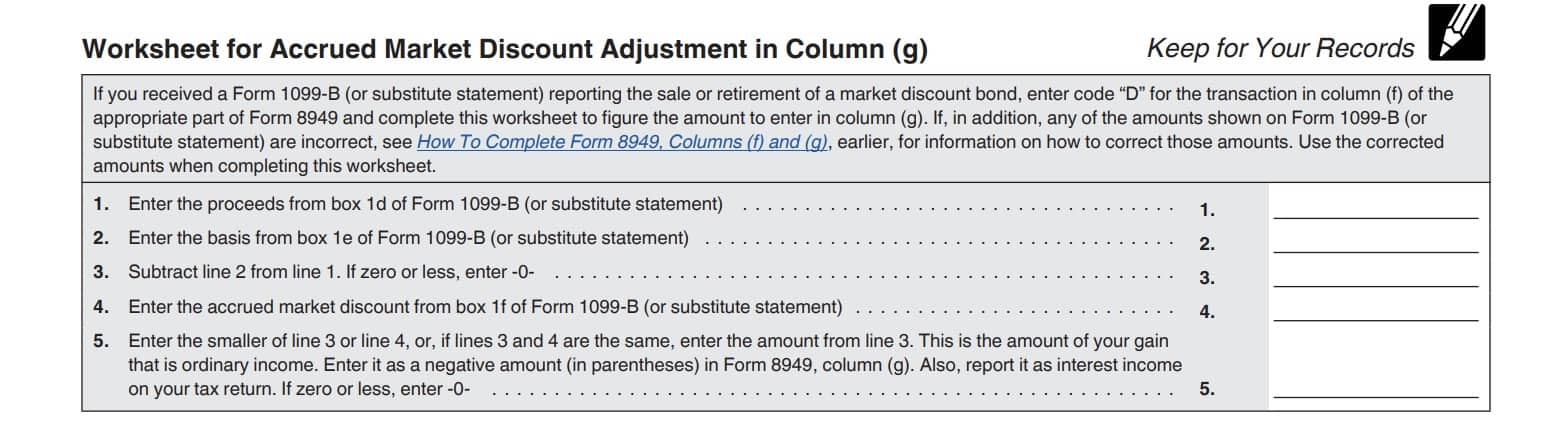
Okay, so you've got the numbers. Now what? You'll generally report the accrued market discount as ordinary income on your tax return. Typically, it goes on Schedule B (Form 1040), Interest and Ordinary Dividends.
Important Note: The specific instructions can get a little hairy, depending on the complexity of your situation (e.g., if you made an election to include the discount in income each year). This is where consulting a tax professional can be a lifesaver. Think of them as your personal financial GPS, guiding you through the tricky terrain of the tax code!
:max_bytes(150000):strip_icc()/ScreenShot2020-02-03at10.53.11AM-3e34b458ed634edf8d428777afabc1d3.png)
Are you supposed to "do the math yourself"? Not necessarily. Most tax software programs (TurboTax, H&R Block, etc.) will walk you through the process step-by-step. Just plug in the numbers from your 1099-B, and the software will do the heavy lifting. It's like having a robot assistant to help you with your taxes!
Market Discount vs. Premium: A Quick Word
Just like there's a "market discount," there's also something called "bond premium." This happens when you buy a bond above its face value. In this case, you might need to amortize the premium over the life of the bond, which means reducing the interest income you report each year. It's the opposite of the market discount, like the yin and yang of bond investing!
The Bottom Line
Reporting accrued market discount on your 1099-B might seem intimidating, but it's really just about understanding the basics and following the instructions. Keep good records, don't be afraid to ask for help (from a tax pro or your trusty tax software), and remember that even taxes can be a little bit interesting when you understand what's going on. Happy investing!