
How To Replace The Battery In A Watch
Ever looked at a beloved watch, perhaps a gift or a trusty companion through countless adventures, only to find its hands frozen in time? That moment when you realize it’s no longer ticking, no longer a reliable time-teller, can feel a little sad. Is it broken? Is it a lost cause? Nah, probably not! More often than not, your watch just needs a fresh sip of power. And guess what? Bringing it back to life yourself is not only surprisingly easy, but also genuinely cool.
Think about it. We live in an age where everything feels complicated and requires a specialist. But what if I told you that you could be your own miniature watch surgeon, giving your trusty timepiece a new lease on life with just a few simple steps? It's like changing a flat tire for your wrist, but way less sweaty and with much tinier tools. Plus, there’s a real satisfaction in understanding the small mechanisms that power our everyday objects.
The Great Watch Awakening: Why Bother DIY?
Let's be real, you could just pop into a jeweler or a watch repair shop. And sometimes that’s absolutely the right move, especially for very expensive or intricate timepieces. But for many common watches, changing the battery yourself is a fantastic little adventure. You save a few bucks, sure, but more importantly, you gain a tiny bit of mastery. You get to peek behind the curtain, understanding how this miniature marvel actually works. It’s like waking up a sleeping friend, and that feeling is pretty awesome.
Must Read
There's also something wonderfully demystifying about opening up a small electronic device. It often looks like a black box, a mystery. But inside? It's usually a surprisingly simple setup. This isn’t rocket science; it's more like a very satisfying game of "find the hidden compartment and swap the tiny disc."
Tools of the Trade: Your Mini-Adventure Kit
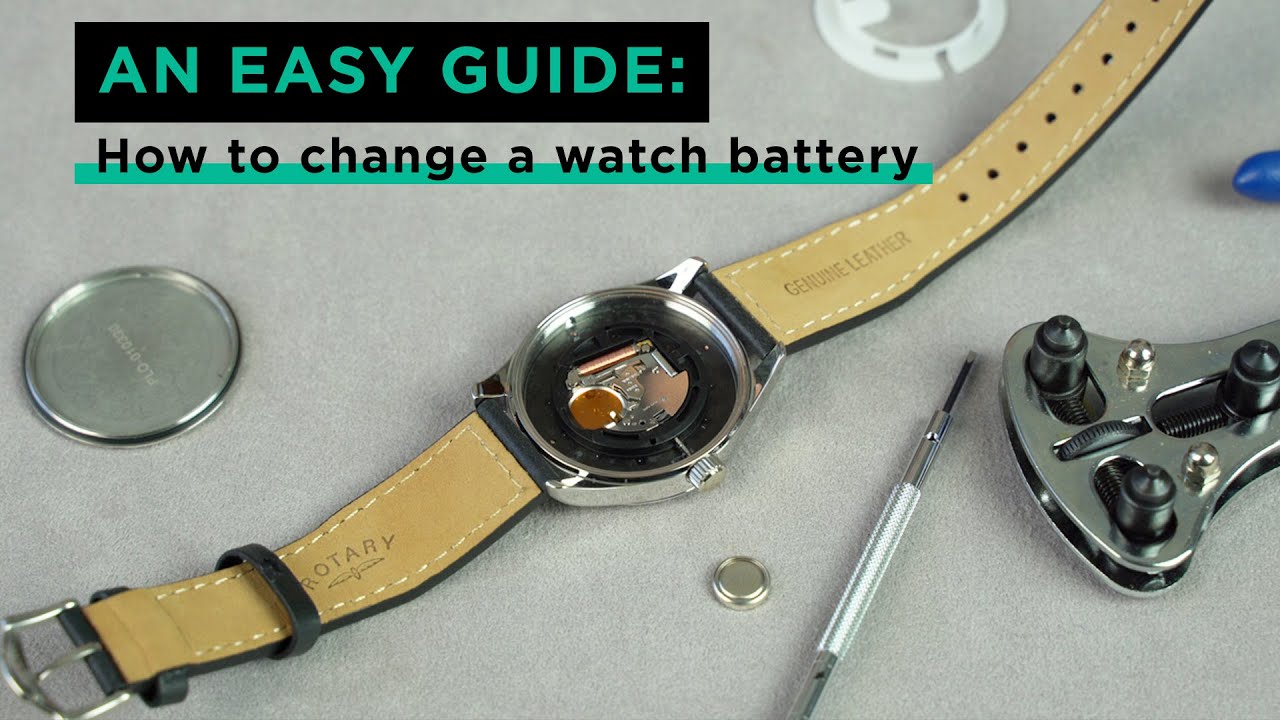
Sounds a bit intimidating, right? "Tools"? Don't worry, we're not talking about a full workshop here. For most watches, you'll need just a few things:

- A new battery, of course! Make sure it’s the correct size and type for your watch. A quick online search with your watch model number usually tells you exactly what you need.
- A small, flat-head screwdriver, or a specialized watch case opener. Some watches have tiny screws, others have snap-off or screw-off backs.
- A pair of tweezers (optional, but super helpful for tiny parts).
- A soft cloth or mat to work on, so nothing scratches or rolls away.
That’s it! It’s less like preparing for open-heart surgery and more like getting ready for a very precise, tiny treasure hunt.
The Big Reveal: Opening the Watch
This is where the magic begins. First, lay your watch face-down on your soft cloth. Now, examine the back. Does it have tiny screws around the edge? Or a small lip or indentation that looks like it could be pried open? Or maybe it's a smooth circle with a few notches?
If it’s a screw-back, gently unscrew them and keep them safe – they are tiny. If it’s a snap-back, locate the small lip and very carefully, using your specialized case opener or the edge of a sturdy, thin knife (be super careful!), gently pry it open. You might hear a satisfying "pop" as it releases. For screw-off backs with notches, you'll need a specific watch wrench, but many simple watches avoid this complexity.
The key here is gentle persuasion. No brute force required! Think of yourself as a super-delicate safe cracker, trying to unlock a tiny vault.
Hello, Old Friend (and New One!): The Battery Swap
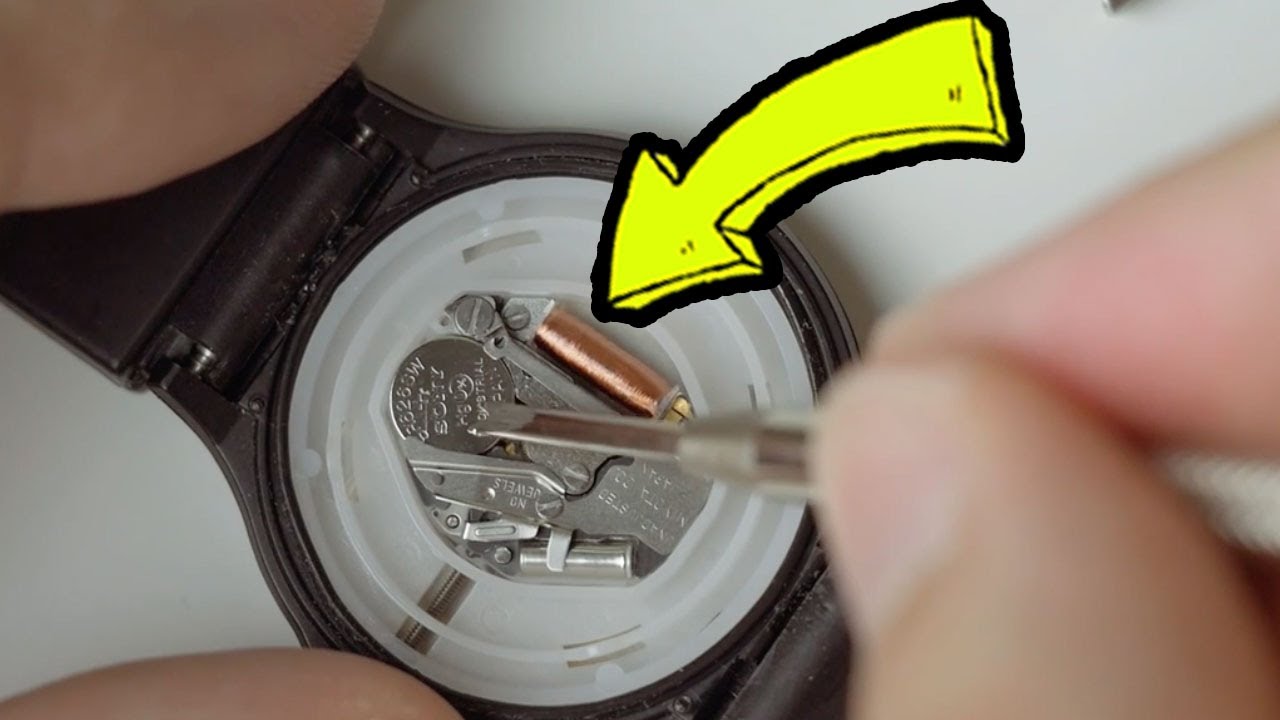
Once the back is off, you'll see the inner workings. Don't be overwhelmed! Your goal is simple: find the battery. It’s usually a small, silver, coin-shaped disc. Sometimes it's held in place by a tiny metal clamp or clip. You might need your small screwdriver to gently push aside a tiny lever or lift a clamp to release it.
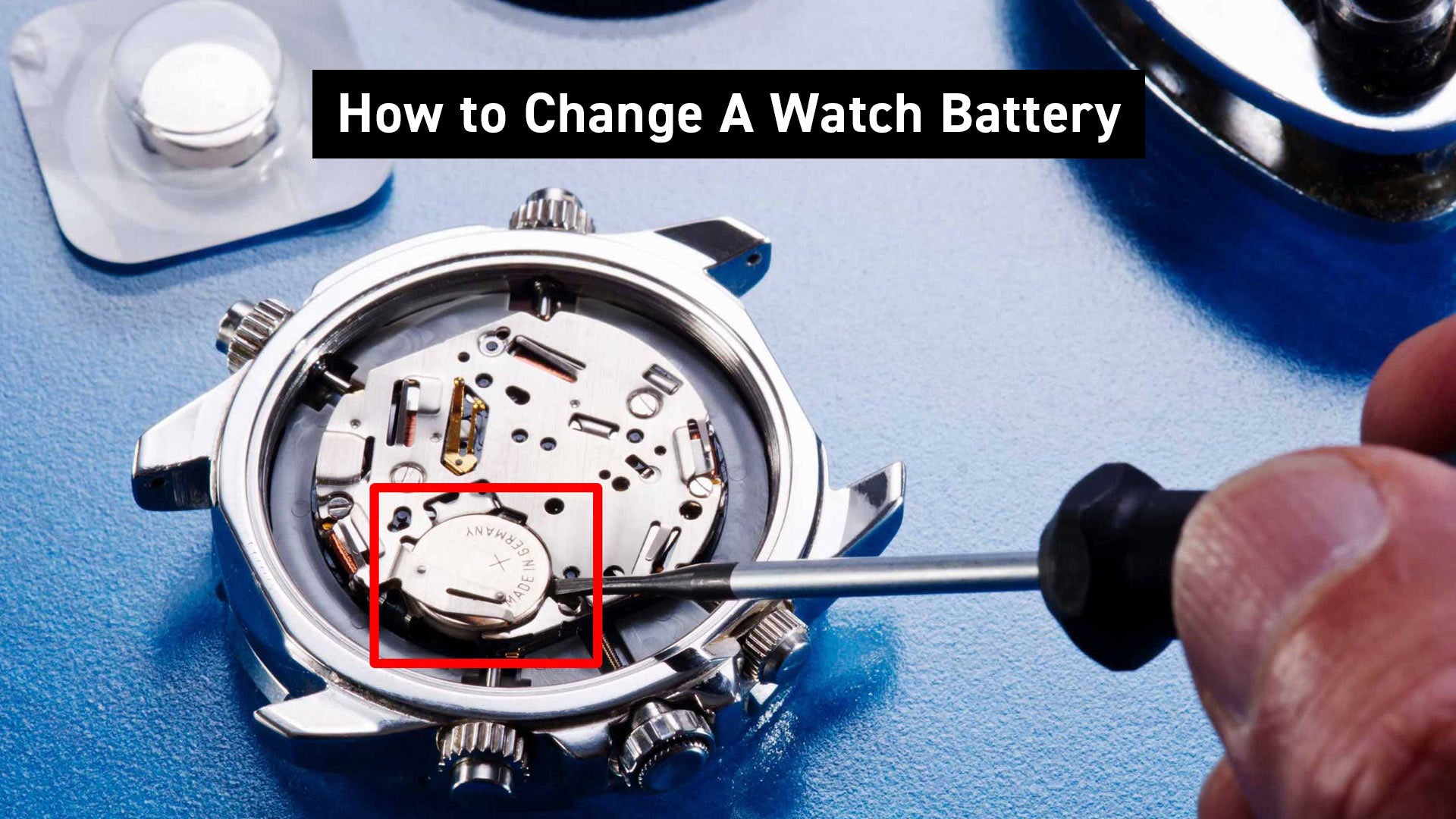
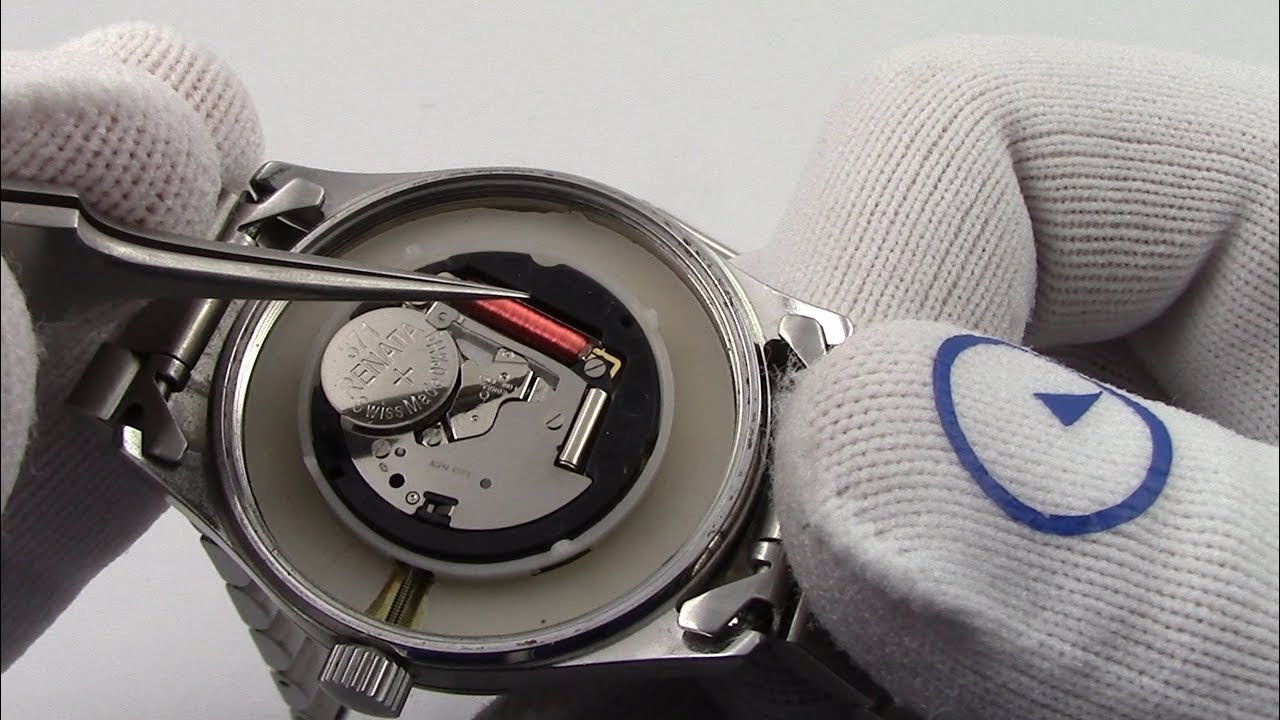
Carefully remove the old battery. Note its orientation – which side was facing up? Batteries usually have a plus (+) sign on one side. This is important for when you put the new one in. With your tweezers, or just careful fingers, pick up the new battery, making sure not to touch its surface too much (finger oils can affect conductivity). Place it in the exact same spot, in the same orientation, as the old one. Gently secure any clips or levers you moved.
This is the moment of truth! You've just given your watch a new heart. Now, it's time to close it back up.
The Grand Finale: Sealing the Deal
Align the back cover carefully. If it’s a snap-back, you might need to press it firmly (sometimes using your thumbs or even a flat, padded surface) until you hear that satisfying "click" that tells you it's securely in place. If it has screws, gently screw them back in, but don't overtighten them. You don't want to strip the tiny threads.
Now, flip your watch over. Did it start ticking? Is it alive again? That little sweep of the second hand is incredibly rewarding, isn't it? You did that! You took a piece of dormant technology and brought it back into the vibrant world of time. It's not just a working watch; it's a symbol of your own curiosity and capability.
So, the next time a watch goes silent, don't despair. Embrace the opportunity for a mini-adventure. Dive in, explore, and enjoy the simple, profound satisfaction of fixing something with your own hands. You might just discover a new appreciation for the tiny wonders that keep our world, and our wrists, ticking.