
How To Play Three Blind Mice On The Piano

Okay, so picture this: I'm at a family gathering, right? My tiny niece, Lily, is banging away on this out-of-tune piano, completely oblivious. And what is she "playing"? You guessed it: "Three Blind Mice." Over and over. It was… charming, for about five minutes. After that, I figured, hey, I could probably show her something a little less, well, repetitive. That got me thinking: how many of us actually know how to play "Three Blind Mice" beyond just plunking at random keys? Probably less than we think!
So, here's the deal. "Three Blind Mice" is actually surprisingly simple. It's a classic for a reason – it's one of the first tunes many budding pianists learn. And guess what? You can too! No, seriously. You can. Even if you think you have zero musical talent. I promise.
The Notes You'll Need (Don't Panic!)
We're sticking to the basics here. You'll primarily be using just a few notes: C, D, and E. That's it! See? I told you it was easy. (And if you're thinking, "What's a C?" Don't worry! I'll explain.)
Must Read
On a piano keyboard, C is the white key directly to the left of a group of two black keys. Find one of those two-black-key groups, and bam! You've found C. D is the white key right next to C, and E is the white key right next to D. Congrats! You're already practically a piano player! (Okay, maybe not, but you're on your way!)
Side note: If you're using a keyboard, make sure it's plugged in and turned on. Obvious, I know, but you'd be surprised...
The Finger Placement (A Little Trick)
Okay, this is where it gets slightly more technical, but still super easy. We're going to use your right hand (if you're right-handed, of course – lefties, use your left!). Place your thumb on C, your index finger on D, and your middle finger on E. This is your "Three Blind Mice" hand position. Congratulations, you've mastered finger placement! (Almost.)
The Actual Melody (Let's Play!)
Here's the sequence of notes you'll need to play "Three Blind Mice":
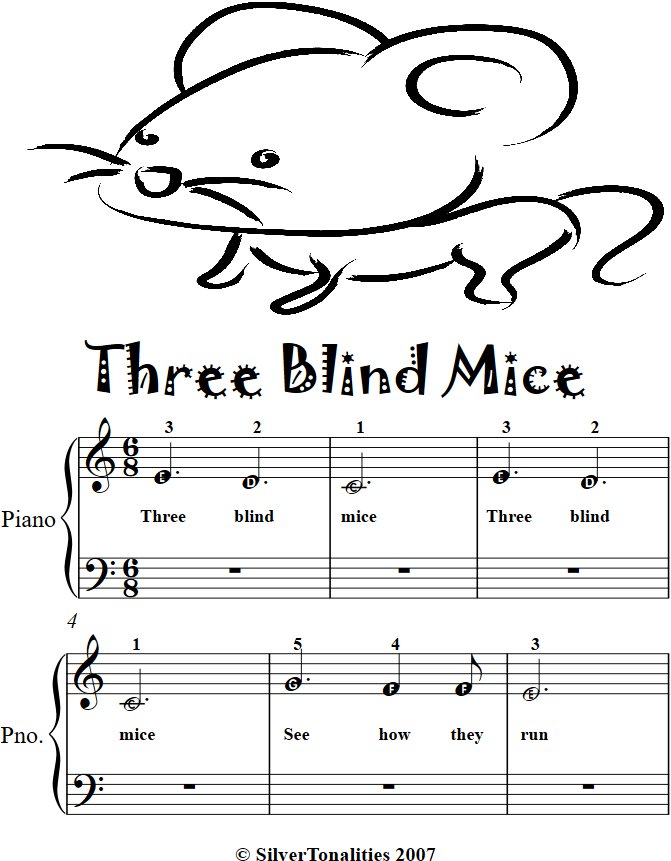
E D C (Three)
E D C (Blind)
E D C (Mice)
D E G (Three)
D E G (Blind)
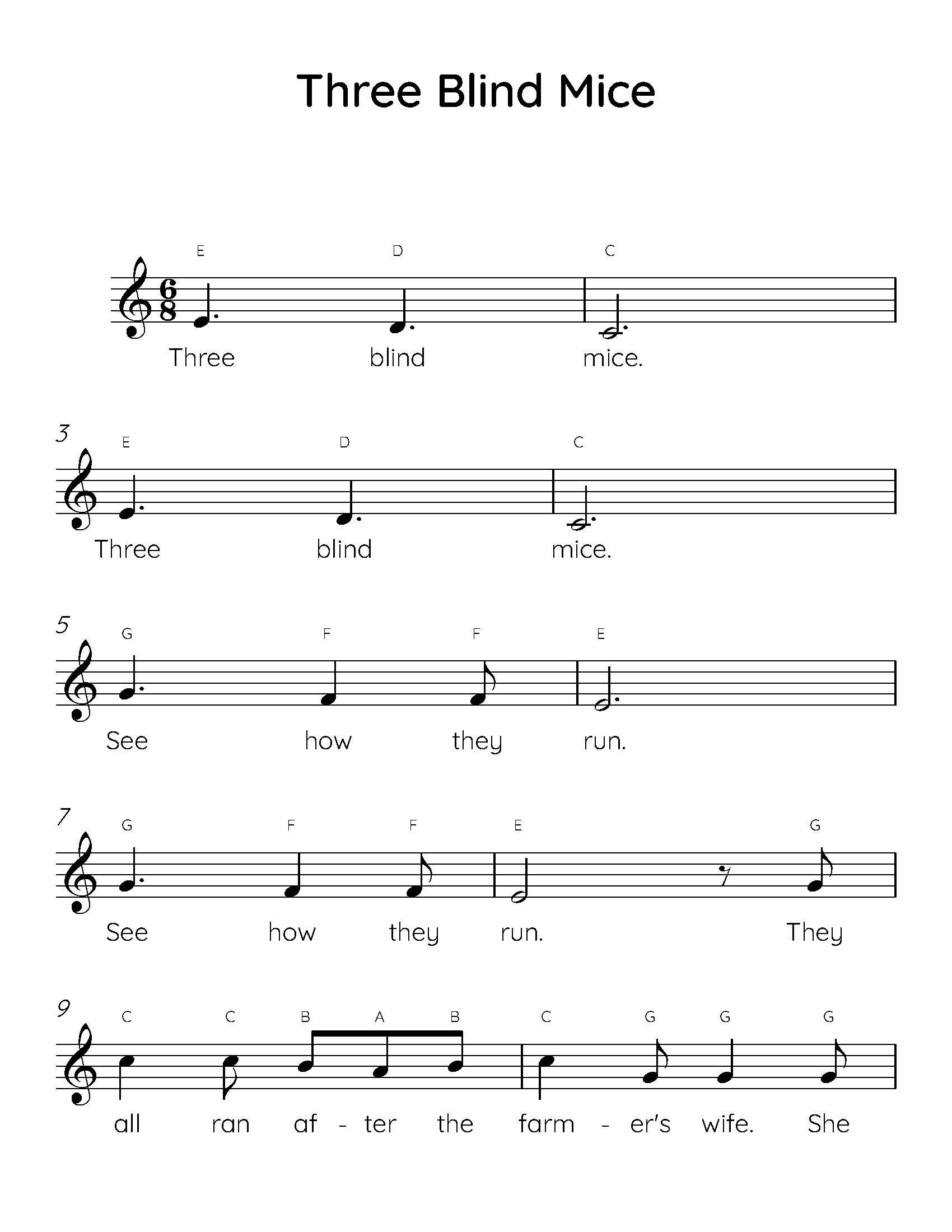
D E G (Mice)
G A G E (See how)
G A G E (They run)
E D C (They all)
E D C (Ran after)

D D D (The farmer's wife)
E E E (She cut off their tails)
E D C (With a carving knife)
E D C (Did you ever see)
D E G (Such a sight in your life)

E D C (As three blind mice?)
Another side note: Don't worry if you can't remember all that. Just copy and paste it into a notepad or something and keep it handy.
Practice Makes... Slightly Better (Maybe?)
Okay, so the key here is to practice. Start slowly. Very slowly. Play each note carefully, making sure you're using the correct finger. Don't worry about speed or perfection. Just focus on getting the notes right. Once you can play it slowly and accurately, you can gradually speed it up.
And don't get discouraged if you mess up. Everyone does! Even the professionals. Just keep practicing, and you'll get there. And hey, even if you don't become a concert pianist, you'll at least be able to impress your nieces and nephews (or, at the very least, annoy your family a little less than Lily did mine).
So go forth and play! And remember, it's supposed to be fun. (Even if it does involve slightly traumatized mice.)