
How To Make A Styrofoam Animal Cell Model

Ever felt like your kitchen could use a little more...biology? Me too! Let’s embark on a quest to turn ordinary craft supplies into a surprisingly adorable, slightly goofy, and undeniably educational animal cell model.
Gathering Your Animal Kingdom (of Craft Supplies)
First, picture the scene: You're rummaging through your craft box, pulling out a large styrofoam ball. This is your cell! The bigger, the better – more room for all the organelles, which, let’s be honest, sound like characters from a fantasy novel.
Next, you'll need smaller styrofoam balls of varying sizes. These will become our superstars: the nucleus, the mitochondria, the ribosomes, and all their microscopic buddies. Grab some paint. Bright, bold colors are your friend here. Think tie-dye meets biology. And don’t forget the glue! Lots and lots of glue.
Must Read
Painting the Town (Cell)
Okay, let's get messy! Start with the big styrofoam ball – our cell. Slather it in a base coat of paint. Pink, purple, green...whatever your artistic heart desires! It's your cell. Make it fabulous. While that's drying, attack the smaller styrofoam balls. This is where the fun really begins.
The nucleus, the cell's control center, deserves a regal color – maybe a deep blue or a shimmering gold. The mitochondria, those powerhouses of the cell, could be fiery oranges and reds. And the ribosomes, little protein factories, can be tiny dots of bright yellow or green, scattered strategically throughout the cell. Seriously, think of it as abstract art with a scientific twist.
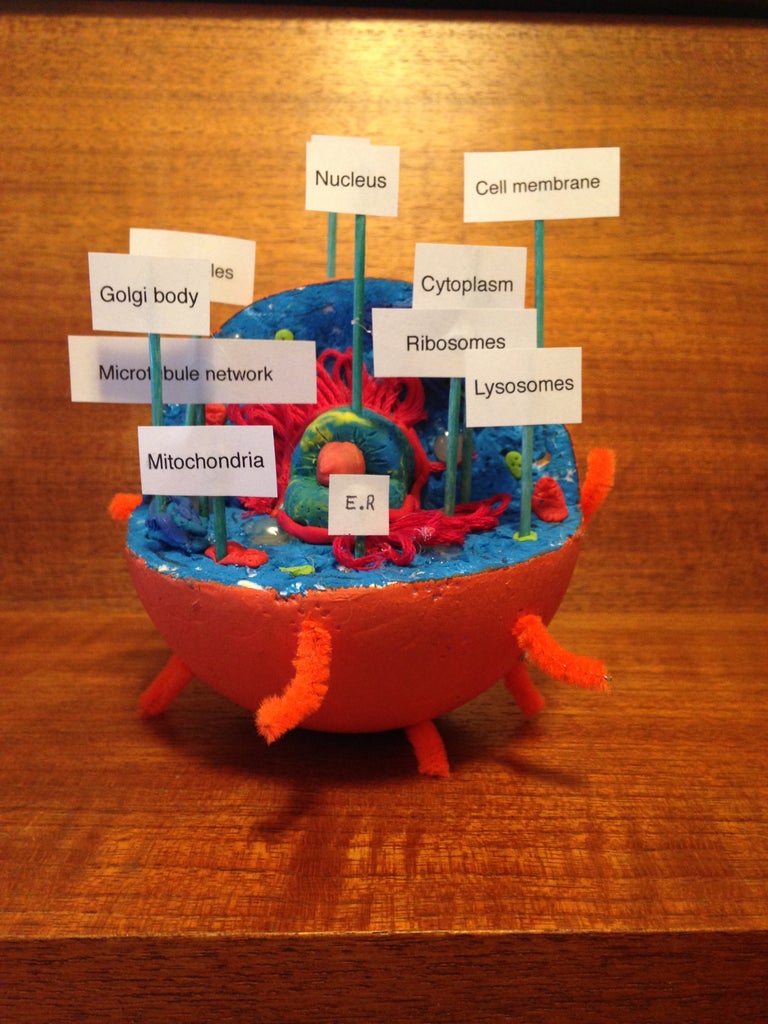
Organelle Assembly: A Microscopic Mashup
Once everything is gloriously painted and dry, the assembly begins. This is where you get to channel your inner sculptor. The nucleus, of course, goes in the center – the VIP of the cellular world. Glue it down firmly. This is its kingdom, after all.
Now, start strategically placing the other organelles. The mitochondria can be glued on with dramatic flair, maybe even slightly tilted for a touch of dynamism. Scatter the ribosomes around like confetti. And don't forget the endoplasmic reticulum – you can make this with some yarn or pipe cleaners, twisting and turning it to create a maze-like structure. Glue that on as well.

Adding the Finishing Touches: Cell-fie Ready
Feeling fancy? Grab some glitter! A little sparkle never hurt an animal cell. You can sprinkle it on the cytoplasm (that's the jelly-like substance filling the cell) for an extra touch of pizzazz. And if you're feeling truly ambitious, you could add some tiny flags or labels, identifying each organelle. But honestly, at this point, it’s all about the visual spectacle.
Step back and admire your handiwork. You've created a stunning, slightly chaotic, and undeniably unique animal cell model. It might not win any scientific awards, but it's guaranteed to spark conversation and maybe even a little bit of cellular enlightenment. Who knew biology could be so…glittery?
Naming Your New Pet Cell
Finally, give your cell a name! Perhaps something like "SparkleCell" or "Mighty Mitochondria." A personalized name will help you feel connected to your new, squishy friend. Be creative! Let the name reflect its beauty, its function, or its overall silliness.
Displaying Your Masterpiece
Find the perfect spot to display your cellular creation. It could be perched atop a bookshelf, hanging from the ceiling, or even acting as a quirky centerpiece on your dining table. Wherever it goes, your styrofoam animal cell model will undoubtedly become a conversation starter. Be prepared to answer questions about its organelles, its colors, and its overall artistic merit. And most importantly, be proud of your scientific masterpiece!

