
How To Find The Average Value Of A Function
Okay, picture this: you're cruising down the highway, right? Your speedometer is all over the place. Sometimes you're hitting 70 mph, other times you're crawling at 30 because, you know, construction. Ever wonder what your average speed was for the whole trip? That's essentially what we're going to figure out today... but instead of speed, we're talking about functions!
Yeah, yeah, "functions" sounds a little scary. But trust me, it's not as intimidating as it seems. Think of a function as a machine. You feed it an input (like a number), and it spits out an output (another number). This output can change as the input changes, giving us a "curve" which can be drawn on a graph. How would you summarize the average behavior of that curve, let's learn this.
So, What Is the Average Value of a Function, Anyway?
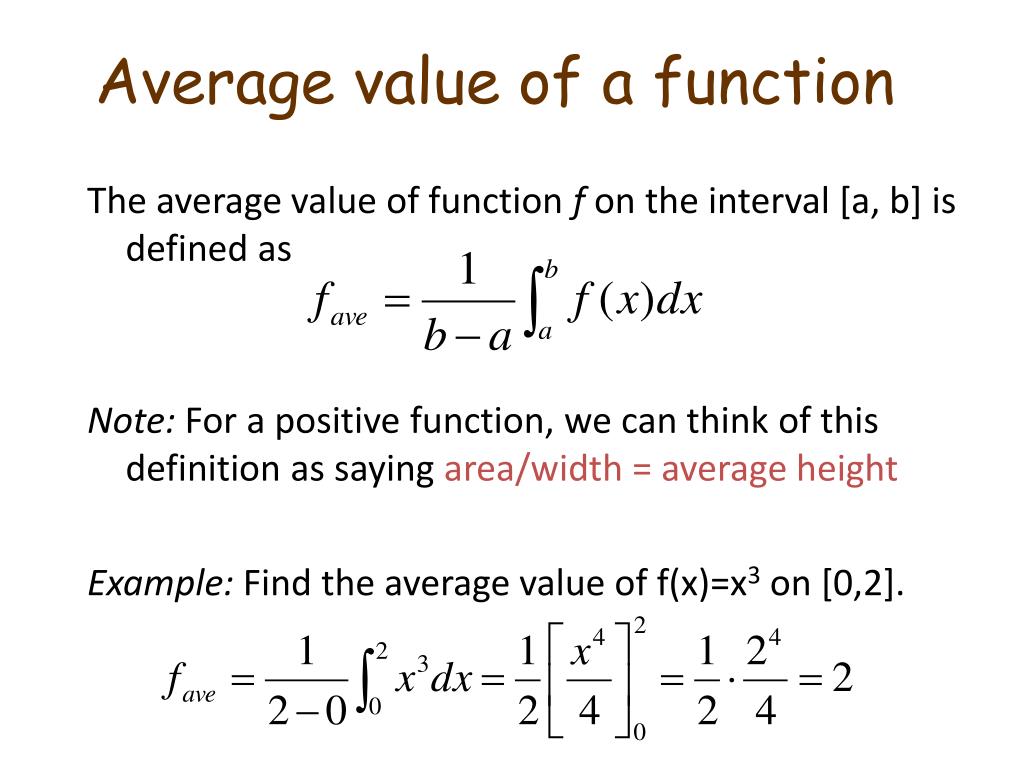
Good question! Let's break it down. The average value of a function, over a certain interval, is basically the average height of the function's graph within that interval. It's the height of a rectangle that has the same width as the interval, and the same area as the region under the function's curve.
Must Read
Still confused? Think of it this way: imagine you've got a wiggly line (that's your function's graph!). Now, imagine you have a lawn mower that magically cuts off all the humps and bumps and spreads them out evenly across the area. The height of the "cut" is the average value of the function!
Pretty neat, huh? But why is this actually useful?

Why Bother Finding the Average Value?
Okay, so it's a cool concept, but what can you do with it? Plenty! Think about:
- Average Temperature: Let's say you have a function that models the temperature throughout the day. Finding the average value will tell you the average temperature for that entire day. Perfect for deciding if you need a jacket!
- Average Profit: Got a function representing your business's profit over time? The average value tells you your average profit over that period. Important for, you know, staying in business!
- Average Population: If you're tracking population growth (animal or human), the average value gives you a sense of the typical population size over a given time. Super useful for planning and resource allocation.
The possibilities are endless! It's all about finding a "typical" value for something that's constantly changing.
The Magic Formula (Don't Worry, It's Not That Scary)
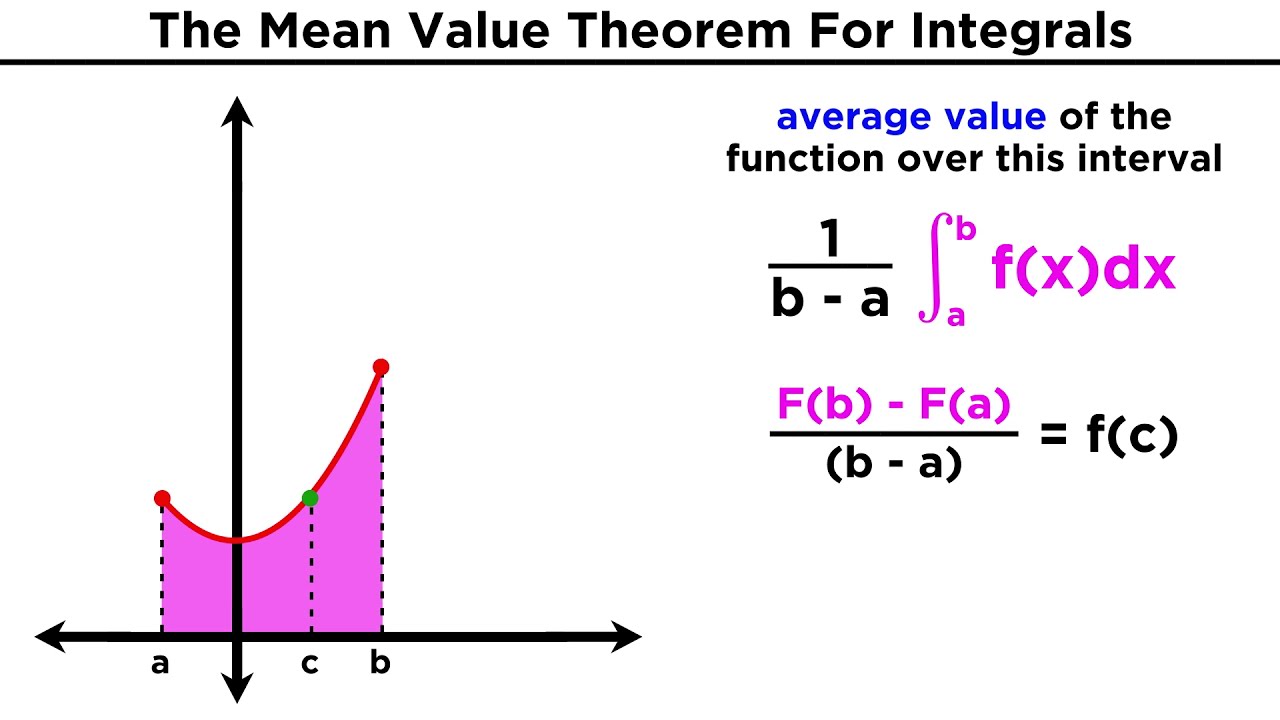
Alright, time to get down to the nitty-gritty. Here's the formula for finding the average value of a function f(x) over the interval [a, b]:
Average Value = (1 / (b - a)) * ∫[a to b] f(x) dx
Whoa! I see that look in your eyes. Let's unpack this bad boy, shall we?
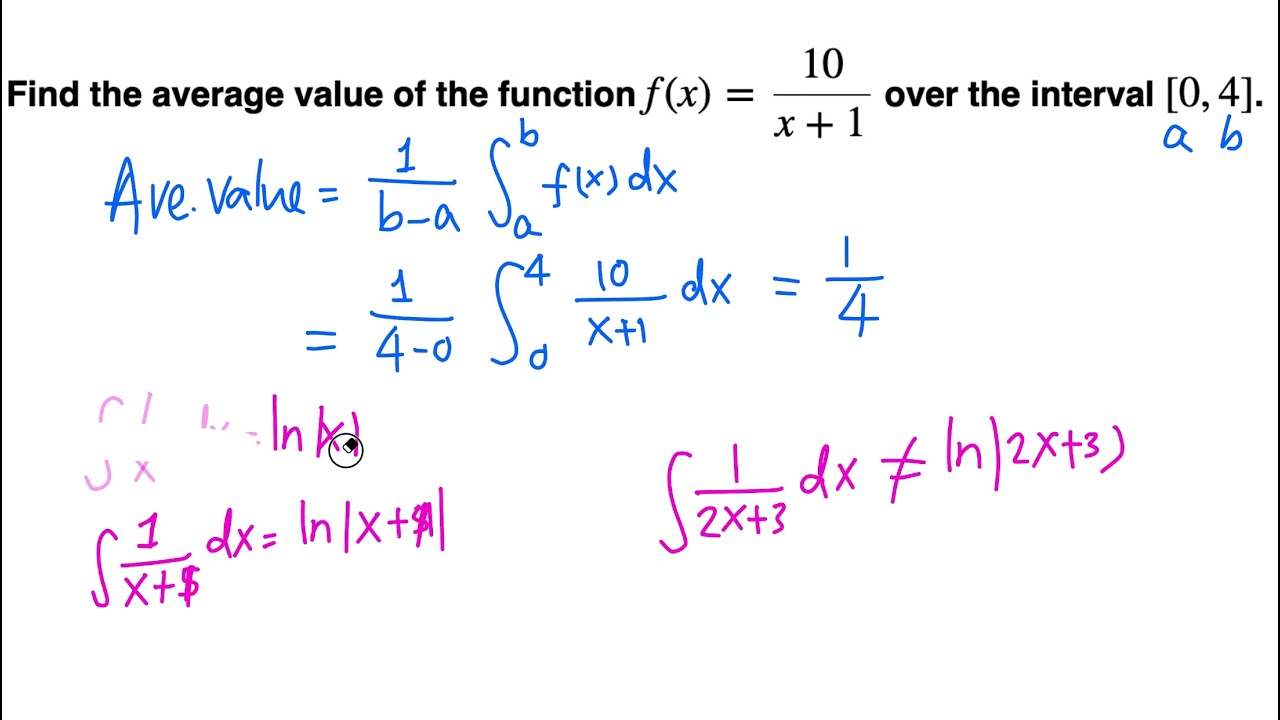
- ∫[a to b] f(x) dx: This is the definite integral of the function f(x) from a to b. Basically, it's the area under the curve of f(x) between those two points. If you haven't encountered integration yet, don't panic! You can think of it as finding the area.
- (b - a): This is simply the width of the interval you're considering. Think of it as the base of our imaginary rectangle.
- (1 / (b - a)): This is just 1 divided by the width. We're using it to scale the area correctly.
In plain English, we're calculating the area under the curve and then dividing it by the width of the interval. That gives us the average height, or the average value of the function!
Let's Do an Example (Because Examples Make Everything Better)
Suppose we want to find the average value of the function f(x) = x2 on the interval [0, 2].
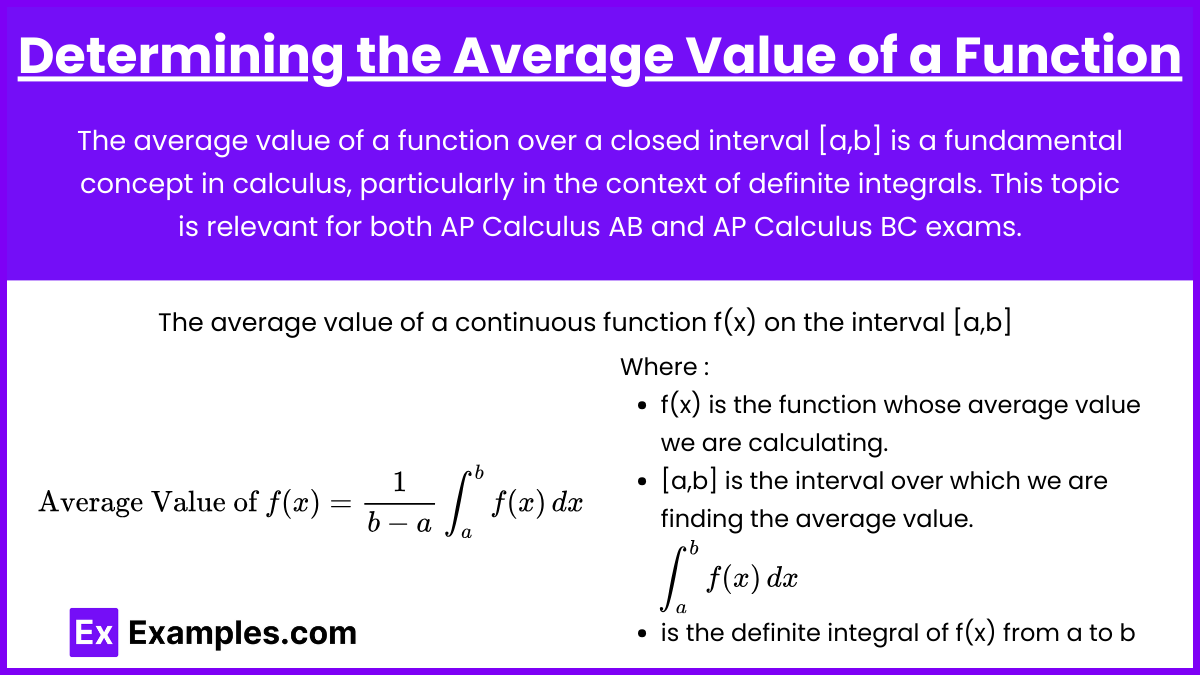
- Find the definite integral: ∫[0 to 2] x2 dx = [x3/3] evaluated from 0 to 2 = (23/3) - (03/3) = 8/3
- Calculate the width of the interval: b - a = 2 - 0 = 2
- Plug into the formula: Average Value = (1 / 2) * (8/3) = 4/3
Therefore, the average value of the function f(x) = x2 on the interval [0, 2] is 4/3. That wasn't so bad, was it?
Tips and Tricks for Finding the Average Value
Here are a few things to keep in mind:
- Know your integration rules: A solid understanding of integration is key to finding definite integrals. Practice makes perfect!
- Sketch the graph: Visualizing the function can help you understand what the average value represents. It can also help you catch any mistakes.
- Don't be afraid to use a calculator or software: For complex functions, feel free to use tools to help you evaluate the definite integral. The goal is to understand the concept, not necessarily to do everything by hand!
Finding the average value of a function is a powerful tool that can be applied in many different fields. It's all about understanding the concept of the average height of a function's graph. So next time you're speeding down the highway, remember the average value – and maybe try not to speed too much!