How To Enable And Disable Calculator Mode In Verilog
Verilog, often associated with complex digital circuit design, might seem intimidating. But did you know you can use its core principles in a surprisingly playful way? Think of it as enabling "Calculator Mode" – harnessing its logic to create fascinating patterns and explore computational art. It's a far cry from designing processors, but opens a whole new world of creative possibilities!
The beauty of this approach lies in its accessibility. You don't need a Ph.D. in Electrical Engineering! For artists, Verilog's precise nature allows for the generation of intricate geometric designs. Hobbyists can explore number theory through visual representations. And for casual learners, it’s a fantastic, engaging way to understand basic programming concepts. Forget dry textbooks; see your code come alive.
So, how do you "enable" Calculator Mode? Think of Verilog modules as building blocks. Instead of designing complex hardware, we use simple mathematical operations within these modules to drive graphical outputs. Imagine you want to visualize the Fibonacci sequence. You can create a module that calculates successive Fibonacci numbers and maps them to color values. Each number corresponds to a shade, creating a gradually shifting palette. Another example? Implementing a simple prime number checker and using it to color pixels. Prime pixels are bright, non-prime pixels are dark. You’ll get intriguing, unpredictable patterns related to the distribution of primes.
Must Read
Variations are endless. You could visualize different number systems (binary, hexadecimal) or implement basic trigonometric functions to generate wave-like patterns. Experiment with different color palettes, mapping numerical outputs to RGB values. Consider using a simple frame buffer – an array where you store color information for each pixel. Then, your Verilog module can directly manipulate the pixels based on mathematical calculations. The key is to think of Verilog not as a hardware description language, but as a tool for expressing and visualizing mathematical relationships.
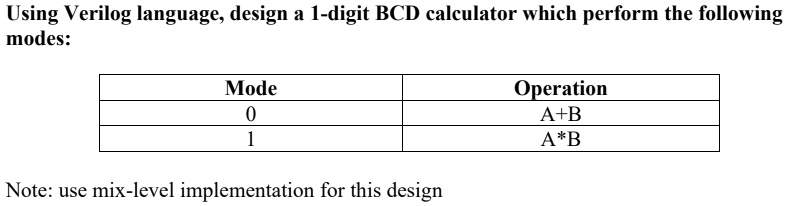
Ready to try it at home? You'll need a Verilog simulator (like Icarus Verilog) and a waveform viewer (like GTKWave). Don’t be intimidated! Start with simple examples. Focus on generating a single output value (e.g., a color component) based on a simple mathematical operation. Then, slowly increase the complexity. Look for tutorials on basic Verilog syntax. Online resources are plentiful, and many communities offer help and support. Remember to break down the problem into smaller, manageable parts. Don't try to build a masterpiece on your first attempt!
The real joy of using Verilog in this unconventional way is the element of surprise. You define the rules, but the resulting patterns often exhibit unexpected complexity and beauty. It’s like setting up an experiment and watching the universe unfold according to the laws you've defined. And, let's face it, there's something deeply satisfying about turning a language typically used for creating silicon chips into a tool for creating digital art. So, go ahead, enable Calculator Mode and see what wonders you can create!