Ever stared at your electricity bill and felt like you were deciphering an ancient scroll? You’re definitely not alone! It’s a common moment, a slight flutter of dread as you wonder if your toaster secretly decided to run a marathon while you were sleeping.
But what if I told you that understanding where your home’s electricity goes isn’t a chore, but an exciting quest? It’s a bit like becoming a friendly household detective, uncovering the secret lives and appetites of your appliances.
So, grab your imaginary deerstalker hat and a trusty magnifying glass. We’re about to decode the charming mysteries of your home’s energy appetite, and maybe even find some surprisingly hungry culprits hiding in plain sight.
First, let’s introduce our main characters: watts. Think of a watt as an appliance's "thirst" for electricity at any given moment, its immediate power demand. A tiny LED nightlight might sip just 1 watt, barely a drop.
On the other hand, a powerful electric kettle, like Kevin the Kettle, could be a formidable 2000 watts! It's like comparing a delicate hummingbird’s sip to a thirsty elephant taking a long, deep drink.
Now, combine that immediate thirst with time, and you get our superstar unit: the kilowatt-hour, or kWh. This is the magic number your electricity company actually bills you for. It represents how much total "juice" an appliance drinks over an entire hour, neatly packaged in thousands of watts.
Imagine your appliances are all little pets with varying appetites. Their wattage is how much food they could eat right now, and the kilowatt-hour is the actual total amount of food they consume over a specific period, usually an hour. We’re going to count those kibble bits!
Understanding kWh is key because it translates directly into cost. Knowing how many kilowatt-hours your washing machine uses allows you to see its financial footprint, making you a more informed and empowered homeowner.
Your Detective Toolkit: The Simple Calculation
Ready for some surprisingly simple math? To figure out an appliance’s electricity usage, you primarily need three pieces of information. First, the appliance’s wattage – this is usually printed on a sticker, on the bottom, or in its instruction manual.
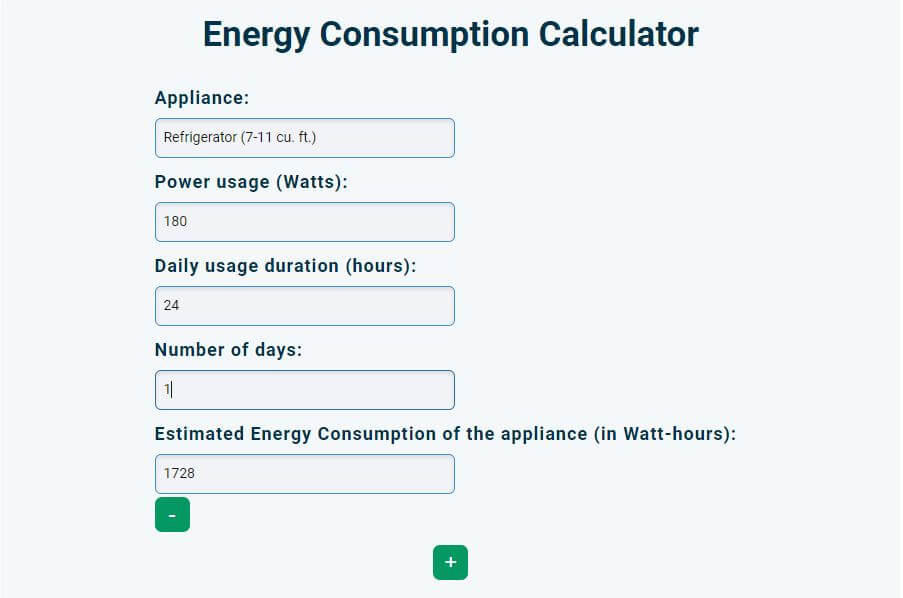
How to Calculate Power Consumption | eFinancialModels
Second, how many hours per day you typically use it. And third, how many days per month it's actively running. That’s truly all you need; no advanced degrees or secret codes are necessary!
Let's take Brenda the Blender, proudly proclaiming her 500-watt power. If you enlist Brenda for 10 minutes (approximately 0.16 hours) every morning to craft your perfect smoothie, we have all the ingredients to start our energy sleuthing.
Let's Do Some Fun Math Together!
Consider your favorite reading companion, Table Lamp Timmy. Timmy houses a cheerful 60-watt LED bulb. You and Timmy spend a cozy 4 hours together every single night, diving into thrilling novels.
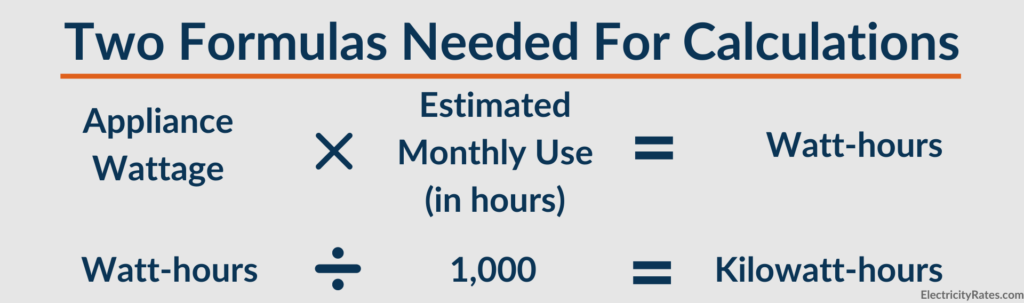
First, we calculate Timmy's daily energy consumption: 60 watts multiplied by 4 hours gives us 240 watt-hours per day. It’s like discovering how many pages Timmy helps you read!
But remember, our billing friends use kilowatt-hours. So, we convert 240 watt-hours by dividing by 1000, which gives us 0.24 kilowatt-hours (kWh) per day. Timmy, it turns out, is a rather modest energy patron.
Watt-hours per day = Watts × Hours used per day
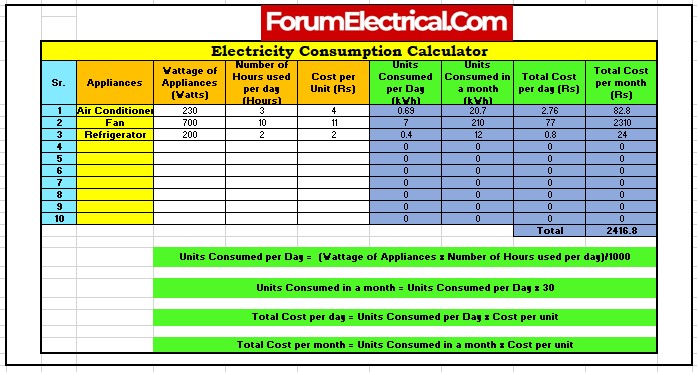
Electricity Consumption Calculator in Ms Excel | How to Calculate
Kilowatt-hours (kWh) per day = (Watts × Hours used per day) / 1000
Now, let’s calculate Timmy's monthly contribution to your energy bill. If he brightens your evenings for 30 days in a month, that's 0.24 kWh/day multiplied by 30 days. This totals a neat 7.2 kWh per month.
If your electricity rate is, say, $0.15 per kWh (a number you can usually find on your own electricity bill!), then Timmy's monthly cost is 7.2 kWh * $0.15, which comes out to a sweet $1.08. A small price for so many literary adventures!
The Sneaky Suspects: Surprising Energy Hogs
While Timmy is a thrifty companion, some appliances are surprisingly ravenous. Have you ever considered your faithful Fridge Freddy? He’s always on, a silent sentinel, diligently keeping your groceries fresh and cool 24/7.
A typical refrigerator might draw 100-250 watts when its compressor runs, but it cycles on and off throughout the day. Over 24 hours, even an energy-efficient fridge can easily consume 1-2 kWh, or sometimes even more for older models.
Multiply that by 30 days, and Freddy could be costing you around $4.50 to $9.00 a month! That’s a significant, quiet chunk of your bill, especially if Freddy has been with your family for many years.
Then there’s Clara the Clothes Dryer, a true power beast. She can easily demand 3000-5000 watts when roaring to life! Even if you only run her for an hour, say, twice a week, those kilowatt-hours stack up astonishingly fast.
Electricitycostcalculator
Imagine Clara, rated at 4000 watts, running for just 2 hours a week. That’s 8 kWh per week, translating to roughly 32 kWh a month! At our assumed $0.15/kWh, Clara could be asking for almost $5.00 just for clothes drying.
These calculations aren’t about criticizing Clara or Freddy. Instead, they’re about understanding their unique energy needs, much like learning a friend's favorite foods or quirks. Maybe Clara could benefit from a little more sunshine, or Freddy could get a check-up!
The Ghostly Guests: Vampire Loads
Beyond the active users, there are the sneaky, silent sippers: vampire loads. These are appliances that consume electricity even when they appear to be off, or are in standby mode. Think of the little lights on your TV, gaming console, or even your phone charger.
Your trusty old Professor PlayStation, for instance, might be drawing 5-10 watts even when you’re not actively gaming, just patiently waiting for you. Individually, these are small sips, but collectively, they can add up to a surprising amount each month.
Unplugging these phantom power drinkers, or using a smart power strip, can be like finding hidden treasure. It's a small change with a surprisingly satisfying impact on your overall energy consumption, cutting down on those invisible guests.
The Big "Aha!" Moment and What Comes Next
Once you start doing these simple calculations, something genuinely magical happens. Your home transforms from a mere collection of inanimate objects into a bustling, living ecosystem of energy users. You begin to see patterns, and you develop an intuitive sense of who’s pulling their weight, and who’s just lazily chilling on standby.
How To Calculate Your Electric Bill - Electricity Rates
This isn't just about saving money, though that’s a wonderfully tangible reward. It’s about empowerment. It’s about looking at that electricity bill and saying, "Ah, I know you, old friend! I recognize Clara's powerful bursts, Freddy's steady hum, and even those tiny sips from Professor PlayStation."
This newfound awareness might prompt you to make smarter choices: perhaps using energy-efficient LEDs for your new Table Lamp Timmy, or running your dishwasher only when it’s completely full. It’s like giving your future self a savvy, money-saving high-five!
The real surprise isn’t just in the numerical savings, but in the ripple effect throughout your home and habits. Understanding your consumption can lead to smarter, more conscious decisions, benefiting both your budget and the environment. It’s a journey towards a more intentional way of living!
And those accumulated savings? They aren't just abstract figures on a statement. They could mean an extra coffee treat each week, finally buying that book you've eyed, or even contributing to a special outing. It’s a heartwarming thought that a little household detective work can lead to real-life delights and a greater sense of control.
Beyond the Numbers: A Kinder, Smarter Home
This exciting journey into computing electricity consumption isn't about becoming an energy miser, obsessing over every watt. It's about becoming an energy wizard, empowered with knowledge and insight. You gain the power to make informed decisions that benefit your wallet, your family, and our shared planet.
It’s about appreciating the silent, constant work of your refrigerator, or the powerful, brief burst of your hairdryer. And it's about being a little kinder to your planet, one well-understood kilowatt-hour at a time, making small, impactful changes.
So, next time you plug something in, give it a little nod. You're not just connecting to an outlet; you're inviting an energy guest into your home. And now, you possess the delightful secret of how to calculate their dinner plate – making you the most informed host on the block!