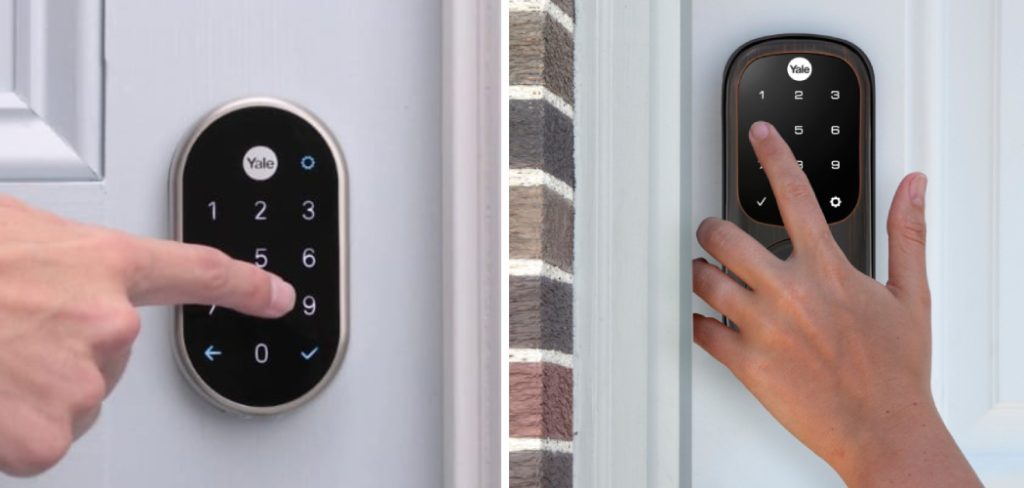
How To Change The Code On A Yale Door Lock

Hey there, tech-explorer! Ready to tackle that Yale door lock code like a true digital wizard? Don't worry, it's not some super-secret spy mission requiring laser grids and cat burglars. Changing the code on your Yale lock is actually super straightforward, and I'm here to guide you through it like a friendly co-pilot. Think of me as your personal, non-judgmental tech guru, complete with virtual high-fives!
First things first, let's take a deep breath. You've got this. Seriously. If you can order pizza online, you can absolutely change a lock code. The hardest part is usually just finding the right button, and even that's more of a fun little scavenger hunt than a brain-buster. Let's dive in!
Gather Your Tech-Troops (aka, What You Might Need)
Before we embark on our coding adventure, let's make sure you have everything ready. It's like preparing for a picnic, but instead of sandwiches, we're dealing with digits.
Must Read
- Your current Master Code: This is often a crucial step for many Yale locks. If you don't know it, you might need to factory reset your lock (a slightly different, but still doable, process). But let's assume you've got it tucked away somewhere, maybe written on a sticky note next to your Wi-Fi password. (Guilty!)
- A fresh 9V battery: Not strictly necessary right now, but a good idea to have on hand. If your lock's acting finicky, a dying battery is often the culprit. It's the equivalent of your phone giving you the silent treatment when it's at 1%.
- Your brain: Fully charged and ready to remember a new code! Try to pick something memorable, but not 1-2-3-4. That's just asking for trouble, my friend.
The Great Reveal: Finding Your Program Button
Okay, this is where the magic (or at least the mechanism) happens. Most Yale smart locks have a little secret button on the inside of the door. Yes, you heard that right – you have to be inside your house to change the code. It makes sense, right? We don't want any porch pirates reprogramming your access!
You'll typically need to:

- Open the door. No, really.
- Look at the inside half of your lock. This is the part with the thumb-turn.
- Unscrew the back cover. It usually has a couple of small screws. Don't worry, it won't explode. It's just a cover.
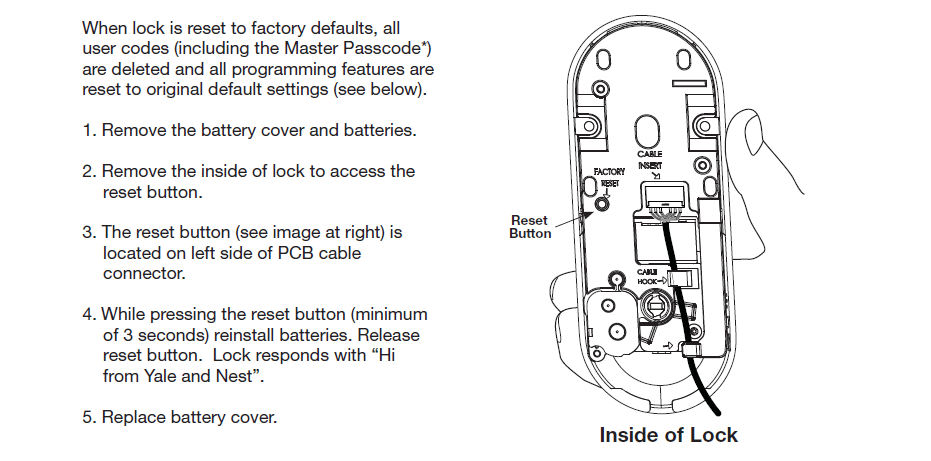
- Behold! The Program Button (P-button). It's usually a small, round button, often red or silver, tucked away. Sometimes it's labeled "P" or "A." Give it a friendly wave; it's about to be your best friend.
Operation: New Code Activated! (The Step-by-Step Goodness)
Alright, you've got your cover off, your P-button is staring back at you, and you're ready to make some changes. Let's do this!
To Change a User Code (the one you give to friends/family):
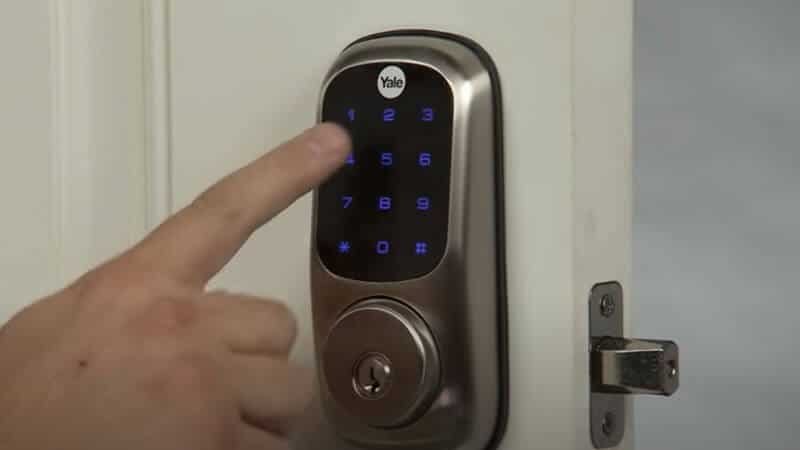
- Wake up the keypad: Touch the Yale logo or press any key to light it up.
- Enter your Master Code: Punch in that original master code of yours and then press the # button.
- Press the Program Button: Give that P-button a quick press and release. You should hear a beep or see a light indication, letting you know it's listening.
- Enter the New User Code: Now, type in the brand new, super-secret code you want to use (4-8 digits usually).
- Press # to confirm: Give it a good tap.
- Enter the New User Code AGAIN: Just to make sure you typed it correctly and didn't accidentally give yourself a secret handshake instead of a code.
- Press # to finish: You should hear a confirmation beep or message. If you hear an error sound, don't panic! Just try again from step 1.
"But what if I want to change the Master Code?" Great question, intrepid code-changer! The process is very similar, but usually involves a specific function number after your initial Master Code entry. Check your lock's manual for the exact function number for changing the Master Code (e.g., usually 1 for Master Code, 2 for User Codes). But for most folks, changing the user codes is what they're after.
The Moment of Truth: Test Your Masterpiece!
Before you screw that back cover on and high-five yourself into oblivion, let's do a quick test. This is important! You don't want to get locked out, looking forlornly through your own window, wondering why you ever messed with technology. (Been there, done that, bought the t-shirt.)
- Keep the door open: Seriously, don't close it all the way.
- Enter your NEW user code: Type it in on the keypad.
- Listen for the happy sound: If it unlocks (or makes the unlocking sound), you're golden! If it gives you an error, repeat the steps from "Operation: New Code Activated!"
Once you're sure it works, go ahead and screw the back cover on. Give yourself a pat on the back!
"Uh Oh, My Lock Is Giving Me the Silent Treatment!" (Troubleshooting Lite)
If things aren't going smoothly, here are a few quick sanity checks:
- Battery check: Did you try a fresh battery? Seriously, 90% of lock issues are battery-related.
- Read the beeps: Some locks have specific error beeps or lights. Consult your actual Yale manual for what those mean. It's like your lock is trying to tell you something in Morse code!
- Patience, grasshopper: Sometimes it just takes a couple of tries. Technology can be a bit temperamental, much like my cat before his morning kibble.
You Did It! You Magnificent Code-Changer, You!
See? That wasn't so bad, was it? You've just mastered a small but mighty piece of home technology, giving you more control and peace of mind. Now you can easily update codes for dog walkers, house sitters, or even just when you want a fresh start. You're not just a homeowner; you're a smart homeowner, capable of bending electronics to your will!
Go forth and enjoy your newly coded, super-secure abode. And maybe treat yourself to that pizza you almost ordered earlier. You've earned it!