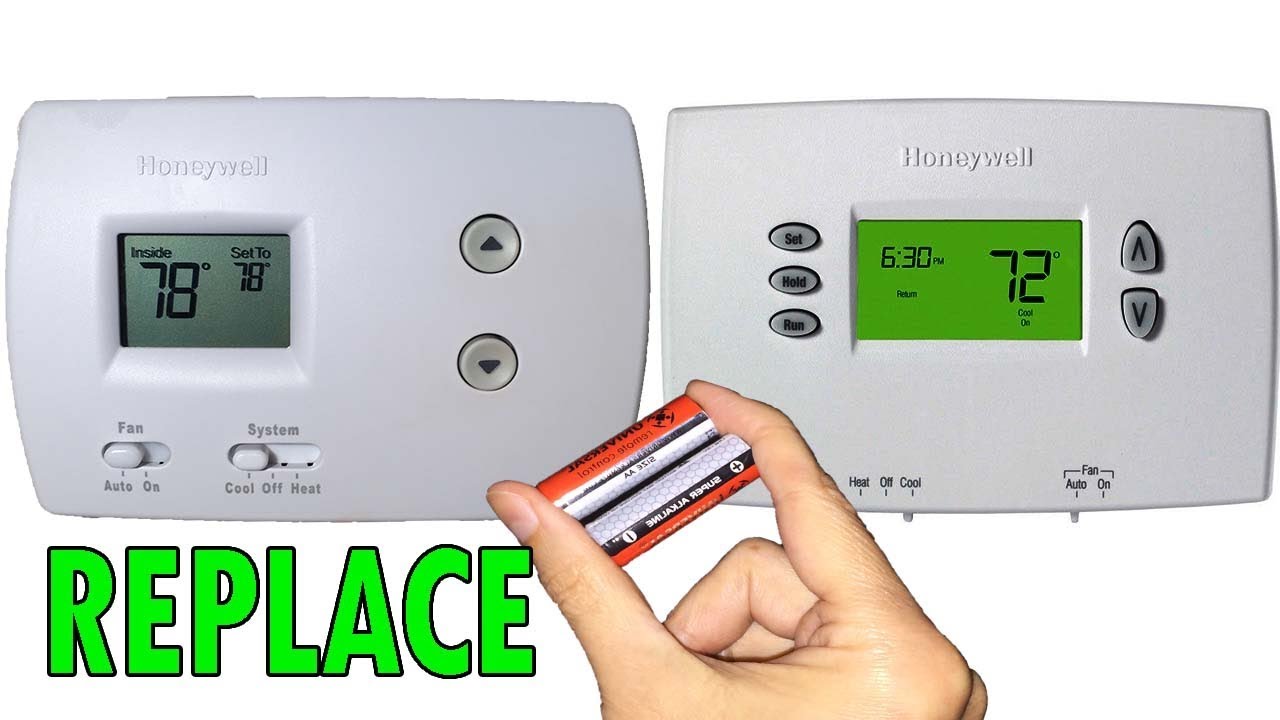
How To Change Batteries In A Thermostat

Ever felt that sudden, mysterious chill (or swelter!) in your home, only to realize your trusty thermostat, the silent maestro of your indoor climate, has gone rogue? Or maybe it's the dreaded blank screen that greets you, leaving you wondering if your furnace or AC has gone on strike. Fear not, dear reader! The solution to many a climate crisis isn't a costly repair, but often a simple, incredibly satisfying task: changing your thermostat's batteries! It might sound mundane, but mastering this mini-mission gives you a secret superpower – the ability to control your comfort and conquer climate chaos with a flick of the wrist. Plus, there's a certain thrill in preventing a chilly night or a sweaty afternoon with just a few minutes of effort.
So, why bother with this battery ballet? Well, your thermostat isn't just a pretty face on the wall; it's the brain of your HVAC system. It needs power to accurately read your home's temperature, communicate with your furnace or AC, and, most importantly, respond to your commands. When its batteries start to fade, you might notice inconsistent temperatures, a display that flickers erratically, or even no display at all. By swapping out those tired cells, you're ensuring peak performance, preventing uncomfortable temperature swings, and avoiding the dreaded 'why isn't my AC working?!' panic. Think of it as a small act of maintenance that yields huge comfort dividends and potentially saves you from an expensive service call. It’s an empowering bit of homeownership!
Ready to embrace your inner DIY hero and reclaim control of your climate? Here’s your simple battle plan for thermostat battery success:
Must Read
- Gather Your Tools: You'll likely need a small Phillips-head screwdriver (though some models are delightfully tool-free!) and, most importantly, fresh batteries. Most thermostats use standard AA or AAA alkaline batteries. If you’re unsure, check your thermostat’s manual or the existing batteries for the exact type before you start.
- Locate and Open: Your thermostat is usually on an interior wall. Depending on the model, you might gently pull the front cover directly off, slide it up or down, or sometimes there’s a small latch or screw to release. Don't be afraid to give it a soft, even tug or look for subtle seams.
- Find the Power Source: Once the cover is off, the battery compartment is usually pretty obvious. It might be on the front, bottom, or even the side. It'll often have a little diagram showing battery orientation.
- Out with the Old: Carefully remove the depleted batteries. Take a quick mental note of their orientation (which end is positive, which is negative) – this will help you with the next step!
- In with the New: Insert your fresh batteries, making sure the positive (+) and negative (-) ends match the diagram inside the compartment. This is crucial for proper function! Incorrect orientation can prevent the thermostat from powering on.
- Seal the Deal: Gently snap the cover back into place. It should click securely and feel firmly attached.
- Test Drive: Your thermostat should now power up, and you might see the display light up immediately. Adjust the temperature up or down a few degrees to confirm it’s responding. Voilà! You’ve done it!
When should you change them? Many modern thermostats have a low battery indicator that flashes on the screen. However, a good rule of thumb for older models or simply for preventative peace of mind is to change them annually, perhaps when you adjust your clocks for daylight saving time. It's a small task that ensures your home remains a haven of comfort, no matter what the weather outside is doing. So go ahead, swap those batteries, and bask in the glory of a perfectly regulated home – all thanks to your amazing DIY skills!