
How To Calculate Energy In Electricity
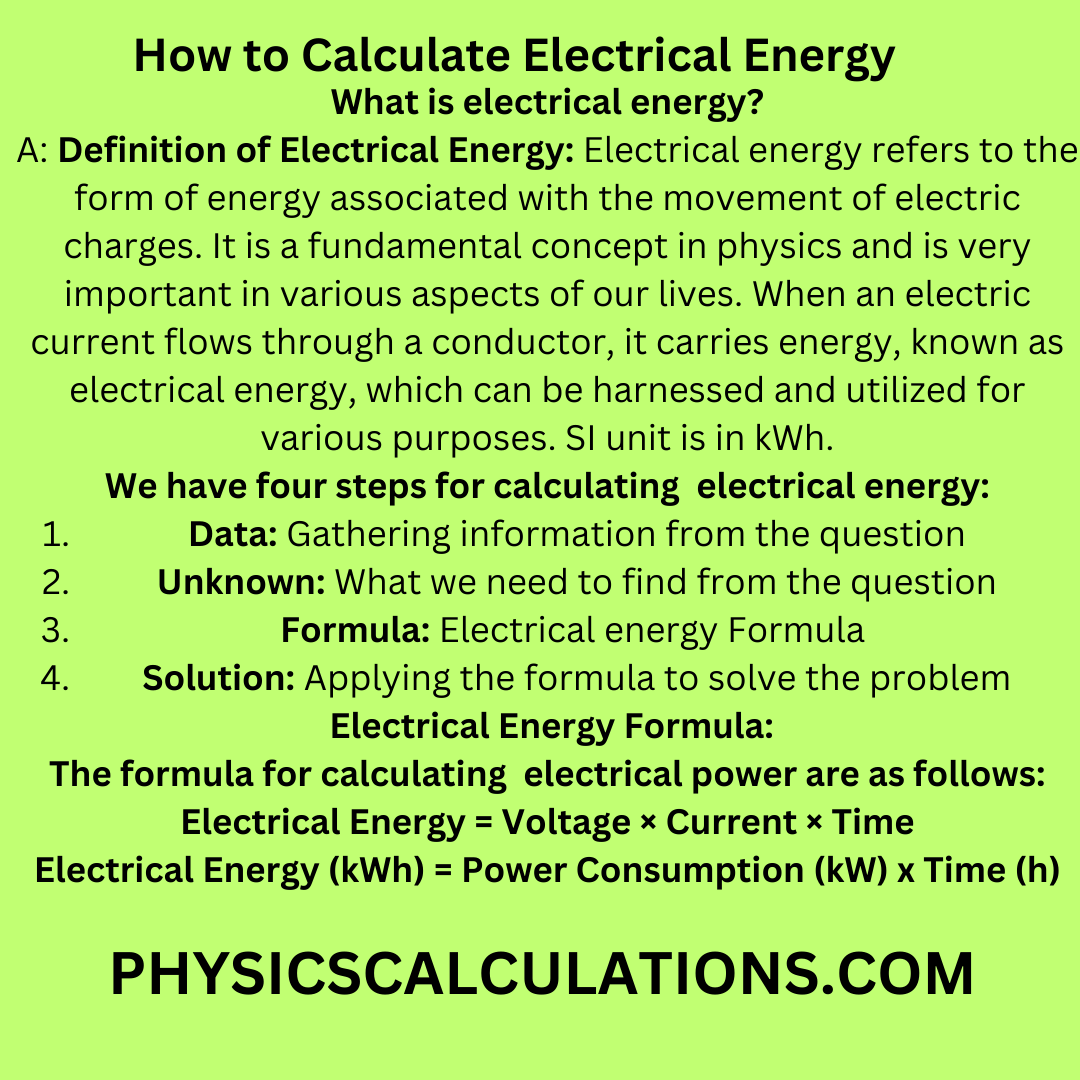
Ever gazed at your electricity bill, a mysterious scroll filled with numbers, and thought, "What on earth is a kilowatt-hour, and why do I owe so much for it?" You're not alone! For many of us, electricity feels like an invisible force that just... happens. But understanding how much energy your gadgets use is actually super fun, surprisingly simple, and can even save you some cash for that extra fancy coffee.
Think of it like this: You wouldn't buy a car without knowing how much fuel it guzzles, right? Or eat a giant slice of cake without a tiny peek at the calories. Electricity is no different! It’s all about knowing your "fuel consumption" – your energy usage.
It All Starts with Power and Time
At its heart, calculating electrical energy is a bit like baking a cake. You need the right ingredients, in the right amounts, for the right time. For electricity, our main ingredients are Power and Time.
Must Read
Energy is simply how much power is used over a certain period. It’s like saying, "My car uses 50 horsepower (power) for 3 hours (time) to get me to the beach." The total work done (the energy expended) gets you there!
Step 1: Understanding "Power" (Watts, please!)
When we talk about an appliance's "power," we're usually talking about watts (W). Think of watts as the "oomph" or "grunt" an appliance has at any given moment. A high-wattage appliance demands a lot of electricity quickly, like a thirsty dog gulping water.
- Your kettle? Probably a mighty 1,500 to 3,000 watts. A quick, powerful burst!
- A standard LED light bulb? A gentle 9 to 12 watts. A steady, soft glow.
- Your phone charger? A super-polite 5 to 15 watts, sipping slowly.
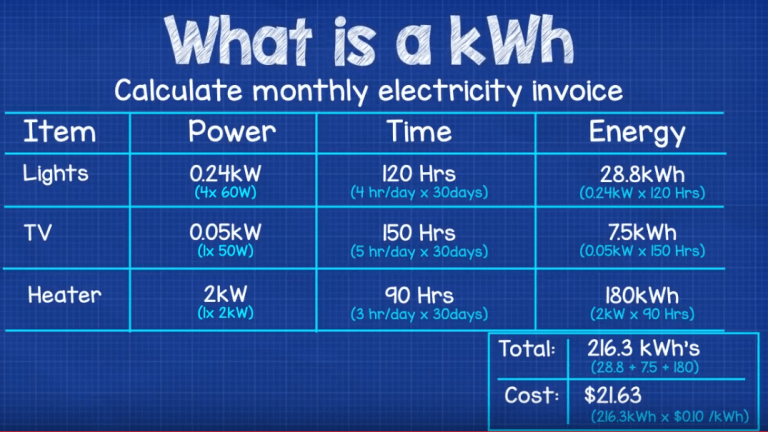
You can usually find an appliance's wattage printed right on its label or in the user manual. It's often written as "W" or "kW" (kilowatts, which is 1,000 watts – handy for bigger things!).
Step 2: Adding in "Time" (Hours, naturally!)
This one's pretty straightforward! It's simply how long you use the appliance. Do you boil the kettle for 3 minutes or let a fan run all night? Time makes a huge difference to the total energy used.
For our calculations, we usually use hours. So, if you use your kettle for 3 minutes, you'd convert that to 0.05 hours (3/60).
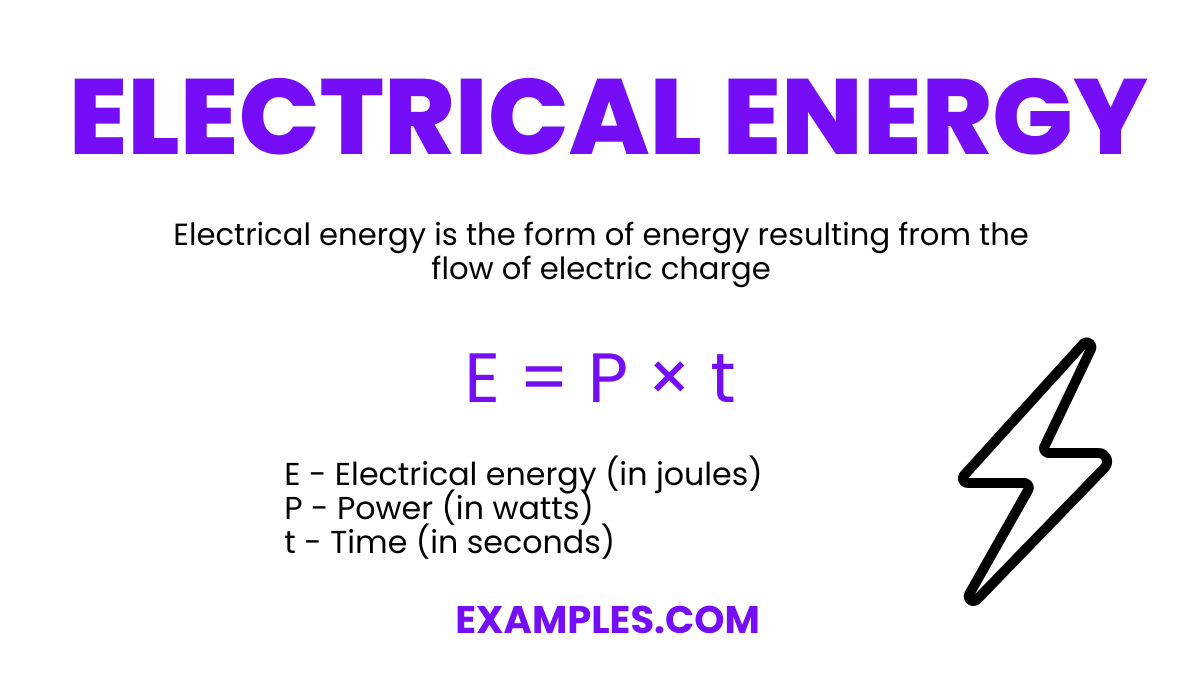
The Simple "Magic" Formula: Energy = Power x Time
Ready for the big reveal? Here it is:
Energy (kWh) = Power (kW) x Time (hours)

That's it! To make it super easy, we usually work with kilowatt-hours (kWh) because that's what your electricity bill uses. One kilowatt-hour is simply 1,000 watts used for one hour. It's the standard "unit" your electricity provider charges you for.
Let's Try a Couple of Friendly Examples!
Imagine your old, trusty toaster is rated at 1,200 watts (1.2 kW). You use it for about 5 minutes every morning to get that perfect golden crunch. That's about 0.083 hours (5/60).
Energy = 1.2 kW x 0.083 hours = 0.0996 kWh
So, a single toast session costs you a tiny fraction of a kilowatt-hour. Now, what about that energy-efficient LED lamp, rated at a modest 10 watts (0.01 kW), that you leave on for 6 hours every evening?

Energy = 0.01 kW x 6 hours = 0.06 kWh
See? Even though the toaster is a power hog, you use it for such a short time that a long-burning low-power light can sometimes use more total energy!
Why Should You Even Care About This Fun Math?
This isn't just for science nerds; it's for everyone who likes money, comfort, and perhaps a tiny bit of power (pun intended!).
1. Become an Energy Detective: Knowing this formula helps you pinpoint the "energy vampires" in your home. Is it that old fridge humming away, or the gaming PC left on all night? You'll know exactly who the culprit is!
2. Save Some Serious Dough: Once you know which appliances are costing you, you can make smarter choices. Maybe switch off lights, unplug chargers (yes, they still sip power!), or upgrade that ancient tumble dryer. Every kWh saved is money in your pocket for something more exciting, like a surprise ice cream delivery!
3. Smart Shopping Spree: Buying a new appliance? Look at its wattage! A slightly more expensive, lower-wattage fridge could save you a fortune over its lifetime compared to a cheaper, energy-guzzling model. Your future self will thank you.
4. Be a Planet Superhero: Less electricity used means less demand on power plants, which often burn fossil fuels. By being energy-conscious, you're doing your bit for Mother Earth, one calculated kWh at a time. High five!
So, the next time you plug something in, give a little nod to Power and Time. They're the dynamic duo behind every blink, whir, and hum in your home. Understanding them turns that intimidating electricity bill into a friendly conversation, and gives you the power (pun absolutely intended!) to make smarter choices for your wallet and the planet.