
How To Barricade A Door That Opens In
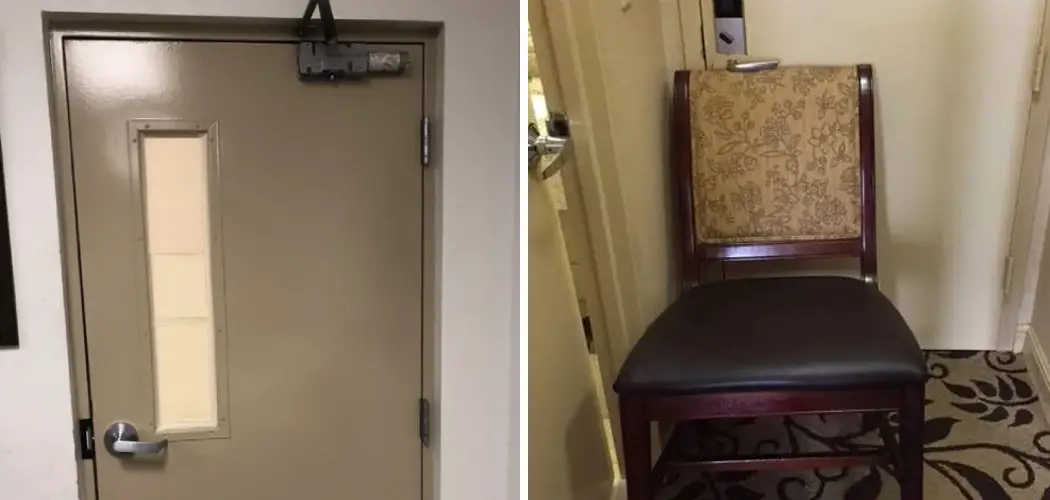
Alright, gather 'round, my friends, because today we're tackling a topic that's been keeping tactical squirrels, overenthusiastic neighbors, and possibly even the occasional rogue vacuum cleaner at bay since the dawn of… well, doors! We're talking about the noble art of barricading a door. But not just any door, oh no. We're talking about the real trickster: the door that swings inward. Yeah, you know the one. The one that, at first glance, seems to mock your defensive efforts with its "come on in!" attitude.
Why would you need this skill, you ask? Well, perhaps you've just whipped up a batch of your famous-but-lethally-spicy chili and need a moment of peace. Maybe your cat has discovered the joy of early morning singalongs. Or, you know, the zombie apocalypse. Whatever your highly specific, totally rational reason, knowing how to turn your humble bedroom door into Fort Knox is a life skill. And a hilarious party trick, if you ever host a "guess the barricade material" contest.
The Inward-Opening Enigma: Why It's Tricky
So, a door that opens outward? Piece of cake! You just jam something against the frame, and presto! It's like trying to push a mountain. But an inward-opening door? That's a different beast. Its very nature invites force from the outside. You can't just brace a stick against the outside frame. The key here is to create internal resistance, turning the door's own desire to open against it. We're talking about leverage, friction, and a healthy dose of sheer stubbornness.
Must Read
Fun fact: Did you know a standard hollow-core interior door can fail with as little as 200-300 pounds of force if applied repeatedly or in the right (wrong?) spot? Your mission, should you choose to accept it, is to make that 200 pounds feel like 2,000!
Tier 1: The Everyday Improv - Your First Line of Defense
The Humble Doorstop: Don't Underestimate the Wedge!
Let's start simple. The classic, often overlooked hero: the doorstop. Not just for propping doors open, folks! Place it snugly under the door, as close to the frame as possible. The wider the wedge, the better the friction. For extra oomph, stack two, facing opposite directions. It’s like giving your door tiny, super-grippy shoes.
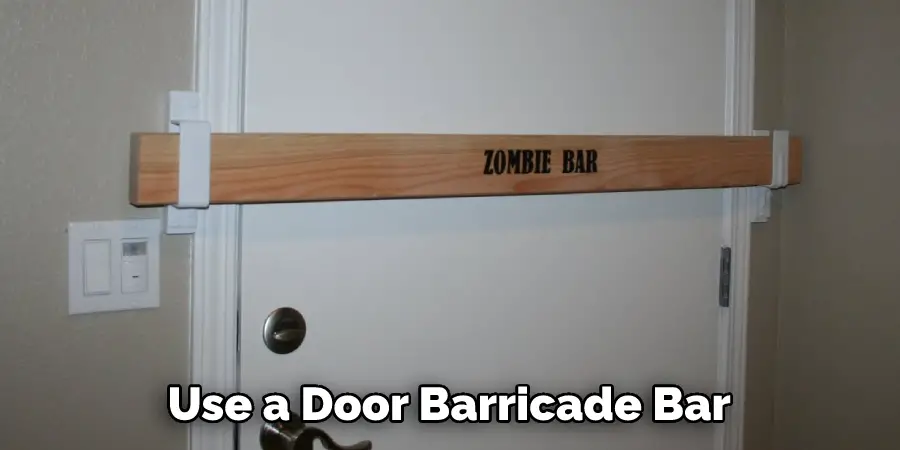
Furniture Frenzy: The Brute Force with Brains Method
Time to get physical. Look around. Is there a dresser? A bookshelf? A particularly sturdy armchair? Anything heavy and awkward to move from the other side. You're going to push it against the door. But here's the secret sauce: don't just push it flat against the door. You want to angle it so that the force trying to open the door actually pushes the furniture more firmly into the door and the floor. Think of it as a diagonal embrace of denial.
For example, a chair. Place it with its back against the door, and its front legs braced against the floor, angled away from the door. The harder someone pushes, the more its legs dig in. It's an elegant dance of physics and stubbornness.
Tier 2: Getting Serious - Leveraging the Leverage!
The Chair Under the Knob: The Movie Classic, Mastered.
Ah, the iconic movie scene. But often, it's done wrong! You don't just jam any old chair under the knob. For maximum effectiveness, find a chair with a sturdy back (no flimsy patio chairs, please!). Place one of the chair's front legs under the doorknob. Now, here's the genius part: angle the chair so that its back is pressing against the door, and its other three legs are digging into the floor at an angle that directs any incoming force downwards and inwards. This creates a diagonal brace that makes the door incredibly difficult to budge. It's like giving your doorknob a tiny, but immensely strong, tripod buddy.
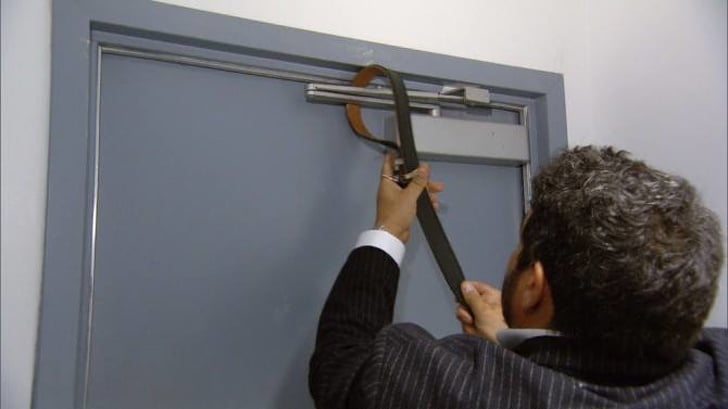
Did you know that in medieval castles, defenders would often brace doors with massive wooden beams, leveraging the entire castle structure? You're essentially doing the same, but with your grandma's antique rocking chair.
Tier 3: The "Oh Crap" Barricade - When You Mean Business
The Plank/Broom Handle Brace: The Ultimate Wedge
If you have a sturdy piece of wood – say, a 2x4, a thick broom handle, or even a sturdy hockey stick – you can create a super-effective brace. Wedge one end firmly against the floor (ideally against a rug or something that provides friction) and angle the other end up against the door, just below the handle. The steeper the angle, the better. This creates incredible resistance. If you have a door with a gap underneath, you can even wedge it horizontally between the door and a wall on the hinge side, effectively blocking the door's swing from the inside. This is like giving your door a structural iron lung.
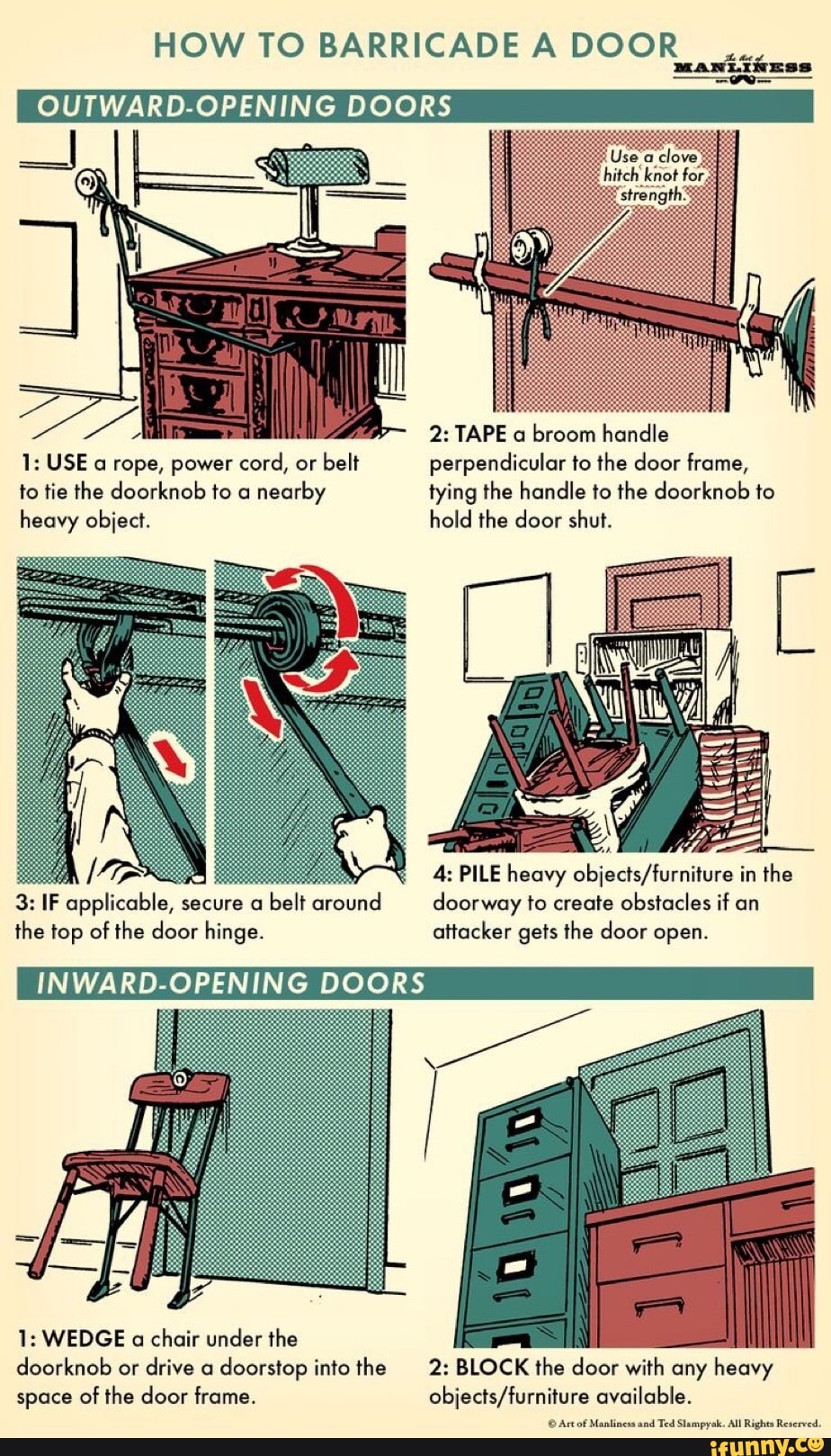
The Weight Stack: Fortifying the Fort
Combine all of the above! Once you have your chair or plank brace, start stacking heavy objects behind it. Books, dumbbells, a bag of cat litter, that box of old tax returns you've been meaning to shred (surprisingly dense!). The more weight you add, the more difficult it becomes to dislodge your primary barricade. Remember, mass equals inertia, and inertia equals "you shall not pass!"
Final Thoughts for the Aspiring Barricader
Remember, the goal isn't just to stop the door, but to make it so unappealing to open that whoever's on the other side gives up and goes home to rethink their life choices. Always consider the strength of the door frame itself – a weak frame is often the weakest link, regardless of your barricade. And don't forget those windows! A well-barricaded door is great, but if someone can just pop a pane and waltz in, you've essentially just made your own life harder.
So there you have it, folks! The art and science of turning an inward-opening door into an impenetrable fortress. Now go forth, practice responsibly (maybe with a willing friend and a stopwatch), and rest easy knowing you're prepared for anything from an unexpected visit from your aunt Mildred to, yes, even the occasional zombie squirrel. Stay safe, stay fortified, and always have a sturdy chair handy!
