
How Much Watt Is A Fridge

Ever stood in front of your fridge, rummaging for a snack, and thought, "Man, this thing is always on. How much power does it actually suck down?" It's one of those silent heroes in our kitchen, constantly humming away, keeping our food fresh and our drinks cold. But have you ever really paused to wonder about its electrical appetite?
Today, we're diving into the fascinating world of fridge wattage. It's not just a boring technical spec; it's a little peek into how our homes work and how much energy we're using without even realizing it. And spoiler alert: it might be less (or more!) than you think.
So, How Many Watts Are We Talking?
Alright, let's get to the juicy bits. If you're looking for a single, easy answer, you're in for a slight curveball. That's because fridges aren't like a light bulb that's just "on" or "off" at a fixed wattage. They're a bit more dynamic!
Must Read
Typically, a modern refrigerator might draw between 100 and 200 watts when its compressor is actively running. Old school models? They could be thirsty beasts, gulping down upwards of 400-800 watts when they're working hard. Think of it like a car: it uses more gas when accelerating up a hill than when cruising on a flat road.
But here’s the kicker: your fridge's compressor isn't running 24/7. It cycles on and off throughout the day to maintain the temperature you set. So, while it might spike to 150 watts for a bit, it also spends a lot of time just chilling (pun intended!) and drawing very little power.
Why the Big Range? Let's Talk Fridge Personalities!
Just like people, not all fridges are created equal. Several factors play a huge role in how much juice your chilling companion consumes:
![Mini Fridge Wattage [1,494+ Units | Most Efficient Revealed]](https://ecocostsavings.com/wp-content/uploads/2023/04/mini-fridge-wattage-examples.jpg)
First up, age matters a lot. An ancient fridge from your grandma's basement? It's probably an energy hog. Technology has come a long, long way in making these appliances incredibly efficient. Newer models with an ENERGY STAR® rating are designed to keep those watt numbers pleasantly low.
Then there's size and type. A tiny dorm room mini-fridge will naturally use less power than a massive, side-by-side smart fridge with an ice maker and a touch screen. A bottom-freezer model might be slightly more efficient than a top-freezer one due to how cold air sinks.
And let's not forget your habits! Do you stand there with the door open, contemplating life's big questions while warm air rushes in? Each time you open the door, the compressor has to work harder to bring the internal temperature back down. The ambient temperature of your kitchen also plays a part – a fridge in a hot garage works harder than one in a cool pantry.
Fridge Power: A Daily Energy Tug-of-War
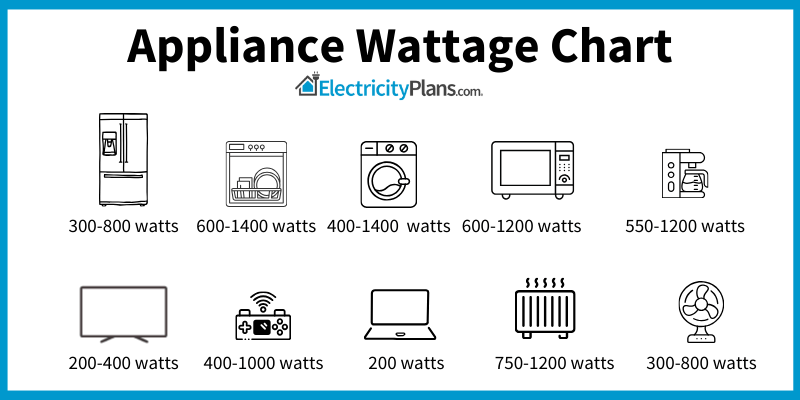
To really put those numbers into perspective, let's play a fun game of "What else uses that much power?"
When your modern fridge's compressor kicks in, drawing around 150 watts, that's roughly equivalent to a couple of old-school incandescent light bulbs burning brightly. Not too crazy, right? Your desktop computer might be using similar power while you're browsing the web.
Now, think about the initial power surge when a microwave starts up – that's often over 1000 watts! Your fridge isn't doing that. Instead, it's like a marathon runner, steadily using smaller amounts of energy over a long period, rather than a sprinter exploding with power for a short burst.
An old, inefficient fridge, though? That could be like keeping a small space heater running intermittently, costing you a surprising amount on your electricity bill. It's the difference between a fuel-efficient hybrid car and a gas-guzzling vintage muscle car. Both do the job, but one is much kinder to your wallet and the planet!
Why This Chilling Knowledge Is Actually Super Cool
Okay, so now you know a bit more about how much power your fridge uses. But why does any of this matter? Beyond satisfying our inner nerd, understanding fridge wattage has some real-world benefits!
Firstly, your energy bill. Every watt-hour adds up! A more efficient fridge means lower monthly expenses. Who doesn't love saving a bit of cash?
Secondly, it's about our environmental footprint. Less power consumption means less demand on power plants, which often translates to fewer greenhouse gas emissions. Making smart choices for your home is a small but mighty way to contribute to a greener planet.

And finally, it's about making informed decisions. When it's time to buy a new fridge, knowing to look for those ENERGY STAR labels, or understanding the difference between an ancient model and a brand-new one, can empower you to choose wisely. It's not just about capacity and features; it's about the long-term cost and impact.
Want a Happier, More Efficient Fridge? Try These!
So, you want to help your fridge be its best, most energy-efficient self? Here are a few friendly tips:
- Don't play peek-a-boo: Try to grab what you need quickly and close the door. Every second counts!
- Check those seals: Worn out rubber seals let cold air escape. A simple dollar bill test (if it pulls out easily when the door is closed, the seal might be weak) can save you power.
- Keep it clean: Dust on the condenser coils (at the back or bottom) makes your fridge work harder. Give them a gentle clean a couple of times a year.
- Give it space: Don't push your fridge right up against the wall. It needs a little breathing room for proper air circulation.
- Don't put hot food in: Let leftovers cool down on the counter before popping them in. Hot items make the compressor kick into overdrive.
- Find the sweet spot: Most fridges are happy between 35-38°F (1.7-3.3°C) for the fridge and 0°F (-18°C) for the freezer. No need to go super-cold!
See? Who knew fridge wattage could be so interesting? From the hum of its compressor to the gentle chill keeping your ice cream perfect, your refrigerator is a marvel of engineering, constantly working to make your life easier.
It's not about being obsessed with every single watt, but rather having a relaxed curiosity about the machines that share our lives. Understanding a little about how much power they use empowers us to make smarter choices, save a bit of money, and be a little kinder to our planet. So next time you open that door, give a nod to your fridge – it's doing a lot of cool work for you!