How Much Is A 1934c $5 Silver Certificate Worth
There's something undeniably captivating about holding a piece of history in your hands, especially when that piece is a vintage banknote. For many, collecting old currency is more than just a hobby; it's a fascinating journey through time, offering glimpses into the economic and artistic sensibilities of past eras. One such note that often sparks curiosity is the 1934C $5 Silver Certificate. But just how much is this piece of American heritage actually worth?
Collecting currency, particularly old paper money, serves several purposes. Beyond the simple enjoyment of owning a tangible piece of the past, it can be a surprisingly educational pursuit. You learn about historical figures depicted on the notes, the economic climate during their circulation, and the evolution of engraving and printing techniques. Furthermore, for some, it's a form of alternative investment. While not guaranteed to appreciate, rare and well-preserved banknotes can gain value over time, making them a potentially profitable addition to a diverse portfolio.
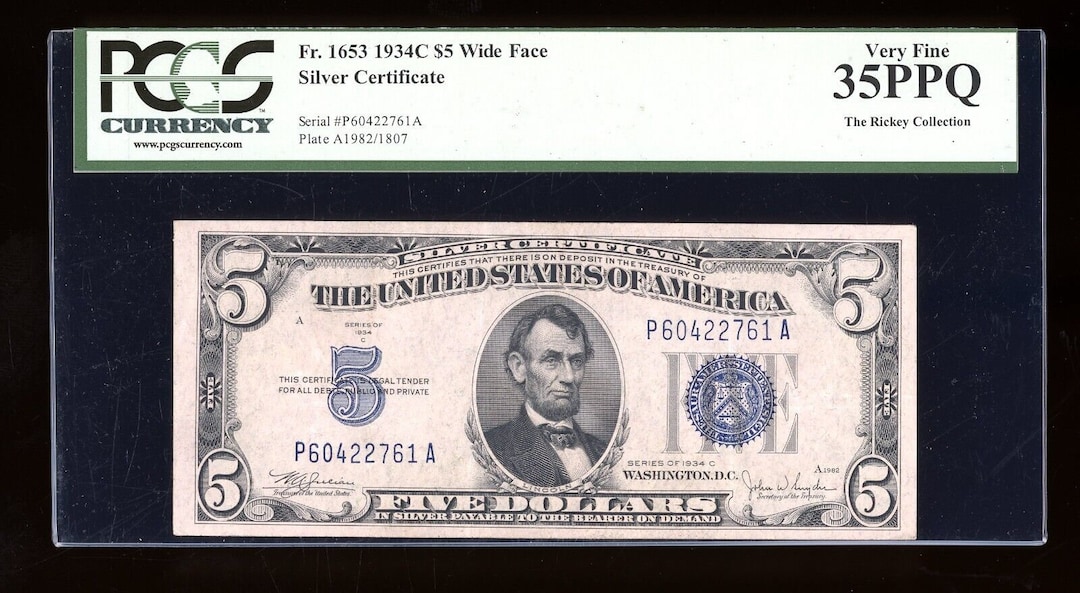
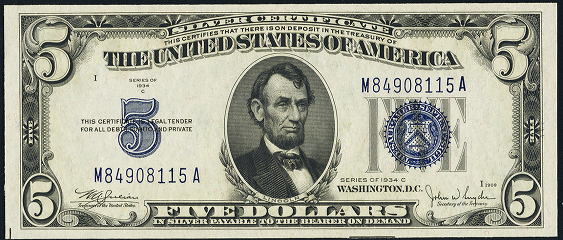
The 1934C $5 Silver Certificate features a portrait of Abraham Lincoln on the front and the Lincoln Memorial on the back. These notes were part of the Silver Certificate series, meaning they were redeemable for silver dollars or silver bullion – a feature that adds to their historical significance. You might find examples of these notes at coin shops, antique stores, or even estate sales. Online marketplaces are also a popular venue for buying and selling them.
Must Read
So, what factors determine the value of a 1934C $5 Silver Certificate? The most crucial element is its condition. A note in uncirculated condition, meaning it appears crisp and new with no folds or wear, will command a significantly higher price than one that's heavily circulated, torn, or stained. Next, rarity plays a key role. While the 1934C $5 Silver Certificate isn't considered exceedingly rare, certain printing variations, such as those with errors or specific serial number combinations (like low numbers or "fancy" numbers), can be more valuable.

To enjoy your currency collecting more effectively, consider these tips. First, learn to grade notes accurately. Understanding the Sheldon Scale (a system used to assess the condition of coins and banknotes) will help you make informed purchasing decisions. Numerous online resources and books are available to guide you. Second, invest in proper storage. Use acid-free sleeves or albums to protect your notes from damage. Third, do your research. Before buying any note, compare prices on reputable auction sites and dealer websites. Check for any known varieties or errors. Fourth, join a numismatic club. Connecting with other collectors allows you to share knowledge, learn from experienced enthusiasts, and potentially discover hidden gems in your own collection. And finally, remember to handle your notes with care. Avoid touching the surface with your bare hands, as oils and dirt can degrade the paper over time. Use gloves or handle them by the edges.
In conclusion, while a heavily circulated 1934C $5 Silver Certificate might only be worth slightly more than its face value, a pristine example with a rare feature could fetch a considerable sum. By understanding the factors that influence value and practicing responsible collecting habits, you can fully appreciate the fascinating world of paper money and perhaps even build a valuable collection along the way!