
How Much Is 4000 Pesos In Us Dollars

Ever wondered what 4000 Philippine Pesos (PHP) translates to in good ol' United States Dollars (USD)? It's a question that pops up more often than you think, especially if you're planning a trip, sending money to loved ones, or just plain curious.
Let's dive into the world of currency exchange! But before we do, a quick disclaimer: exchange rates are like the weather. They change. A lot. So, the figures we'll talk about are approximations.
The Big Question: 4000 Pesos to Dollars
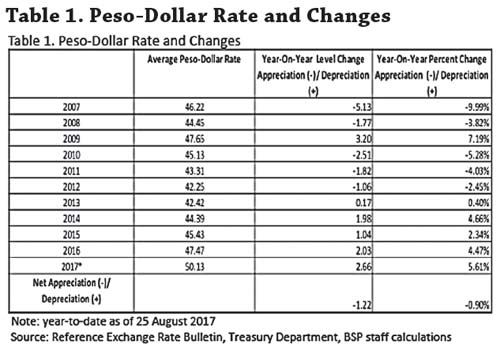
As of today, if we guesstimate, 4000 PHP would be somewhere in the ballpark of $70-$80 USD. This, however, is a floating target.
Must Read
Imagine you're planning a trip to the Philippines. Knowing this rough conversion is super helpful. It helps you estimate costs for meals, souvenirs, and that sweet Jeepney ride you’ve been dreaming about.
Factors Affecting the Exchange Rate
Okay, so why does the exchange rate bounce around like a kid on a trampoline? Several factors are at play.
First, there's the simple supply and demand. If lots of people are buying Pesos, its value goes up. If everyone's selling, it goes down.
Then there's the economic health of both the Philippines and the United States. Strong economies tend to have stronger currencies.
Political stability (or instability) also plays a role. Nobody wants to invest in a country if things are too uncertain.
Interest rates set by the central banks of each country can also influence currency values. Higher interest rates can attract foreign investment.
Real-Life Scenarios: What Can $70-$80 Get You?
Now for the fun part: let's imagine what you could buy with $70-$80, both in the US and its equivalent in the Philippines.

In the US, that might get you a decent dinner for two at a casual restaurant, a couple of movie tickets, or a small shopping spree at your favorite store.
But in the Philippines, 4000 Pesos stretches further. It's more than enough for a delicious feast of lechon (roasted pig), several servings of adobo (braised meat in soy sauce and vinegar), and enough halo-halo (a shaved ice dessert) to satisfy your sweet tooth for a week!
It could also cover a few nights in a budget-friendly hotel, a handful of local market treasures, or a round-trip bus ticket to explore some stunning scenery.
Where to Exchange Your Money
So, where do you actually exchange your money? You have a few options.
You can go to a bank. Banks usually offer decent exchange rates, but they might charge fees.
You could visit a currency exchange booth. These are often found at airports and tourist hotspots, but their rates can be less favorable, and their fees, well, let's just say proceed with caution.
ATMs are another option. Just be aware of potential fees from both your bank and the ATM operator.
Some online platforms offer currency exchange services too. These can be convenient, but it's crucial to research the platform's reputation and fees before using them.
Tips for Getting the Best Exchange Rate
Want to get the most bang for your buck (or Peso)? Here are a few tips.
Shop around for the best exchange rate. Don't just settle for the first one you see.
Avoid exchanging money at airports if possible. Their rates are typically the least favorable.
Consider using a credit or debit card with no foreign transaction fees. However, be mindful of potential ATM fees if you withdraw cash.
Keep an eye on the exchange rate trends. If you're not in a rush, you might be able to get a better rate by waiting for a favorable fluctuation.
The Human Element: Why It Matters
Beyond the numbers and calculations, currency exchange has a very real human element.
Think about the Filipino families who rely on remittances from relatives working abroad. A slight fluctuation in the exchange rate can make a big difference in their lives.
For tourists, understanding the exchange rate can enrich their travel experience. It allows them to immerse themselves in the local culture and support local businesses without breaking the bank.
And for those who simply enjoy learning about different cultures, understanding currency exchange is like unlocking a window into the global economy.
A Quick Recap
So, to recap: 4000 Philippine Pesos is approximately $70-$80 US Dollars, give or take. But remember, that exchange rate is a moving target.
Many factors influence the exchange rate, from supply and demand to economic and political stability.
You can exchange your money at banks, currency exchange booths, ATMs, or online platforms.
Shop around for the best exchange rate and be mindful of fees.
And most importantly, remember the human element behind the numbers.
Beyond the Exchange Rate: The Value of Connection
While knowing the exchange rate is useful, it's also important to remember that money isn't everything.
The real value lies in the connections we make, the experiences we share, and the memories we create.
Whether you're traveling to the Philippines, sending money to loved ones, or simply curious about the world, embrace the opportunity to learn, connect, and appreciate the richness of different cultures.
Final Thoughts: More Than Just Numbers
So, the next time you wonder how much 4000 Pesos is in US Dollars, remember that it's more than just a number.
It's a gateway to understanding the global economy, appreciating different cultures, and connecting with people from all walks of life.
And who knows, maybe it'll even inspire you to book that trip to the Philippines you've always dreamed of. Just remember to factor in the cost of all that delicious halo-halo!
So, mabuhay! (Welcome to the Philippines!)
Remember to always check with a reliable source or financial institution for the most up-to-date exchange rates before making any financial decisions. Ingat! (Take care!)
The world of currency is a fascinating one, constantly shifting and reflecting the complex tapestry of global economics and human connection. It's more than just numbers; it's a story told in fluctuating values and the shared dreams of people around the world.
“The value of a thing is what someone is willing to pay for it.” – A wise person.