
How Much Does Fan Cost To Run
Ah, the gentle hum of a fan. It’s the soundtrack to so many of our warmer days and restless nights, a simple luxury that promises a bit of respite from the sweltering heat. But as we chase that elusive cool breeze, a little thought often drifts in: “How much is this costing me, really?”
Good news, comfort-seeker! If you’ve ever fretted that your trusty fan is secretly guzzling electricity like a thirsty dragon, prepare for a pleasant surprise. Running a fan is, by and large, incredibly kind to your wallet. It's one of the most
The Pennies and Cents of Comfort
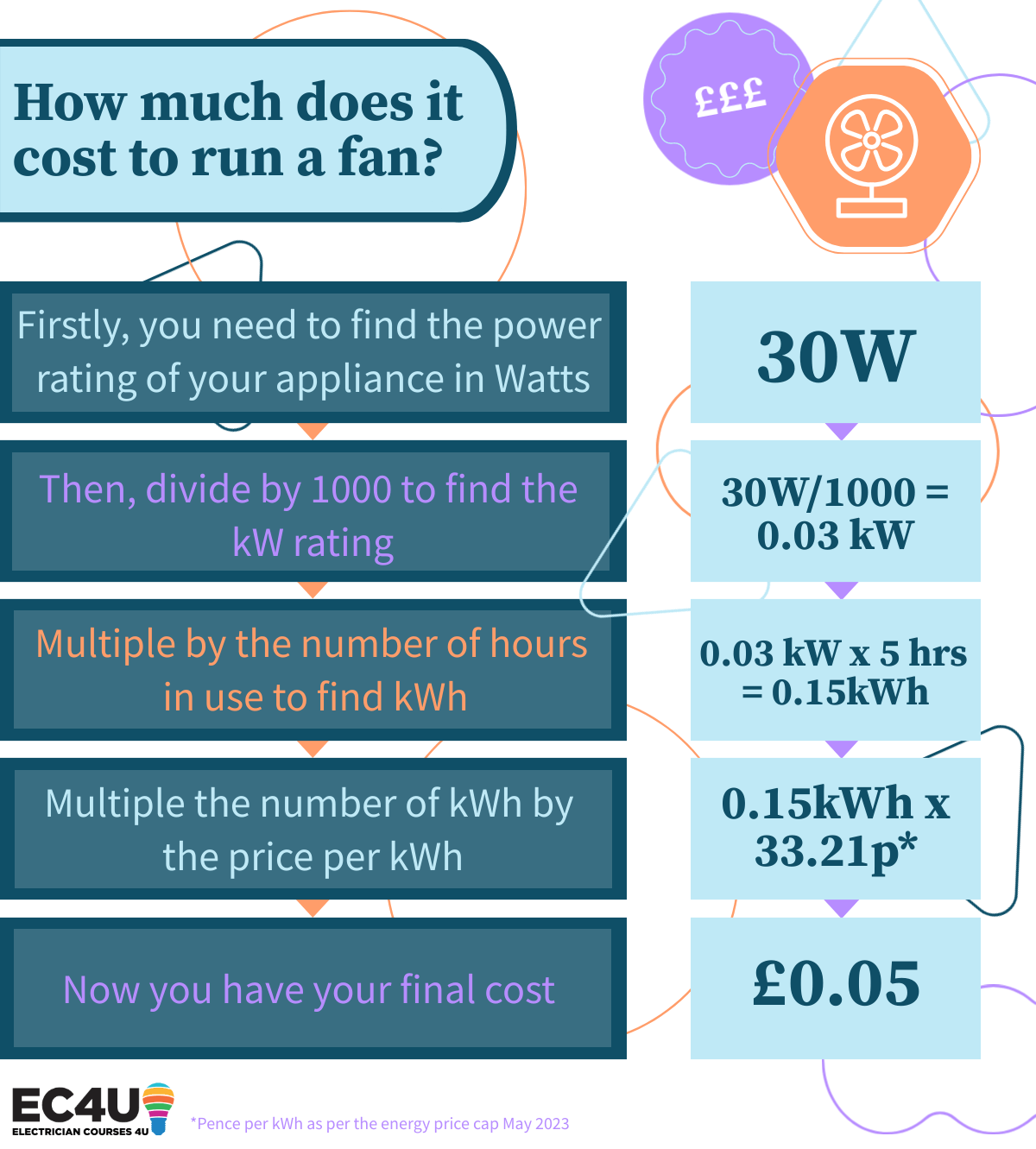
Let's get straight to the cool, hard facts. Most standard household fans – think your desk fan, tower fan, or even a modest ceiling fan – use very little electricity. We’re talking about wattage in the range of 25 to 100 watts. To put that into perspective, an average incandescent light bulb might use 60 watts, and your microwave oven can easily hit 1000-1500 watts when it’s zapping your leftovers.
Must Read
So, what does this mean for your bill? Generally, running a fan for an entire hour will cost you mere pennies. Depending on your local electricity rates (which can vary, of course, from a few cents to around 20-30 cents per kilowatt-hour across different regions), a typical fan might cost you anywhere from 0.5 cents to 2 cents per hour. That’s right, less than a nickel for an hour of breezy bliss!
Leaving a fan on all night, say for eight hours? That’s probably only going to set you back about 5 to 15 cents. For a full month of constant cooling, you're looking at a grand total of around $5 to $15. Compare that to the hundreds of dollars an air conditioner can rack up, and you’ll see why fans are the unsung heroes of energy efficiency.

What Influences the Cost?
While the overall cost is low, a few factors can nudge it up or down:
- Fan Type: A small personal desk fan uses less power than a large, oscillating tower fan or a powerful box fan. Ceiling fans, surprisingly, are often
very energy efficient due to their motor design and ability to circulate air broadly. - Wattage: Check the label! The higher the wattage, the more electricity it consumes. Modern fans often boast lower wattages for the same air movement.
- Speed Setting: Running your fan on high speed naturally uses more electricity than a lower setting. Sometimes, a gentle breeze is all you need, saving you even more.
- Electricity Rates: As mentioned, these vary. Peak hours in some areas might also have higher rates, though the impact on a fan's cost would still be minimal.
Smart Breezes: Tips for Maxing Your Fan's Potential
Want to be a true fan-fanatic? Here are some cool tips:
![How Much Does It Cost to Run a Fan [2025 Update] - Jackery Australia](https://au.jackery.com/cdn/shop/articles/how_much_does_it_cost_to_run_a_fan_guide.png?v=1745491749)
Strategic Placement is Key: Don't just point it randomly! Position your fan to create a
Pair with AC (Smartly): On those truly scorching days, a fan can help your air conditioner work more efficiently. By circulating the cool air, a fan allows you to set your AC a few degrees higher, saving significant energy without sacrificing comfort. Think of them as a dynamic duo!
Clean Blades, Better Breeze: A dusty fan isn't just unsightly; it's less efficient. Dust buildup on blades can reduce airflow and make the motor work harder. Give it a wipe down every now and then!
![How Much Does It Cost to Run a Fan [2025 Update] - Jackery Australia](https://cdn.shopify.com/s/files/1/0689/8470/1213/files/running_costs_of_fans.png?v=1745465263)
Utilize Timers: Many modern fans come with built-in timers. Set it to turn off after you've fallen asleep, ensuring you stay cool without running it longer than needed. It’s like setting a tiny, silent alarm for your comfort.
A Little Bit of Fan Trivia!
Did you know that early fans weren't always electric? The ancient Egyptians used large fan-like leaves to create airflow, and hand fans have a rich history across many Asian cultures, evolving into beautiful artistic statements. The first electric fan was invented in 1882 by Schuyler Wheeler, just a few decades after electricity became more widely available. Talk about a glow-up!
Fans also contribute to that glorious phenomenon known as "white noise." For light sleepers, the consistent hum can mask other disruptive sounds, helping you drift off to dreamland faster. So, it's not just cooling your body; it's calming your mind!
The Humble Comfort Champion
So, the next time you switch on your fan, take a moment to appreciate its silent, powerful service. You’re not just activating a cooling device; you're investing in a
It’s a gentle reminder that sometimes, the greatest luxuries in life – a cool breeze on a hot day, a peaceful night's sleep – don't have to come with a hefty price tag. Embrace the whir, relax, and let your fan do its wonderfully cheap work.