
How Much Does A Barrel Of Crude Oil Weigh
Ever found yourself staring blankly at a news report, hearing about "barrels of crude oil" being traded, and picturing a bunch of sturdy wooden casks rolling around? And then, perhaps, your mind wanders to the really important question: "How much does one of those things actually weigh?"
You’re not alone! It’s one of those delightful little mysteries of the universe, right up there with "why is there always one sock missing?" and "who decided 'smörgåsbord' was a good word?" Well, pull up a virtual chair, grab your imaginary coffee, because we’re about to spill the beans (or perhaps, the crude) on this surprisingly weighty topic.
First, Let's Clarify "Barrel" (It's Not Always What You Think!)
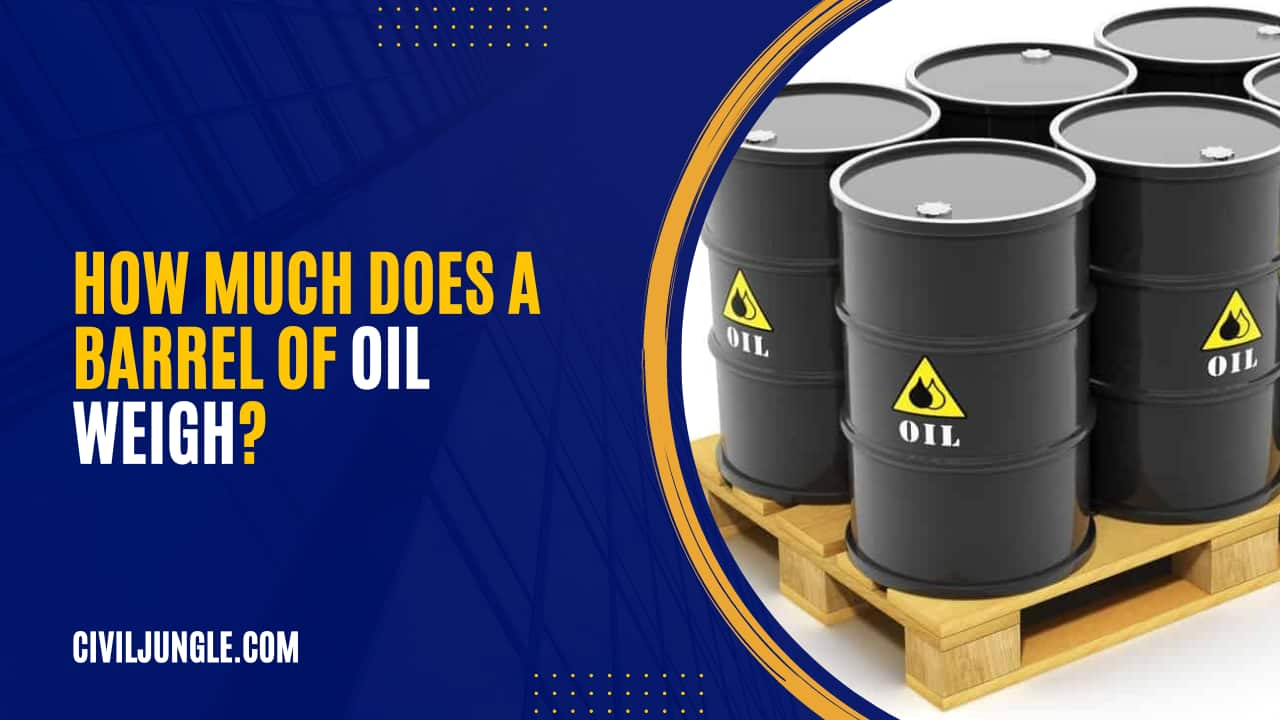
Okay, before we get to the actual heft, let's clear up a common misconception. When the oil industry talks about a "barrel," they're usually not talking about a physical barrel you could roll down a hill in a cartoon. Nope! They're talking about a unit of volume, specifically 42 US gallons. Yes, 42! Not 40, not 50, but a very specific, slightly quirky 42 gallons.
Must Read
Why 42? Because back in the day, Pennsylvania oil pioneers were apparently not fans of round numbers, and also, that's what their whiskey barrels held. True story! So, while you could put 42 gallons of oil into a physical barrel (which, by the way, typically weighs around 50-70 pounds empty), the "barrel" is mostly just a measurement of volume. It's like how you order a "pint" of beer; you're not usually asking for it in a pint-shaped brick.
So, our question isn't "how much does an empty wooden drum weigh filled with oil," but rather, "how much do 42 US gallons of crude oil weigh?" Now, that's a question we can sink our teeth into!
Now, For the Slippery Star: Crude Oil Itself
Here’s where it gets a little more fun (and a touch more complicated). Crude oil isn't just "crude oil." Oh no, that would be far too simple for an industry this complex! Think of it like coffee beans: you have light roasts, dark roasts, fancy single-origin stuff, and that mysterious sludge from the back of the convenience store. They're all coffee, but they're different.
Crude oil is the same. It comes in different "grades" – light, medium, and heavy. This isn't just a marketing gimmick; it actually refers to its density. Light crude is, well, lighter and flows more easily (think olive oil). Heavy crude is thicker, gooier, and denser (think molasses in January). This density difference is the crucial factor in how much our theoretical 42-gallon barrel will weigh.
It’s like asking how much a basket of fruit weighs. Apples are heavier than grapes, and a watermelon could ruin your shoulder. So, the answer will always be, annoyingly, "it depends." But fear not, we can give you a very good average!
The Big Reveal: Crunching the (Surprisingly Variable) Numbers!
Alright, drumroll please! Or perhaps, oil barrel roll?
On average, crude oil weighs somewhere between 7.0 and 8.5 pounds per US gallon. This range accounts for those light vs. heavy differences we just chatted about. Very light crude might be closer to 6.8 pounds/gallon, and super heavy, tar-like crude could push 8.7 pounds/gallon. But let's stick with the common range for our calculations.
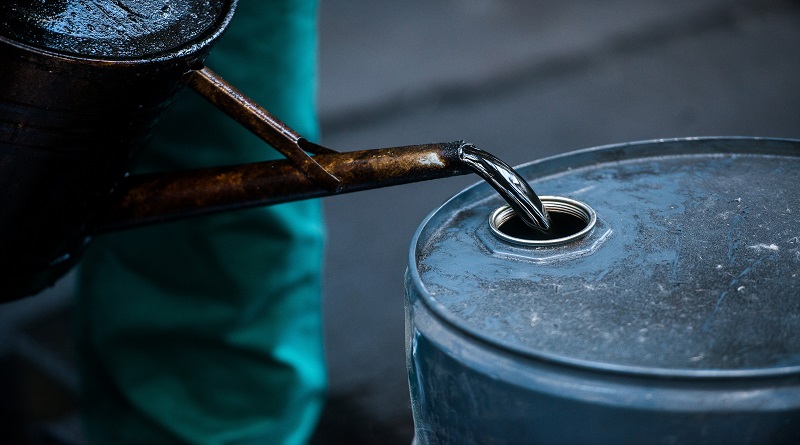
So, if we take our magic number of 42 gallons and multiply it by a typical average density of, say, 7.2 pounds per gallon for a common grade like West Texas Intermediate (WTI), we get:
42 gallons * 7.2 pounds/gallon = 302.4 pounds!
If we lean towards a slightly heavier crude, say 8.0 pounds per gallon:
42 gallons * 8.0 pounds/gallon = 336 pounds!

And for a really heavy, viscous crude, pushing 8.5 pounds per gallon:
42 gallons * 8.5 pounds/gallon = 357 pounds!
So, a barrel of crude oil, on average, weighs somewhere between 300 and 360 pounds (approx. 136 to 163 kilograms). That's a serious amount of heft!
To put that into perspective:

- That's roughly the weight of a full-grown sumo wrestler (on the lighter end of the scale).
- Or a very large refrigerator, but way more liquid-y.
- It's more than two average adult humans combined!
- You could barely lift it yourself, unless you're secretly a superhero. Even then, your back might have a word with you.
Why Should We Care About a Barrel's Waistline?
Beyond satisfying our casual curiosity, knowing the weight of crude oil is actually pretty important. For starters, it affects transportation costs. Heavy oil takes more energy to pump and move. It also impacts refining processes; different crude densities yield different amounts of gasoline, diesel, and other products.
Plus, when you hear about millions of barrels of oil being shipped around the world, you can now truly appreciate the monumental logistical effort involved. We're not talking about dainty little flasks; we're talking about the equivalent of thousands of sumo wrestlers being ferried across oceans!
So, What's the Takeaway?
Next time you hear about a "barrel of crude," you won't just picture a cartoon barrel. You'll picture 42 gallons of liquid gold (or black gold, as it were), weighing in at a formidable 300 to 360 pounds, depending on its specific personality.
It's not just a number; it's a hefty commitment of mass and energy. And who knew a simple question about weight could lead to such a deep dive into the surprisingly quirky world of crude oil? Now, go forth and impress your friends at your next café visit with your newfound, extremely niche, and undeniably fascinating knowledge!