
How Much Atp Is Produced In The Electron Transport Chain
Hey there, friend! Ever wonder where the zing in your zippy morning jog comes from? Or what fuels your brain during that epic chess match? Well, buckle up, because we're about to dive into the fascinating world of cellular energy – specifically, the Electron Transport Chain (ETC) and its amazing ATP production!
Now, I know what you might be thinking: "Biology? That sounds like homework!" But trust me, understanding this stuff isn't about memorizing textbooks; it's about appreciating the incredible machine that is you. And honestly, knowing how your body generates energy is kinda like having cheat codes to understanding your own awesomeness!
The ATP All-Star: What's the Big Deal?
First things first: ATP. Adenosine Triphosphate. Think of it as the universal energy currency of your cells. Every movement, every thought, every blink… it's all powered by ATP. It's like the gasoline in your car, the electricity in your house, the… well, you get the idea. It's essential.
Must Read
So, how much of this precious ATP does the Electron Transport Chain actually crank out? This is where it gets a little nuanced, but stick with me! We're talking about a process that's both elegant and incredibly efficient. And maybe, just maybe, it'll inspire you to appreciate that avocado toast a little more knowing the amazing energy it's contributing!
The Electron Transport Chain: The Powerhouse Assembly Line
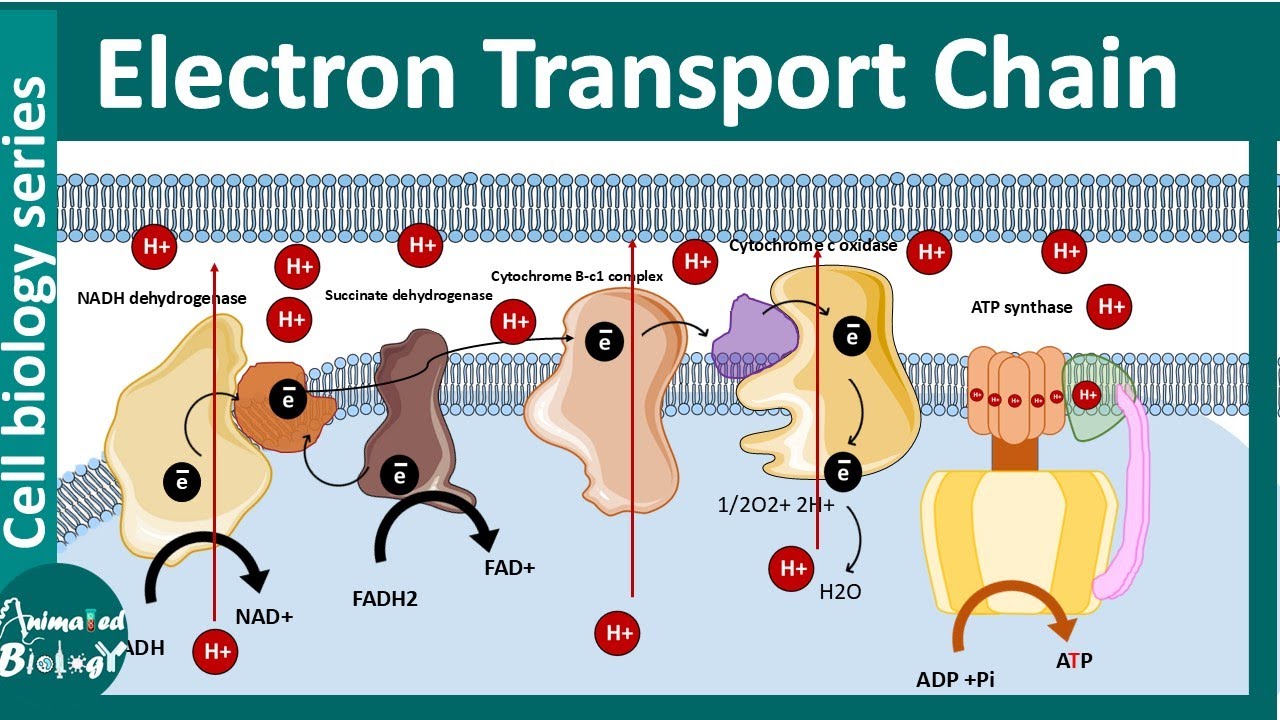
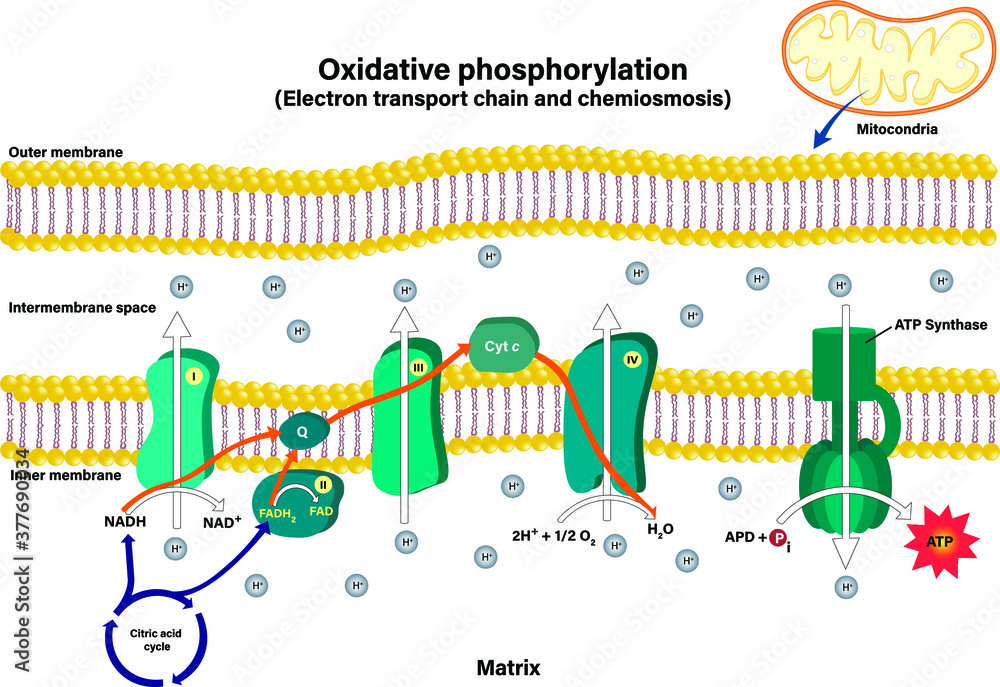
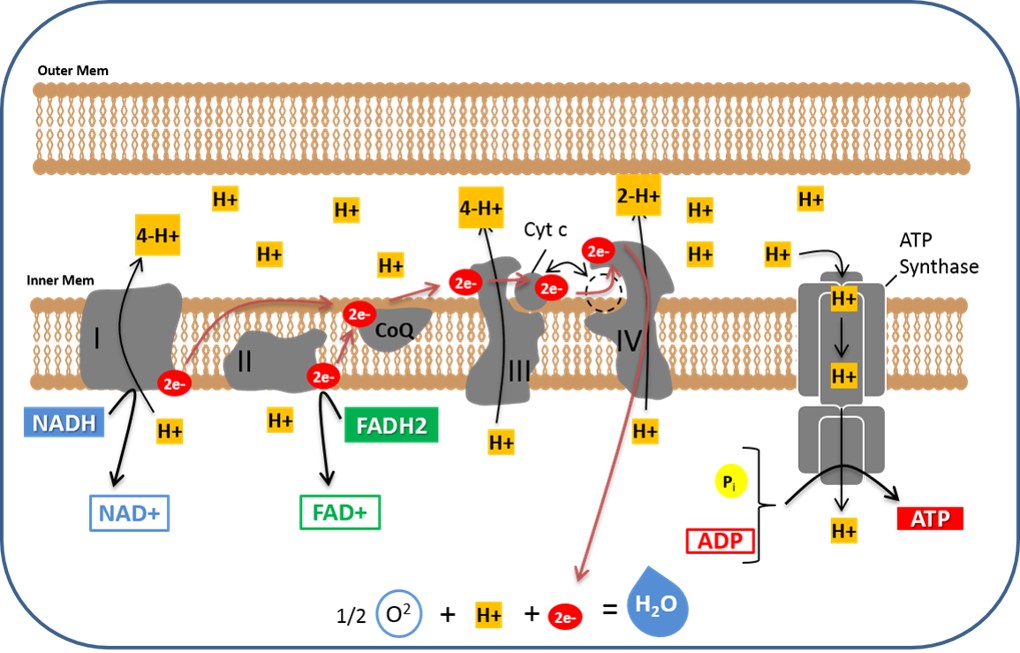
Imagine a microscopic assembly line humming away in your mitochondria (those are the powerhouses of your cells, by the way – feel free to impress your friends with that trivia!). This is the Electron Transport Chain in action. It's a series of protein complexes embedded in the inner mitochondrial membrane, passing electrons down the line like a tiny, super-efficient bucket brigade.

As these electrons get passed along, protons (H+) are pumped from the mitochondrial matrix into the intermembrane space. This creates a concentration gradient – basically, a build-up of protons on one side of the membrane. Think of it like water building up behind a dam. All that potential energy is just waiting to be released!
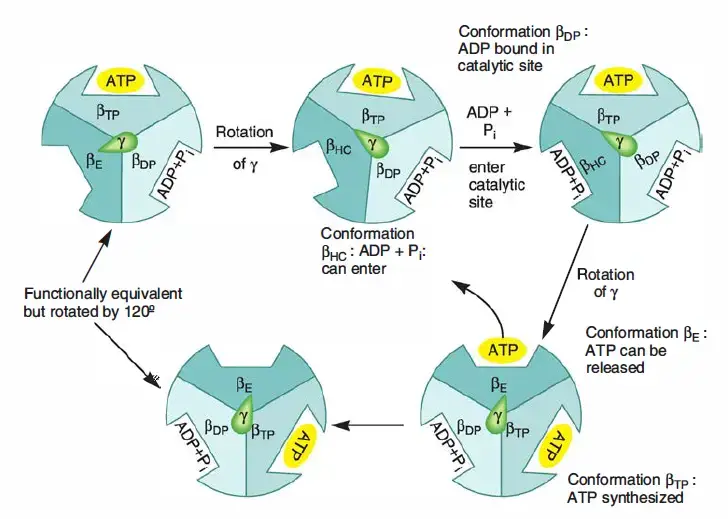
And release it does! These protons flow back across the membrane through a special enzyme called ATP synthase. ATP synthase is like a tiny molecular turbine, using the flow of protons to spin and attach a phosphate group to ADP (Adenosine Diphosphate), turning it into our energy-rich buddy, ATP!
So, How Much ATP Are We Talking About?
Okay, the million-dollar question (or rather, the million-ATP question!). Traditionally, textbooks often cited around 32 ATP molecules being produced per glucose molecule through cellular respiration, with the ETC playing the starring role.
But here's the thing: science is always evolving! More recent research suggests the actual number is a bit lower, closer to 28-30 ATP molecules. Why the difference? Well, it turns out that the process isn't quite as perfectly efficient as we once thought. Some of the proton gradient is used for other cellular processes, and some energy is lost as heat (which, hey, helps keep you warm!).
Regardless of the exact number, the ETC is still a major ATP producer. Think about it: without it, we'd be running on fumes! This efficient process allows our bodies to perform all the amazing functions we need to survive and thrive.
Why Should You Care?
Besides the sheer awe-inspiring nature of cellular biology, understanding ATP production can actually make your life more fun! For example:
- Knowing that carbohydrates are broken down into glucose, which fuels ATP production, might inspire you to make healthier food choices (hello, complex carbs!).
- Understanding the importance of oxygen in the ETC can motivate you to get that heart-pumping cardio workout.
- Realizing how vital ATP is for brain function might make you more diligent about getting enough sleep (your brain will thank you!).
See? It's not just abstract science; it's about empowering you to make better decisions for your own health and well-being.
And remember, even the most seemingly complex biological processes are built on simple, fundamental principles. Once you grasp those principles, a whole new world of understanding opens up!
The Adventure Continues...
So, there you have it: a whirlwind tour of the Electron Transport Chain and its ATP-generating prowess. I hope this has sparked your curiosity and shown you that science isn't some dry, dusty subject confined to textbooks. It's a living, breathing adventure that's happening inside you right now!
Feeling inspired? Awesome! There's a whole universe of cellular biology waiting to be explored. Dive deeper, ask questions, and never stop learning. Because understanding how your body works is the first step towards unlocking your full potential! Go forth and be energetic!